The price of bitcoin keeps hitting new all-time highs, recently topping $24,000, which means things are getting a little nutty. The coiners want bitcoin to shoot to the moon. And the no-coiners want Tether to get taken down and the nonsense to end, like it should have three years ago after the 2017 bubble.
I’ve now got hundreds of new Twitter followers, most of them bitcoiners repeating the same boilerplate phrases like “have fun staying poor,” “gold is a Ponzi too” (it’s not) and proclaiming me the U.S. dollar is going to collapse, which would be a shame as bitcoin is mainly traded in dollars.
Caught up in the whirlwind, Mike Novogratz, CEO of Galaxy Digital, has gotten a tattoo—a large moon and a rocket with the letter “B” on it. Fortunately, the “B” is relatively small, so he can easily get that part lasered or covered up if bitcoin crashes, which it will, because that is the fate of all Ponzi schemes.
Here is the news:
Ledger creates a target list for SIM swappers
In July 2020, hardware wallet provider Ledger was hacked, with the hackers gaining access to its customer database. The database has been circulating for five months now, and the hacker has just dumped it on RaidForums, a site dedicated to sharing hacked databases, for the whole world to access—at no charge.
“The first confirmed price I saw for this database was 5 BTC,” the hacker wrote. “Today you can get it for free.”
The database contains the emails, physical addresses, and phone numbers of 272,000 Ledger buyers along with emails of 1 million additional users.
Essentially, Ledger, a company dedicated to security, has given hackers access to a massive target list for SIM swappers and phishing campaigns. Ledger is very, very sorry for the leak.
ALERT: Threat actor just dumped @Ledger's database which have been circling around for the past few months.
The database contains information such as Emails, Physical Addresses, Phone numbers and more information on 272,000 Ledger buyers and Emails of 1,000,000 additional users. pic.twitter.com/Sv9cQwhuNy
Coinbase, the most valuable U.S. crypto firm, has filed confidentially for an IPO with the SEC. When the crypto exchange last raised private funding in 2018, it was valued at $8 billion. It is probably worth plenty more now, with investors going mad over tech stocks.
The San Francisco company has tapped Goldman Sachs to bring it to market, meaning that that the bank will lead the syndicate of banks underwriting the deal. (Cointelegraph)
Several VCs have invested hundreds of millions of dollars into Coinbase, and it makes sense that at some point they want to realize the returns on their investment, probably before this bubble blows.
According to Nicholas Weaver, a researcher at the International Computer Science Institute in Berkeley, the IPO “is entirely about a16z and the other VCs unloading their ownership-bags, not cryptocurrency bags, before the space implodes because Tether finally gets killed.”
Note this is entirely about a16z and the other VCs unloading their ownership-bags, not cryptocurrency bags, before the space implodes because Tether finally gets killed.
The Financial Crimes Enforcement Network has unveiled new rules aimed at closing anti-money laundering loopholes for regulated cryptocurrency transactions. The rules call for additional customer verification and more reporting.
According to the proposed rule, if a user makes a deposit or a withdrawal of over $3,000 involving a non-custodial wallet, exchanges have to record the name and physical location of the wallet owner. Crypto exchanges also have to report to the U.S. Department of Treasury any deposit or withdrawal over $10,000.
The rule is devastating to regulated crypto exchanges. In a lengthy Twitter thread last month, when he first learned of the new rule coming down the pipes, Coinbase CEO Brian Armstrong publicly attacked the new regulation. He knows serious KYC requirements will kill a lot of his business.
Nouriel Roubini responded by bashing Armstrong as a contemporary Gordon Gekko—a character in the 1987 Oliver Stone movie “Wall Street”—putting his profits ahead of the need to enforce regulations to stop the financial activities of criminals, tax evaders, terrorists, drug dealers and human traffickers.
.@brian_armstrong : you are a self serving modern version of greed-is-good Gordon Gekko putting your profits ahead of the need of any civilized country to enforce AML/KYC/TFC regs to stop financial activities of criminals, tax evaders, terrorists, drug dealers, human traffickers! https://t.co/xKYxSgy3Nw
Tokyo bitcoin exchange Mt. Gox went bankrupt in early 2014, and its former users are still waiting to get some portion of their funds back. Their long wait may soon be over. Recently, the Mt. Gox trustee submitted a draft plan for the rehabilitation of creditors.
If the Tokyo District Court gives the plan a thumbs up, that means 140,000 bitcoin may soon flood the market. The price of BTC has gone up substantially since 2014, so no doubt claimants will want to sell as quickly as possible—and that could create a bear market, pushing down the price of BTC. (Coindesk)
Unless there’s enough real cash left in the system—which is unlikely, because if there was, we wouldn’t need 20 billion tethers—Tether will need to issue an additional 2.5 billion tethers to absorb those bitcoin.
Tether surpasses $20 billion
Tether has now crossed $20 billion worth of tethers in circulation. Paolo Ardoino, Bitfinex and Tether CTO, bragged about it on social media. He tweeted: “#tether $USDt 20 BILLION!”
Patrick McKenzie, the software engineer who last year wrote this brilliant article explaining Tether, says all he wants for Christmas is for “Tether to unwind explosively.”
As Tether keeps issuing more and more tethers to pump bitcoin’s price, remember that the whole point in all this is to lure real dollars into the system. Look, the price keeps going up! You too can get rich! Buy bitcoin!
As David Gerard explained in a recent blog post, bitcoin price pumps are almost always immediately followed by a sell off. If you’re still not convince how the game works, CryptoQuant CEO Ki Young Ju provides proof.
He points out that when bitcoin hit $20,000, it was a coordinated pump fueled by stablecoins—127 different addresses depositing stablecoins to exchanges in one block of transactions on Ethereum minutes before the first price peak. “Price is all about consensus,” he said.
Lots of people deposited stablecoins to exchanges 7 mins before breaking $20k.
Price is all about consensus. I guess the sentiment turned around to buy $BTC at that time.
Visa and Mastercard said they will stop processing payments on Pornhub following a report in the NYT about illegal content on the site uploaded by unverified users. Mastercard has cut off ties completely, while Visa says it has cut off ties pending an investigation. (Decrypt)
According to Vice, Pornhub purged 70% of its content in an attempt to get the card providers back. How else will it stay in business? The site still accepts crypto—and cash via checks and wires—but apparently that’s not enough. There’s no way it can function without the credit card payments. More proof that bitcoin is a failed payments system.
Other news
The Dread Pirate Roberts is sorry, so please let him go. President Trump is weighing granting clemency to Ross Ulbright, the founder of the Silk Road. (Daily Beast)
“If Ulbricht’s supporters really cared about the war on drugs or libertarian ideals, they’d be demanding that the nearly half a million people currently in U.S. jails for drug offenses should be pardoned too.” (Vanity Fair)
A NY judge says Reggie Fowler’s defense team can withdraw from the case. Their client hasn’t paid them in a year. Fowler has 45 days to find a new lawyer who is also willing to risk not getting paid. (My blog)
Binance reportedly puts zero actual effort into keeping U.S. customers out. The info comes by way of a U.S. user who created a BFX account (no VPN), transferred bitcoins to BFX and sent some out from there. (Twitter)
If you want to cash out your USDT on Kraken, the exchange apparently only takes two types: Omni or ERC-20. (Twitter)
Eric Peters, CEO of One River Asset Management, has set up a new company to invest in crypto. His firm will bring its holdings of bitcoin and ether to about $1 billion as of early 2021, he said. (Bloomberg)
Michael Saylor wants to lure Elon Musk into bitcoin. (Decrypt)
A New York district judge agreed to allow Reginald Fowler’s defense team to withdraw from their client’s case due to nonpayment. He then gave Fowler 45 days to seek a new attorney.
(Update on Feb. 9: The judge has given Fowler three more weeks. Fowler now has until Feb. 25 to retain new counsel, according to the latest court filing.)
Judge Andrew L. Carter
Fowler is the former NFL minority owner linked to hundreds of millions of dollars in missing Tether and Bitfinex funds. Tether is the company that has so far issued $20 billion worth of stablecoins, and Bitfinex is a crypto exchange. Both companies are operated by the same individuals.
In a telephone status conference today, Judge Andrew L. Carter agreed to allow Fowler’s defense counsel—Hogan Lovells and Rosenblum Schwartz & Fry—to step down. They claim their client owes them more than $600,000.
However, while the government agreed to letting the lawyers withdraw, it was opposed to an adjournment of the April 28 trial, arguing that the situation was of Fowler’s own making. After all, his lawyers had been warning him since February they were planning to quit. The trial has already been postponed twice.
“We believe the almost four months until trial is sufficient time for a new counsel to prepare for trial,” U.S. Assistant Attorney Jessica Greenwood told the judge.
Judge Carter disagreed. That assumes Fowler’s new attorneys have already been retained and are on the case today, he said, stressing that it may take time for Fowler to find a new lawyer—especially given that his current lawyers are seeking to withdraw because he hasn’t paid them.
“That usually doesn’t make the defendant a very attractive client to a subsequent law firm,” Carter said.
The judge then explained to Fowler—who was on the call, joined by his defense team—that if he was unable to afford a new attorney, the court would provide him one free of charge. However, he would need to fill out a financial affidavit for the court to make that determination.
Although Fowler would not admit to whether he could afford an attorney, he did say he wished to try and hire one who would be more willing to work with him given his “current condition.”
“The government has seized all my assets,” he said, starting to sound a bit angry. “The government has asked me to put the properties that I have that are free and clear up for bail. The government has handcuffed me. They have shut me down. They have locked down my family,” he said—though it’s not clear what he meant in saying his family was “locked down.”
“I can’t even get a bank account. My business has been shut down since COVID, so we don’t have any income. We do have assets. We can’t get to the assets because the government has tied them all up, so what I want to do, respectfully, is to try to find a firm that will work with me, understanding that we have assets that are tied up by the government, i.e., the properties that have me set for bail, or whatever you call it.”
Fowler, now living in Chandler, Arizona, is free on $5 million bail. Five properties were put up for lien in order to secure his bond.
He called it “ludicrous” that the government forced him to put up “nearly $2 million worth of nearly free-and-clear properties” for bond. (A quick look on Zillow puts the properties’ value at around $1.4 million.)
Fowler said if he could not find an attorney to work with him, he would ask the court for assistance.
The judge stressed that Fowler has a right to be represented by an attorney, and gave him until Feb. 2, 2021, to find one on his own. A new trial date will be set after that time, the judge said.
Hogan Lovells also represents Fowler in a class-action complaint against Tether and Bitfinex, in which Fowler is named. They are seeking to withdraw from that case as well.
The price of bitcoin is headed back over $19,000 again. What will it take to push it past $20,000—more tethers? More institutional buying? Or maybe, more crypto journalists proclaiming (without evidence) that tethers are fully backed? Here’s the news:
MicroStrategy wants more, more, more
Michael Saylor, the new crazy god of bitcoin institutional buying, continues his bitcoin buying spree. He seems really, really confident the price of BTC will go up.
Saylor’s publicly traded company MicroStrategy currently owns 40,824 bitcoins—because no sense using all that excess cash for buying back a ton of stock or paying a big dividend. Better off to gamble it on crypto.
Now the firm is actually going into debt to buy bitcoin. After completing a $650 million bond offering, MicroStrategy plans to plow all the proceeds into buying more bitcoin. (Microstrategy PR, Cointelegraph)
Citibank isn’t impressed. Analyst Tyler Radke downgraded MicroStrategy (MSTR) from neutral to sell, calling the recent rally—MSTR went up after its first few BTC buying announcements—”overextended” and a possibly “deal-breaker” for software investors. (The Block)
Tether: Ain’t no stopping us now
Tether is now at $20 billion worth of tether—that’s assets, but circulating supply is soon to follow—and there is no evidence whatsoever to conclude that there is $20 billion in real cash behind all those tethers. Why? Because the company has never had a formal audit.
Still, last month, The Block’s Larry Cermak defended tethers as being “either fully backed or very, very close,” telling folks “everything is in order now.” He based that on conversations he claimed to have had with “third-parties” who told him they had successfully redeemed several hundred million in tethers.
Cermak is not the only one to buy the Tether line of B.S.
In December 2018, after looking at Tether bank statements, Bloomberg’s Matt Leising also reported that Tether appeared to be fully backed. He was wrong.
Unbeknownst to him at the time, in the previous two months, the DOJ froze five NY bank accounts belonging to Reginald Fowler, who ran a shadow banking service for Tether/Bitfinex’s Panamanian payment processor. And in November, the NYAG, having serious concerns about Tether’s finances, issued subpoenas to Bitfinex and Tether asking for details on their banking. Finally, in April 2019, Tether admitted it was only 74% backed. And that’s before it went off and printed another 17.5 billion tethers. So what’s backing all those?
In a recent blog post, David Gerard explains why Tether is “too big to fail.” Essentially, it’s keeping the entire BTC market afloat. If Tether were to get the Liberty Reserve treatment, the price of bitcoin is unlikely to ever recover.
Thus, “the purpose of the crypto industry, and all its little service sub-industries, is to generate a narrative—so as to maintain and enhance the flow of actual dollars from suckers, and keep the party going,” he said.
NYAG: Tether documents forthcoming
Meanwhile, there’s been a new document filing in the NYAG Tether probe.
In a letter to the NY supreme court, NYAG says Bitfinex/Tether are cooperating on document production and the parties expect to finalize things “in the coming weeks.” These documents, of course, consist of everything NYAG asked for in its original November 2018 subpoena—information that will shed light on the Tether and Bitfinex’s shadowy dealings since 2015.
A part of me wants to get excited about this news, but another part says, wait a minute. In the past when Tether’s operators said they were going to hand documents over, they simply handed over material that was already public information. They also have a long history of shenanigans, so let’s just wait and see.
How to turn USDT into cash
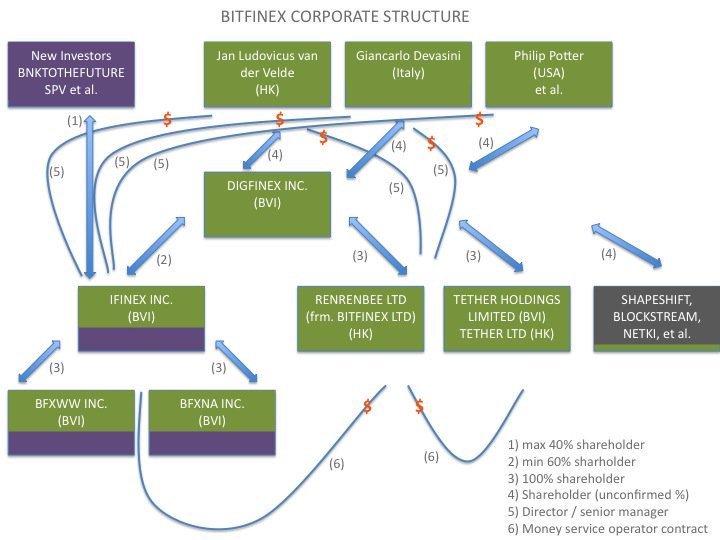
Jorge Stolfi, a computer scientist from Brazil, shared on Reddit a “mainstream theory” on what could be happening behind-the-scenes at Tether—specifically, how Tether’s operators could convert USDT into cash for their own personal use. Remember, this is totally unproven. It is just a theory. (The “triad,” by the way, refers to Tether CSO Phil Potter, CEO and man of mystery J.L. van der Velde, and CFO Giancarlo Devasini. They are the same operators behind sister company Bitfinex.)
He writes:
The owners of Tether Inc (which I will call “the Triad”) print billions of USDT without any backing.
The Triad deposits those USDT into Bitfinex (which they own too).
The Triad uses those USDT to buy BTC and other cryptos from other Bitfinex clients, attracted by the better price.
The Triad withdraws the BTC to their private wallets.
The Triad moves all or some of those BTC to other exchanges that handle real currencies, such as USD, EUR, JPY, etc.
The Triad sells those BTC for real money.
The Triad withdraws the real money into their personal bank accounts.
This is a theory. This is not proven. But the point is, when you have no checks and balances in place along with massive loopholes in oversight, anything can happen. We saw this already with QuadrigaCX—the Canadian crypto exchange that went bankrupt after the founder disappeared (aka “died in India”), taking along with him hundreds of millions of dollars in customer funds.
Coinbase loses half critical security team
After NYT reporter Nathaniel Popper reported about discriminatory complaints at Coinbase, new information came out. Among those who recently resigned to protest the exchange’s new internal policies, were four of the seven people on Coinbase’s critical security team—aka the “key management team.”
New detail on how the turmoil at Coinbase has hit the company's efforts to secure its Bitcoins.
Among the people who resigned this fall – to protest new internal policies – were 4 of the 7 people on the most critical security team, the "key management team," sources told me.
The key management team is responsible for securing the cryptographic keys to Coinbase’s cold wallets, where the majority of the company’s crypto is held—somewhere in the neighborhood of $30 billion.
“No job is more fundamental to the company’s success,” Popper said.
Coinbase’s security chief shot back, saying Coinbase’s security team is managed by several teams with redundancy built in. Of course, he wants us to believe everything is fine, but not everyone is convinced.
LOL what "most of the key management team for Coinbase's cold wallets quit" is absolutely not a "nothingburger"
Bitcoin has a new institutional investor: MassMutual. The Springfield-Mass insurance firm purchased $100 million worth of BTC for its general investment account, which totals $235 billion. (WSJ)
MassMutual purchased the bitcoin through NYDIG, a New York-based fund management company, which has $2.3 billion worth of crypto under management. MassMutual also acquired a $5 million minority equity stake in NYDIG.
The $100 million cash injection into bitcoin sounds like a lot, but it’s small potatoes. That money will cover the network’s operators—the bitcoin miners—for only six days. Remember, bitcoin miners are selling their 900 newly minted bitcoin per day for $17 million, at current BTC prices. Investors will never see that money again. Bitcoin doesn’t make any real profits on its own—just investor money going in one end, out the other.
Law firm Hogan Lovells is requesting to withdraw their representation of Reggie Fowler in a class-action against Bitfinex and Tether in which Fowler is also named. (Motion to withdraw)
Bryce Weiner has written a nice overview of how Tether works in relation to the crypto industry.
Crypto-friendly CFTC chair Heath Tarbert plans to resign early next year. His term was set to expire in 2024. (The Block)
Bitcoin’s right-libertarian anarcho-capitalism fits right in with far-right extremism. Crypto analyst Tone Vays brags on Twitter about spending a night with the Proud Boys.
If you like my work, please consider supporting my writing by subscribing to my Patreon account for as little as $5 a month. Thank you!
Among other things, it means MicroStrategy CEO Michael Saylor has replaced Patrick Bryne as the new crazy god of institutional bitcoiners. And another crypto exit scam has been invented: dying in India. (See Jorge Stolfi’s full reddit post. He is a computer scientist in Brazil.)
All Ponzi schemes eventually implode, even if it takes 25 years like Bernie Madoff’s did. When that happens, you have two choices: turn yourself in or disappear. Gerald Cotten chose to disappear. Of course, many people believe he is really and truly dead. I’m just not one of them.
With that, here is the news that I find interesting from Bitcoinlandia, an imaginary place where people keep insisting bitcoin is not a Ponzi.
MicroStrategy buys more BTC
MicroStrategy continues to funnel its excess cash into bitcoin. The analytics firm bought another $50 million worth of bitcoin, Saylor disclosed in a tweet.
MicroStrategy has purchased approximately 2,574 bitcoins for $50.0 million in cash in accordance with its Treasury Reserve Policy, at an average price of approximately $19,427 per bitcoin. We now hold approximately 40,824 bitcoins.https://t.co/nwZcM9zAXZ
MicroStrategy bought its most recent pile of bitcoins at an average price of $19,427—at the top of the market—and now owns a total of 40,824 bitcoins.
Here’s the thing: Saylor holds 73% of the voting stock of MicroStrategy, so he does not need buy-in from stockholders to make decisions. He is ruler and king, and if he wants his firm to buy more bitcoin, so be it.
Saylor also has a large private stash of bitcoins. I would be very curious to know how much BTC he owned before and after MicroStrategy’s recent purchase.
If those bitcoin hold their value, all will be fine, Jorge Stolfi said on Reddit. But, if BTC “drops back to $8,000, the other stockholders will be upset, and may have grounds to sue Michael for mismanagement or whatever—even if there are no other shenanigans. If he did sell his coins while the company bought them, it will be worse.”
Guggenheim Partners
Another institutional investor has jumped on the bitcoin bandwagon. In a recent SEC filing, Guggenheim Partners, a leading Wall Street investment firm, revealed that it is looking to invest 10% of its $5.3 billion Macro Opportunities Fund into Grayscale’s Bitcoin Trust.
To be clear, Guggenheim is not buying bitcoin directly. It plans to invest nearly $500 million in GBTC shares. Grayscale itself now owns more than 500,000 bitcoin.
And Guggenheim isn’t taking on any risk. The firm makes money whether the price of BTC goes up or down. The retailers who are invested in the fund are the ones who carry all the risk.
Bitcoin is highly volatile and has no role in retail investor portfolios. As Economist Nouriel Roubini explained in a lengthy Twitter rant:
“Investing in BTC is equivalent to [taking] your portfolio to a rigged illegal casino & [gambling]; at least in legit Las Vegas casinos odds aren’t stacked against you as those gambling markets aren’t manipulated the way BTC is. Instead BTC is manipulated heavily by Tether & whales.”
Tether’s runaway train
On to my favorite topic: Tether—a firm that mints a dollar-pegged stablecoin that’s hugely popular on unbanked exchanges.
On Nov. 28, Tether surpassed 19 billion tethers in circulation. And like a runaway train with no way of stopping, it is fast on its way to issuing 20 billion tether—worth the notional equivalent in US dollars.
So, what is going on with the New York Attorney General’s investigation into Tether and Bitfinex?
The last bit of real news we had was in September when Judge Joel M. Cohen once again ordered Bitfinex and Tether to turn over financials. However, he did not set a deadline. He left that decision to a special referee, according to Coindesk. And we haven’t heard anything on the matter since.
Stepping back, recall that Bitfinex/Tether have been resisting handing over documents since November 2018 when the NYAG—in pursuant to the Martin Act, which gives it broad powers to investigate fraud—first served subpoenas for information stretching back to January 2015.
In April 2019, when the NYAG was concerned that iFinex (parent company of Bitfinex/Tether) was insolvent and Bitfinex was dipping into Tether’s cash reserves, it sought an ex parte order compelling the companies to produce documents and staying further actions pending the ongoing investigation.
iFinex responded with a motion to dismiss. In August 2019, the Supreme Court denied the motion and the respondents sought to appeal, arguing that the NYAG did not have the power to demand documents since Bitfinex and Tether didn’t have sufficient contacts in New York.
In July 9, 2020, a New York state appeals court sided with the NYAG. (Court filing)
As I’m writing up this newsletter, Coindesk’s Nikhilesh De has just pulled up a new court filing in the case from Dec. 4 that is a bit bewildering. At first glance, it appears to be the same filing from July, repeated twice.
So there was a new filing in NYAG v iFinex on Friday (h/t @ahcastor for making me think of this today). But there's something odd about this… https://t.co/rS7MXJBW1B
Drew Hinks, a lawyer not involved in the case, said the filing is a remittitur—a jurisdictional document that formally ends the life of an appeal by notifying the world that the decision is final.
I’ll update this post as I learn more—specifically why a remittitur is important after the appellate judgment has already been issued and become final. Does this help the investigation going forward?
(Update: I am pretty sure that the remittitur was just a procedural thing that signals that the appellate court is done and has kicked the ball back to the original court—i.e., Justice Cohen.)
Bitcoin sets new all-time high
On Nov. 30, the price of bitcoin reached $19,900 on Coinbase, according to the Block, surpassing its previous all time high (ATH) set on Dec. 17, 2017, by about $10.
After bitcoin reached its new high, it promptly lost 13% of its value.
When you see bitcoin getting pumped like this, what you are seeing is traders cashing out before the bubble bursts. Bitcoin is not a company. It does not create any actual revenue. Cash coming into the system goes to paying the miners, who sell their 900 newly minted BTC per day and earlier investors lucky enough to sell at the right time.
I’m sure the current pump has nothing to do with the NYAG getting closer to exposing Tether/Bitfinex’s inner workings, the recent indictment of BitMEX operators, and Binance’s latest efforts to aggressively block U.S. citizens from using its exchange.
Binance pulls in big profits
The largest tether exchange expects to earn between $800 million and $1 billion in profits for 2020, its captain Changpeng Zhao (“CZ”) told Bloomberg. The Malta-registered exchange also expected $1 billion in profits 2018.
Speaking of Binance, the crypto exchange is suing Forbes and two journalists for a recent report claiming that the exchange had a plan to dodge regulations. (Here is the complaint.) It’s unlikely CZ will get anywhere with this lawsuit because the suit will get torn apart in discovery.
Similar to when Bitfinex threatened to sue prolific critic Bitfinex’ed in December 2017, this is likely more of warning to other journalist: don’t dig too deep, or we’ll come after you.
STABLE Act
The big news of the week is that three congressional democrats are trying to pass a bill that will require stablecoin issuers to comply with the same regulations and rules as banks.
If passed, the Stablecoin Tethering and Bank Licensing Enforcement (STABLE) Act, would require stablecoin issuers to apply for bank charters, get approval from the Federal Reserve and hold FDIC insurance. (The bill, press release.)
Stablecoin issues are like wild cat banks. Back in the 1800s banks would issue their own currency, and nobody knew what was backing the currency. And because these banks were often in remote, hard to get to locations, people often had trouble redeeming their notes for silver or gold or whatever it was that was supposed to be backing them.
They are banks printing their own banknotes. It is literally recapitulating 19th century banking. They just don't have pretty critters on the pieces of paper.
Reggie Fowler owes his defense team $600,000. Lawyers were conned by a con. (My blog)
Joe Biden intends to nominate Adewale Adeyemo as Deputy Treasury Secretary, not Gary Gensler as previously thought. (New York Times)
Bill Hinman, who first spoke of “sufficient decentralization,” served his last day as SEC’s Division of Corporation Finance director on Friday. (SEC statement on departure)
Spotify is looking to add support for crypto payments. The streaming service wants to hire an associate director to lead activity on the libra project and other crypto efforts. (Coindesk)
If you like my work, please consider supporting my writing by subscribing to my Patreon account for as little as $5 a month.
Reggie Fowler, the former NFL minority owner linked to missing Tether and Bitfinex funds, owes his defense team more than $600,000, according to a new court filing on Tuesday.
Fowler’s lawyers want to drop out of the case due to nonpayment, but they need to get permission from the court first.
Last we left off, U.S. District Judge Andrew Carter ordered attorneys at law firm Hogan Lovells—also representing defense lawyer Scott Rosenblum at Rosenblum Schwartz & Fry—to file three versions of a sealed letter dated Nov. 18.
The public version—redacting what should not be revealed to the government or the public—discloses more details on the lawyers’ frustrations with a client who perpetually strings them along.
Hogan Lovells attorneys James McGovern and Michael Hefter initially asked for a $25,000 retainer in late 2018 when they first met with their client. Fowler only ever paid the retainer, and two years later, he now owes them $600,000.
His defense team believed all the stories he told them that he was swimming in money, so they weren’t too concerned—at first.
“From the very inception of this matter, we have been led to believe that Mr. Fowler is a high net worth individual with substantial assets, which would allow him to pay his legal bills with little hardship,” the lawyers said in their letter to the judge.
Hogan Lovells started working with Fowler on October 18, 2018. They had their first meeting with him on Nov. 8, 2018, around the time Fowler was initially contacted by the FBI.
“When we agreed to represent Mr. Fowler, it was our understanding that he had been targeted by cryptocurrency businessmen seeking to take advantage of Mr. Fowler’s personal balance sheet as a means of transacting cryptocurrency transactions without drawing the attention of bank compliance officers or regulators,” they said.
After his release in May on $5 million bail, Fowler hired Scott Rosenblum to join the defense team. Rosenblum asked for a $275,000 retainer and an additional $85,000 per week retainer, if the case went to trial. Rosenblum received a partial retainer of $100,000, which Hogan Lovells notes that Fowler paid “while he had several unpaid, overdue invoices for legal services issued by Hogan Lovells.”
Additionally, Fowler paid another lawyer (unnamed) in Portugal in full for her services. He also paid international law firm Reed Smith LLP for services rendered in 2018.
“The fact that other attorneys had received payments from Mr. Fowler for their services led us reasonably to believe that Mr. Fowler’s representations to us that he would pay our bills was truthful,” the lawyers said.
In the second half of 2019, the lawyers were diligent about contacting Fowler for money. Each time they reached out, he told them payment was imminent and that “transactions or business deals that would fund the payment of our fees were in process”—but he never paid him.
In February, following a plea bargain that went awry and a superseding indictment, the defense team realized the case would likely go to trial, requiring a substantial amount of work, and still no check from their client.
Fowler has ample funds, they said, including “$10 million in real estate that is unencumbered and could have been liquidated or monetized at any point during the past two years.” His refusal to pay, the lawyers added, has “led to a breakdown in the attorney-client relationship.”
The government has till Dec. 8 to respond and replies are due Dec. 11.
If you like my work, please consider supporting my writing by subscribing to my Patreon account for as little as $5 a month.
Are the pixie fairies sprinkling gold dust on bitcoin’s market again? By the looks of things, you might think so.
Like in the bubble days of 2017, the price of bitcoin is headed ever upward. On November 18, 2020, it surpassed $18,000 — a number not seen since December 2017 when bitcoin, at its all-time peak, scratched $20,000.
Of course, the market crashed spectacularly the following year, and retailers lost their shirts. But here we are once again, trying to unravel the mysteries of bitcoin’s latest price movements.
Several factors may explain it — Tether, PayPal, and China’s crackdown on over-the-counter desks — but before we get into that, let me reiterate how critical it is for bitcoin’s price to stay at or above a certain magic number.
Bitcoin miners — those responsible for securing the bitcoin network by “mining” the next block of transactions on the blockchain — need to sell their newly minted bitcoins for real money, so they can pay their massive energy bills.
Roughly $8 million to $10 million in cash gets sucked out of the bitcoin ecosystem this way every day. So, in order for the miners — the majority of whom are in China — to turn a profit, bitcoin needs to be priced accordingly. Otherwise, if too many miners were to decide to call it quits and unplug from the network all at once, that would leave bitcoin vulnerable to attacks. The entire system, and its current $345 billion market cap, literally depends on keeping the miners happy.
Now let’s jump to May 11, an important day for bitcoin. That was the day of the “halvening,” an event hardwired into bitcoin’s code where the block reward gets slashed in half. A halvening occurs once every four years.
Before May 11, miners received 1,800 bitcoin a day in the form of block rewards, which meant they needed to cash in each bitcoin for $5,000. But after the halvening, the network would produce only 900 bitcoins per day, so miners knew they needed to sell each precious bitcoin for at least $10,000.
But trouble loomed. Just months before the halvening, the price of bitcoin went into free fall. Between February and March, when the world was first gripped by the COVID crisis, bitcoin lost half its value, dropping to a low of $3,858 on March 13 — barely enough to pay the system’s energy costs post-halvening. Miners were likely pacing, wringing their hands, wondering how they would stay in business. Who would guarantee their profits?
That is when Tether — a company that produces a dollar-pegged stablecoin of the same name — sprung into action and started issuing tethers in amounts far greater than it ever had before in its five years of existence.
Tethers, for the uninitiated, are the main source of liquidity for unbanked crypto exchanges, which account for most of bitcoin’s trading volume. Currently, there are $18 billion (notional value) worth of tethers sloshing around in the crypto markets. And nobody is quite sure what’s backing them.
Due to Tether’s lack of transparency, its failure to provide a long promised audit, and the fact that the New York Attorney General is currently probing the firm along with Tether’s sister company, crypto exchange Bitfinex, for fraud, a good guess is nothing. Tethers, many suspect, are being minted out of thin air.
(Tethers were initially promised as an IOU where one tether was supposed to represent a redeemable dollar. But that was long before the British Virgin Island-registered firm began issuing tethers in massive quantities. And no tethers, to anyone’s knowledge, have ever been redeemed—except for when Tether burned 500 million tethers in October 2018, following the seizure of $850 million from its payment processor Crypto Capital.)
According to data from Nomics, at the beginning of 2020, there were only $4.3 billion worth of tethers in circulation. That number remained stable through January and February and into March. But starting on March 18, just five days after bitcoin dipped below $5,000, the tether printer kicked in.
Tether minted 4.4 billion tethers in April 2020 — crypto’s version of an economic stimulus package. By early June, the price of bitcoin crossed $10,000. Yet the Tether printer kept printing, pushing the price of bitcoin ever skyward and giving bag holders an opportunity to cash out.
In May, June, and July 2020, Tether issued a combined total of 3 billion tethers. In August, when the price of bitcoin reached $12,000, Tether issued another 2.6 billion tethers. In September, when bitcoin slid below $10,000, Tether infused the markets with another 2.2 billion tethers, although, even that couldn’t lift bitcoin up to $12,000 again. The price just hovered in the $10,000 range.
And then in October — just after US prosecutors charged the founders of BitMEX, a Seychelles-registered, Hong Kong-based bitcoin derivatives exchange, for failing to maintain an adequate anti-money laundering program — the price of BTC started to soar. What happened?
Tether’s frenzied pumping
One theory is that Tether just kept issuing tethers, billions and billions of them, and those tethers were used to buy up bitcoin. A high demand drives up the price — even if it’s fake money.
Only unlike in 2017, the effort to drive up bitcoin’s price is requiring a lot more tethers than ever before. (At the end of 2017, before the last bitcoin bubble popped, there were only $1.3 billion worth of tethers in circulation, a fraction of what there are today.)
Nicholas Weaver, a bitcoin skeptic and a researcher at the International Computer Science Institute in Berkeley, is convinced bitcoin’s latest price moves are 100% synthetic.
“The amount of tether flooding into the system is more than enough explanation for the price as it is well more than the amount needed to buy up all the newly minted bitcoin,” he told me. “If it was organic, there would at least be some significant increase in the outstanding amount of non-fraudulent stablecoins.”
What he means is, if real money was behind tether, we’d be seeing a similar demand for regulated stablecoins. But that is not the case. Only one regulated stablecoin has seen substantial growth — Circle’s USDC — but that growth is far overshadowed by Tether, and mainly a result of the growing decentralized finance (DeFi) market — a topic for another time.
Jorge Stolfi, a professor of computer science at the State University of Campinas in Brazil, who in 2016 wrote a letter to the SEC advising about the risks of a bitcoin ETF, which the SEC published, agrees.
“As long as fake money can be used to buy BTC, the price can be pumped to whatever levels to keep the miners happy,” he told me. He went on to explain in a Twitter thread that the higher the bitcoin price, the faster real money flows out of the system — assuming miners sell all their bitcoin for cash. Multiply bitcoin’s current price of $18,600 times 900, and that’s nearly $17 million a day. Investors will never get that money back, he said.
Klyith (not his real name) from Something Awful, a predecessor site to 4Chan, explains Tether this way:
“A bunch of pixies show up and start flooding the parchment market with fairy gold, driving prices to amazing new heights. But when any of the player characters try to spend the fairy gold in other towns or to pay tithes to the king, it turns into worthless rocks.
“If you denounce the pixies to the peasants or start using dispel magic to reveal that fairy gold is rocks, the price of parchments will collapse and the peasants may stop using them altogether. But if you ignore the pixies and keep the parchment economy going, you will end up with more and more worthless rocks instead of gold. The pixies can of course tell the difference between fairy gold and real gold at a glance. So they will quickly drain all the real gold from the whole township if you don’t act. What do you do?”
Still, it is hard to imagine that outside events don’t have some impact on bitcoin’s price. Two other events are being talked about right now as reasons behind bitcoin’s price gains—and they are getting a lot more media attention than Tether.
PayPal’s shilling
One of the biggest companies in the world is now promoting crypto, giving retail buyers the impression that bitcoin is a safe investment. After all, if bitcoin were a Ponzi or a scam, why would such a well-known, respectable company embrace it? I should add that MicroStrategy, Square, Fidelity Investment and Mexico’s third-richest person, Ricardo Salinas Pliego, are also currently shilling bitcoin on the internet.
On Oct. 21, PayPal announced a new service for its users to buy and sell crypto for cash. And on Nov. 12, the service became available to U.S. customers, who can now buy and sell bitcoin, bitcoin cash, ether, and litecoin via their PayPal wallet.
If you are a PayPal user, you have already gone through the process of proving you are who you say you are. And that removes the hassle of having to sign up with an crypto exchange, like Coinbase in the U.S., and take selfies of yourself holding up your driver’s license or passport.
Of course, there are limitations. You can’t transfer crypto into or out of your wallet, like you can on a centralized exchange. But you can pay PayPal’s 26 million merchants with crypto — although, not really, because what they receive on their end is cash. And the transaction is subject to high fees, like 2.3% for anything under $100, so what is the point? All you are doing is taking out a bet against PayPal that the price of bitcoin is going to rise.
Stolfi describes PayPal on Twitter as “a meta-casino where you can choose to use special in-house chips with a randomly variable value.”
The broader point is that PayPal makes it easy to buy crypto for people who are less likely to understand how crypto really works or know about Tether and the risk it imposes on the crypto markets. (If authorities were to arrest Tether’s operators and freeze its assets, similar to what happened to Liberty Reserve in 2013, that could lead to a huge plummet in bitcoin’s price.)
If you think Tether doesn’t have that big of an impact on bitcoin’s price, recall that Tether/Bitfinex CFO Giancarlo Devasini (going by “Merlin”) is recorded in the NYAG’s 2019 complaint as having reached out to Crypto Capital to plead for missing funds: “Please understand all this could be extremely dangerous for everybody, the entire crypto community,” said Merlin, indicating what could happen if Tether failed to exist. “BTC could tank to below 1k if we don’t act quickly.”
PayPal this month reached 85% of the volume of Binance.US, the U.S. branch of major crypto exchange Binance. Granted the volume of Binance.US is small in comparison with Binance’s main crypto exchange, but you can see where this is going.
One thought is that PayPal’s move into crypto is a “death sentence” for bitcoin, and that Tether and the exchanges who depend on tethers are working together to pump up the price of bitcoin to lure as much cash into the system as possible while the going is good.
Paypal's move was a death sentence for crypto. It's much easier for people to simply "buy Bitcoin" on Paypal, instead of sending their fiat to exchanges & Tether. That's why they rushed their epic pump now, before Paypal gains traction, to get as much FOMO cash as they still can.
According to news coming out of the country, China’s bitcoin miners may be encountering difficulty selling their bitcoin on over-the counter exchanges.
Since China banned crypto exchanges three years ago, OTC exchanges — where buyers and sellers go to trade directly — have become the most convenient way for the country’s citizens to on-ramp and off-ramp into and out of the crypto world. It’s also the main way bitcoin miners sell their bitcoin for yuan.
Recently, as part of a move to curtail internet gambling and contain capital outflows, Chinese authorities have been targeting OTC desks. If authorities determine that your counterpart (the person on the other end of your trade) is trying to launder illicit funds, you risk getting your bank account frozen. As a result, miners may be having to take more precautions and cash out less frequently, according to The Block (paywalled).
There is some speculation that this is making it harder for bitcoin miners to offload their bitcoins, leading to a liquidity crisis. In other words, fewer bitcoin are available to buyers, thus driving up demand similar to if hoards of bitcoin were being bought up by Tether.
But ICSI’s Weaver cautions there is no way to think rationally about bitcoin’s price. “The market is completely loony,” he said.
In a rational world, he believes shutting down OTC desks would have no effect on the price of bitcoin — if the rest of the markets were efficient and honest. OTC desks are really about miners’ paying power and Chinese who want to evade capital controls by trading cash for bitcoin and moving that bitcoin overseas, he said. He added that he could envision China’s crackdown on OTC desks driving up the price of bitcoin if it resulted in fewer OTC purchasers selling their bitcoin on banked exchanges. “But really, that doesn’t make sense either,” he said. “How many banked exchanges are left?”
Updated on Nov. 21 to mention that nobody has ever redeemed their tethers, meaning there is no record of anyone having sent their USDT back to Tether and received a bank wire for cash.
If you like my work, please consider supporting my writing by subscribing to my Patreon account for as little as $5 a month.
Bitcoin broke $16,000 on Thursday. That’s up from $10,000 in early September. And yet, with all the media outlets rabidly covering the latest “Bitcoin bull run,” the only one mentioning the billions and billions of dollars worth of tether (USDT) entering the market was Cointelegraph.
In particular, none of the mainstream press has bothered to mention tether in their writings about BTC’s recent price rise. This is worrisome because retail folks — the ones most vulnerable to risky investments — have little understanding of tether and the risk it imposes on Bitcoin’s price.
Instead, most media pointed to the election, PayPal’s recent embrace of crypto and huge BTC investments by MicroStrategy and Square as the reasons for BTC’s moon. Mainstream adoption! Institutional money! The truth is, crypto markets are easy to manipulate. And when BTC goes up in value like this, the main benefit is so early investors can cash out.
In other words, BTC gets passed on to the next bright-eyed, bushy-tailed dupe who hopes the price will continue skyward. History has shown, however, these bubbles are generally followed by a crash, and a lot of people getting hurt, which is exactly what happened in 2018.
Trolly McTrollface (not his real name, obvs) points out in a tweet thread that Tether went into hyperdrive in March to stop BTC from crashing. BTC had dropped to $5,000, losing half its value from two months prior. In fact, March is when BTC entered its current bull run phase.
During the bloodbath of March – May 2020, Tether created 4B new USDT. These issuances marked turning points in $BTC – namely, stopping the crash, and pumping prices back up. It was a coordinated action between Tether and exchanges. A thread.
Remember, if the price of BTC falls too low, the network’s miners — who are responsible for Bitcoin’s security — can’t make a profit, and that puts the entire network in danger.
Trolly believes the current price pump is a coordinated effort between Tether — which has now issued a jaw-dropping $18 billion worth of dollar-pegged tethers — and the exchanges.
Let’s talk about some of those exchanges.
OKEx withdrawals still frozen
Withdrawals from OKEx, one of the biggest crypto exchanges, have been frozen ever since the news came out that founder “Star” Xu was hauled away for questioning by Shanghai authorities more than a month ago.
Xu’s interrogation appears to be part of a broader crackdown on money laundering in China, though OKEx denies any AML violations.
OKEx is registered in Malta, but retains offices in Shanghai and Beijing, where it facilitates peer-to-peer—or “over-the-counter”—trades. The exchange acts as an escrow to reduce counter-party risk in fiat-to-crypto trades, so you don’t have to worry about someone disappearing with your cash before they hand over the BTC you just bought from them.
As Wolfie Zhao explains for the Block, these OTC trades are the only fiat on/off ramp for Chinese crypto traders—and have been ever since September 2017 when the country banned crypto trading on exchanges.
Effectively, the government made it so the exchanges could no longer get access to banking in the country.
P2P allows two people to transact directly, thus bypassing the Chinese ban, as long as the trades are small in scale. All Chinese crypto-to-fiat is OTC, while crypto-to-crypto trades are still done via a matching order book. (A Chinese citizen simply needs to use a VPN to access Binance, for instance.)
Currently, the OTC desk is the only trading desk that remains open at OKEx All of its exchange trading activity has been ground to a halt. The exchange claims Xu has access to the private keys needed to access its funds, and until he is free, all that crypto sits locked in a virtual vault.
As a result, according to blockchain analytics firm Glassnode, there are currently 200,000 bitcoin stuck on OKEx. The exchange insists all funds are safe, and says, essentially, that everything will be fine as soon as Xu returns. But its customers remain anxious. Did I mention OKEx is a tether exchange?
Update Nov 12:
Withdrawals remain suspended with user funds safe & unaffected: https://t.co/1fxZsOj6Cj@OKEx Microstructure report, Oct: https://t.co/AlPCGjVofC – OKEx sees highest OI for BTC & ETH futures at $1.1B & $240M – #DeFi trading volume remains stable
Like OKEx, Huobi is another exchange that moved its main offices out of China following the country’s 2017 crackdown on crypto exchanges.
Huobi, now based in Singapore, continues to facilitate fiat-to-bitcoin and fiat-to-tether trades in China behind an OTC front. (Dovey Wan does a nice job explaining how this works in her August 2019 story for Coindesk.)
Since earlier this month, rumors have circulated that Robin Zhu, Huobi’s chief operating officer, was also dragged in for questioning by Chinese authorities. Huobi denies the rumors.
Meanwhile, since Nov. 2—the day Zhu was said to have gone missing —$300 million worth of BTC has flowed from Huobi to Binance, according to a report in Coindesk. (I still don’t have a good explanation as to why Huobi is doing this. If anyone can fill in the gaps, please DM me on Twitter.)
What’s up with Binance?
If you follow Whale Alert on Twitter, like I do, it’s hard to ignore the enormous influx of tether going into Binance multiple times a day.
Here’s an example: On Friday, in four separate transactions, Tether sent Binance a total of $101 million worth of tethers. The day prior to that, Tether sent Binance $118 million in tethers, and the exchange also received $90 million worth of tethers from an unknown wallet. And on Wednesday, Tether sent Binance $104 million in tethers.
That’s over $400 million worth of dubiously backed tethers—in three days.
Reggie Fowler, the Arizona businessman in the midst of the Crypto Capital scandal, is running low on cash. His lawyers have decided they don’t do pro bono work, so now they want to drop him as a client.
Last month, Fowler’s legal team asked the court to change his bond conditions to free up credit. But apparently, that isn’t working. Unfortunately, all this is happening just when there was a possibility of negotiating another plea deal. (Read my blog posts here and here.)
Quadriga Trustee releases report #7
EY, the trustee handling the bankruptcy for failed Canadian crypto exchange QuadrigaCX, released its 7th Report of the Monitor on Nov. 5.
According to the report, EY has received 17,053 claims totaling somewhere between CA$224 million and CA$290 million—depending on what exchange rate EY ends up using to convert the USD and crypto claims to Canadian dollars for disbursement.
EY has CA$39 million ready to distribute to affected Quadriga users, who submitted claims. But none of that money is going anywhere until the Canadian Revenue Agency finishes its audit of the exchange. (Ready my blog post for more details.)
Gensler goes to Washington
Gary Gensler has been picked to lead President-elect Joe Biden’s financial reform transition team. As Foreign Policy notes, Gensler, who was the head of the CFTC during the Obama years, is an aggressive regulator.
He is also well familiar with the world of crypto. He taught a course on blockchain at MIT Sloan. He suspects Ripple is a noncompliant security, and he told me in an interview for Decrypt that the SAFT construct—a once-popular idea for launching an initial coin offering—will not spare a token from securities laws. (He also thinks 99% of all ICOs are securities.)
Libra Shrugged author David Gerard said in a tweet that Gensler was excellent in the Libra hearing last July. Gensler also “helped clean up the 2008 financial crisis, he knows literally all the possible nonsense,” said Gerard.
Clearly, this is good news for bitcoin.
Gensler was *excellent* in the Libra hearing last July (see the book). He helped clean up after the 2008 financial crisis, he knows literally all the possible nonsense https://t.co/zdo1kgNF5H
Nov. 15 — Before I said that OKEx offered the only fiat-to-crypto on/off ramp in China. That is inaccurate. P2P OTC exchanges *in general* are the only fiat on/off ramps for crypto traders in China and have been since Sept. 2017.
Nov. 16 — Previously, this story stated that Quadriga’s trustee has CA$30 million available to distribute to claimants. It’s been updated to correctly reflect that EY has CA$39 million (US$30 million) to distribute.
Reginald Fowler’s lawyers confirmed that money is indeed at the center of a conflict between them and their client — and the main reason why they want to withdraw from the case.
The news was revealed Friday in a telephone status call attended by Assistant US Attorneys Jessica Greenwood, Sheb Swett and Sam Rothschild; Fowler’s defense team, James McGovern, Michael Hefter, and Sam Rackear of Hogan Lovells, and Scott Rosenblum of Rosenblum Schwartz & Fry; and Fowler himself.
Fowler, a former NFL investor — who resides in Chandler, Arizona, and is free on bail — is accused of setting up a shadow banking service that has been linked to Crypto Capital, a Panamanian firm at the center of the New York Attorney General’s investigation into crypto firms Bitfinex and Tether.
As I wrote earlier, Fowler’s defense counsel have been careful about disclosing details on why they want to ditch their client, who they have been working with since Fowler was indicted in April 2019.
District Judge Andrew Carter began the call: “Defense, can you give me a little further elucidation regarding the grounds for your seeking to be relieved without getting into any privileged or confidential materials?”
Fowler’s attorney McGovern said the matter involved privileged and confidential information but added: “I think it is fair to say that it is of the nature that the government assumes in their filing, of a fee-based nature.”
Judge Carter cut straight to the heart of the matter: “So it is fair to say, without getting into the details, this is about lawyers not getting paid?”
“Yes,” McGovern answered, but added it was “a little bit more than that.” He then suggested that his team file an ex-parte submission setting out the nature and specifics of the request to withdraw. “That way, we’ll provide the court with a substantial amount of information that will provide color for the entire discussion,” he said.
Fowler is represented by two legal firms. Carter asked if the nature of the conflict was the same for both firms. “Yes,” responded Rosenblum, Fowler’s attorney at the second law firm.
Federal prosecutors have argued that Fowler’s defense can’t simply withdraw from the case without giving some type of explanation.
US Assistant Attorney Greenwood reiterated that argument, telling the judge that “there are significant portions of a fee arrangement that are not potentially privileged.” She suggested Fowler’s attorneys provide details in an ex-parte and then allow the government to access the non-privileged portions “so we can appropriately respond to the motion to withdraw.”
Judge Carter agreed to allow Fowler’s defense team to file a submission under seal. “Once I receive those materials,” he said, “I will make a determination as to whether or not the document will remain under seal or whether or not there are portions that can, in fact, and should, in fact, be redacted and other portions that should be made public.”
The defense counsel said they would submit the document on Nov. 18.
So where is Fowler’s money?
Fowler has been having money problems for a while—problems that extend back to when the US Department of Justice froze his bank accounts in late 2018, leading to the collapse of the Alliance of American Football, a new football league that he cofounded and was a major investor in.
From there, things seem to have gotten worse.
Recall that in January 2020, Fowler rejected a plea deal that would have required him to forfeit $371 million. It was the forfeiture requirements that blew up the deal. Prosecutors hit back with a superseding indictment that added a new count: wire fraud.
On October 15, Law360, reported that Fowler’s legal team might be open to exploring for a second time potential options to resolve the charges, even though the new wire fraud charge complicated things.
And then, on October 23, Fowler’s defense team went to the court seeking to modify conditions of his bond so that he could pay for his defense. (Here is the original May 2019 bond conditions; here is their request for a change.)
Specifically, they wanted to change the bond conditions to enable Fowler to take credit out on properties he had acquired prior to February 2018 “when the alleged conspiracy began” without approval from pretrial services. And to remove the five properties posted as security for the $5 million bond.
Those properties, based on a rough estimate of looking at them on Zillow, are probably only worth around $1.5 million total.
Whatever happened after that — it clearly wasn’t enough to satisfy his attorneys.
Updated Nov. 14 to add the bit about Fowler’s accounts getting frozen in 2018 and the AAF.
Reginald Fowler, the Arizona, businessman allegedly linked to hundreds of million of dollars in missing Crypto Capital funds, is about to lose his defense team. Did he neglect to pay them?
And knowing who their client was, did his lawyers ask for a large enough retainer in the event that something unexpected like, say, a superseding indictment might extend their work?
Crypto Capital is the payment processor that Tether and Bitfinex—and several other cryptocurrency firms—used to shuttle money around the globe as a workaround to the traditional banking system. Fowler allegedly helped out by opening up a network of bank accounts for them.
We can only guess the real reason Fowler’s lawyers are keen to drop their client at the moment, but court docs may offer clues. Here is the backstory:
Earlier this week, Fowler’s attorneys—James McGovern and Michael Hefter of Hogan Lovells US LLP—asked a New York judge for permission to withdraw from the case. (Here is their motion to withdraw filed on Nov. 9.)
(Fowler is also represented by Scott Rosenblum of Rosenblum Schwartz & Fry PC, though Rosenblum’s name is not on the motion.)
The lawyers claim they initially told Fowler their reasons for wanting to quit on February 26—coincidentally, just five days after the government added a fifth charge against Fowler in its superseding indictment and a month after Fowler forfeited on a reasonable sounding plea bargain.
In the months follower, the legal team informed Fowler both “orally and in writing on multiple occasions” of their grounds for wanting to withdraw. Now, after much back and forth, they have had enough: they are asking the court for permission to drop him.
McGovern and Hefter don’t offer a specific reason for wanting to quit in their motion, citing attorney-client privileged. But they argue the case has had “limited pertinent discovery,” Fowler has had ample time to find new counsel, and essentially, the case should go on just fine without them.
Federal prosecutors are not convinced. In a letter addressed to Andrew Carter, the Southern District of New York judge overseeing the case, they argue the defense counsel has’t presented enough facts for the court to decide on the motion. (Here is their response filed on Nov. 12.)
Specifically, they dispute the “limited pertinent discovery” claim, saying the government has so far produced over 370,000 pages of discovery, much of which they have already discussed in detail with the defense counsel.
Further, they argue that if this is about a “fee dispute,” the court needs to weigh other factors, such as “nonprivileged facts” about the fee arrangement, including whether a “more careful or prudent approach to the retainer agreement might have avoided the current problem”—i.e., McGovern and Hefter should have insisted on more money up front.
Finally, they claim that if Fowler’s lawyers’ leaving further delays the trial, the court should not allow it. After two postponements, the trial is currently scheduled for April 12, 2021. (It was originally slated to begin on April 28, 2020, and then got moved to January 11, 2021, before the current trial date.)
“Now, approximately five months before the current trial date, defense counsel seeks to withdraw from this matter based on facts they claim were discussed with the defendant as early as February 26, 2020—nearly nine months ago and before both prior adjournments in this case,” federal prosecutors said. “The current motions should be denied if allowing counsel to withdraw at this late stage would further delay trial.”
It’s no fun when the money’s all gone. Two weeks after Polish crypto exchange Bitmarket shut down due to “lack of liquidity,” the lifeless body of its CEO, Tobiasz Niemir, turned up in the woods. It’s not clear if he fell in with shady characters or he put that bullet in his head all by himself.
Here is an interviewwith Niemer done shortly before his death.
You remember BTC-e, the crypto exchange that was shut down in mid-2017? The U.S. is now suing the exchange and its operator Alexander Vinnik to recover penalties of $100 million imposed by FinCEN for allegedly violating the Bank Secrecy Act. Vinnik, a Russian national, is facing extradition requests from both the U.S. and Russia. (Here are the court docs.)
Binance has been shilling its centralized BNB token. The crypto exchange regularly burns (destroys) large numbers of the token to increase the value of whatever is left. The BNB burn is “meaningless nonsense to fool suckers,” writes David Gerard. “Anyone taking Binance posts about BNB seriously as any sort of trading signal is dumb enough to trade literally any shitcoin they see, and probably deserves to.”
The hearing for Reggie Fowler, the AAF investor tied to Bitfinex’s missing $850 million, has been moved to December. (Here are the court docs.) Also, recall that he was released on $5 million bail secured by several pieces of cheap real estate and two financially responsible people. Who were his wealthy friends? A source tells me it was his ex-wife Lori Fowler and Molly Stark, the director of Spiral Volleyball, a company he owned. It pays to stay on good terms with your exes.
(Update Dec. 22: Lori Fowler and Molly Stark signed the court documents for his release.)
Bitfinex and Tether filed court docs arguing once again that they are not doing any business in New York and tether is not a security. (Here is Bitfinex counsel Stuart Hoegner’s affidavit and an accompanying memorandum of law submitted by the company’s outside counsel). It all boils down to “yeah, but, no, but yeah.” We’ll hear from the judge on Monday, July 29 as to what he thinks.
Big whoops: Swedish crypto exchange Quickbit says it has leaked the data of 300,000 customers. According to the exchange, a third-party contractor left the data unprotected while upgrading on the exchange’s servers.
Elsewere in cryptoland
After bidding an astounding $4.5 million in a charity auction for the privilege to have lunch with billionaire Warren Buffet, Tron CEO Justin Sun cancelled last minute, claiming a bad case of kidney stones. But come to find out Sun’s been on the lam from China since November 2018. He is living in San Francisco now, which was where the lunch was supposed to have taken place.
Sun was, however, feeling well enough to attend the Tron after-party on July 25, even though nothing actually happened before the party, since lunch was cancelled.
According to Chia founder Bram Cohen, Sun also forgot to make a scheduled payment as part of Tron’s mid-2018 acquisition of file sharing service BitTorrent. Someone needs to explain to Bram that kidney stones can take a lot out of a person.
Anybody know if Justin Sun is hard up for cash? He isn't letting the last payment for BitTorrent get out of escrow.
In other news, the IRS is sending out scary letters to bitcoin holders, reminding them that they need to report any gains in crypto trading and pay their taxes. “Taxpayers should take these letters very seriously, IRS Commissioner Chuck Rettig said.
How did the IRS get all this info? Previously, a court ordered Coinbase to hand over the personal identifying information of customers who had transactions of $20,000 or more on the exchange between 2013 to 2015.
An MIT fellow thinks the structure of Facebook’s Libra was lifted verbatim from a paper that he and two other scholars published last year. What say you, Facebook? Are you stealing people’s ideas? It’s not like you’ve done anything like that in the past.
On the subject of Libra, one of the big selling points of the project was that it had 27 partners backing the project. But the CEO of Visa reminds us, no companies have officially joined yet. They’ve only signed non-binding letters of intent.
Telegram is under the gun. The popular messaging service has sold $1.7 billion worth of its Gram tokens to investors. Now it needs to build a Gram wallet into Messenger by October or give all the money back — and we’re sure it doesn’t want to do that.
Finally, Sergey Ivancheglo (aka “Come from Beyond”), the founder of IOTA and one of the project’s core developers, quit the IOTA Foundation. The two remaining directors are non-developers, but we’re sure they’ll handle everything just fine on their own. Nice bunch of people, really.
Since I’m now the editor of an ATM website, let’s start with bitcoin ATM news. LibertyX is adding 90 machines to its bitcoin ATM network. It now has over 1,000 machines.
Actually, these are not new machines. They are traditional cash ATMs that are bitcoin enabled. A software upgrade on the machines allows users to buy bitcoin with a debit card. The ATMs continue to dispense cash as well.
According to CoinATM Radar, there are now 5,200 bitcoin ATM machines on this earth. Who the heck is using them? At least one operator, frustrated by a lack of business, has moved his Bitcoin ATM into his mother’s garage.
In the exchange world —
Dmitri Vasilev, the ex CEO of defunct crypto trading platform Wex, was arrested in Italy. Wex was a rebrand of BTC-e, an exchange that was shut down in 2017 for being a hub of criminal activity. BTC-e was also linked to the stolen bitcoin from Mt. Gox.
Economist Nouriel Roubini — aka “Dr. Doom” — has stepped up his attack on crypto derivatives exchange BitMEX. In a scathing column in Project Syndicate, Roubini claims sources told him the exchange is being used daily for “money laundering on a massive scale by terrorists and other criminals from Russia, Iran, and elsewhere.”
Days after Roubini’s column came out, Bloomberg reported that the CFTC was investigating whether BitMEX allowed Americans to trade on the platform. In fact, we know that crypto analyst Tone Vays, a New York resident, was trading on the platform until November 2018 when his account was terminated.
Regulators are cracking down on crypto exchanges. As The Block’s Larry Cermak points out, the situation is getting “quite serious.”
This is getting quite serious. Let's summarize:
– Both BitMEX and Bitfinex are now investigated for servicing U.S. customers
– Bittrex and Poloniex started to geo-block tokens from the U.S.
– Binance pulled crypto-to-crypto trading out of the U.S. completely
Elsewhere, Bitpoint, the Tokyo-based crypto exchange that was recently hacked, says it will fully refund victims in crypto, not cash. Roughly 50,000 users were impacted when $28 million worth of crypto vanished off the exchange. Two-thirds of the stolen funds belonged to customers of the exchange.
U.S. crypto exchange Coinbase has killed off its loss-making crypto investment packages. After shutting down its crypto index fund due to a lack of interest, it closed its much ridiculed “Coinbase Bundle.” The product launched eight months ago with the aim of making it easy to purchase a market-weighted basket of cryptocurrencies.
Malta-based Binance found itself $775,000 richer when it stumbled across nearly 10 million Stellar lumens (XLM). Turns out, the exchange had been accidentally staking (receiving dividends) on its customers lumens for almost a year. It’s planning to give the tokens away in an airdrop and will also add staking support for customers.
Tether, the stablecoin issued by Bitfinex/Tether, is now running on Algorand, a new blockchain protocol. It’s also running on Omni, Ethereum, Tron and EOS. Presumably, running on a plethora of networks makes tether that much harder to shut down. It’s sort of like whack-a-mole. Try to take it off one network, and tether reappears on another.
There are now officially more than $4 billion worth of tether sloshing around in the crypto markets. That number almost doubled when Tether inadvertently issued $5 billion unbacked tethers when it was helping Boston-based crypto exchange Poloniex transfer tethers from Omni to Tron. Oops.
Also interesting —
David Gerard is working on a book about the world’s worst initial coin offerings. He recently uncovered another cringe-worthy project. “Synthestech was an ICO to fund research into transmutation of elements, using cold fusion — turning copper into platinum. Literally, an ICO for alchemy. Turning your gold into their gold.”
Facebook’s Libra had a busy week.
U.S. Secretary of Treasury Steven Mnuchin gave a press briefing on crypto at the White House. (Here’s the transcript.) He is concerned about the speculative nature of bitcoin. He’s also seriously worried Libra will be used for money laundering. He said the project has a long, long way to go, before he feels comfortable with it.
Unlike bitcoin, which goes wildly up and down in price, Libra would have a stable value, because it would be pegged to a basket of major currencies, like the dollar, euro, and yen. Although, nobody is quite sure how that will work and what currencies it will be pegged to. Tether has a stable value, too, of course.
After his talk, Mnuchin flew off to Paris, where he met with finance ministers from six other powerful countries at the G7 summit. Everyone there agreed they need to push for the highest standards of regulation on Libra.
Meanwhile, David Marcus, the head of the Libra project, got a grilling in Congress over privacy and trust issues. (You can watch the Senate hearing here and the House Financial Services Committee hearing here.) Nobody believes Facebook will keep its word on anything.
All of this is happening, of course, just after the social media giant got a $5 billion slap on the wrist for privacy violations following the Cambridge Analytica scandal.
What we learned from today's senate hearing and grilling of Mr. Marcus: + A bunch of Senators hate FB + A couple of them think the tech could be cool + Senators attuned to in weeds issues (Warner a good example) + Marcus is a skilled operator + There will be more hearings
The dumb tweet of the week award goes to Anthony Pompliano, co-founder of a digital asset fund Morgan Creek Digital, who says dollars aren’t moved digitally, they are moved electronically. For some reason, he has 250,000 followers on Twitter. The historic tweet even made it in FT Alphaville.
They aren’t moved digitally. They are moved electronically. That is why it takes so long for you to settle dollar transactions between banks for example. Small, but very important difference.
Apple co-founder Steve Wozniak has joined an energy-focused blockchain startup in Malta. The Mediterranean island nation is gung-ho about blockchain. It is also a haven for money laundering and the place where a female journalist who tried to expose government corruption was blown up in 2017.
U.S authorities have charged former Silk Road narcotics vendor Hugh Brian Haney with money laundering. The darknet market was shut down in 2013. Special agents used blockchain analytics to track down Haney and seize $19 million worth of bitcoin.
This clever young man has made a business out of helping crypto exchanges inflate their volume.
ConsenSys founder Joseph Lubin is being sued by a former employee for $13 million. The employer is alleging fraud, breach of contract and unpaid profits.
Former bitcoin core developer Peter Todd is being sued for allegedly touching people inappropriately.
And finally, bitcoin ransomware Ryuk is steadily making its way into China.
This newsletter is reader supported. If you appreciate my work enough to buy me a beer or cup of coffee once a month, that’s all it costs to become a patron. I’m trying to pick up freelance gigs when I can, but one of the joys of writing for my own blog is I can write whatever I want, when I want. On to the news…
Bitfinex and LEO
UNIS SED LEO, the full name of Bitfinex’s shiny new utility token, is in its second week of trading. The price started at around $1, but it’s already climbed to a high of $1.52, according to CoinGecko. I’m sure the price increase is totally organic—not.
There are 1 billion LEO in circulation—660 million issued on Ethereum and 340 million issued on the EOS blockchain.
Crypto Rank warns that 99.95% of LEO coins are owned by the top 100 holders. Also, Bitfinex still has not disclosed information about the investors. “We consider that the token can be manipulative,” Crypto Rank tweeted.
Given its $850 million shortfall, Bitfinex needs to pull in more money. It recently entered the initial exchange offering (IEO) business. IEOs are similar to initial coin offerings (ICOs), except that instead of handing you money directly to the token project, you give it to the exchange, which acts as a middleman and handles all of the due diligence.
Tethers
As the price of bitcoin goes up—at this moment, it is around $8,730—the number of tethers in circulation is going up, too. There are now more than $3 billion worth of tethers sloshing around in the crypto markets, pushing up the price of bitcoin.
Utter rubbish. It has skyrocketed for one reason only, and that is market manipulation by Bitfinex/Binance/Tether to recoup the $850m lost by Bitfinex and evade the NYAG's injunction. https://t.co/bHTgAWNx0O
— (((Frances Coppola))) (@Frances_Coppola) May 31, 2019
Omni tethers, Ethereum tethers, Tron tethers. Tethers appear to be constantly coming and going, bouncing from one chain to another. It gets confusing. But maybe that is the point—to keep us confused. And to add to the jumble, tethers are now executing on EOS.
. @Tether_to is launching on a new chain today. Any guess? I believe that cross-chain support is a key element for the success of a stable-coin.
In the next couple of weeks, Tether is also planning to issue tethers on Blockstream’s federated sidechain Liquid. And later this year, the Lightning Network.
I updated my recent tether story to note that if you want to redeem your tethers via Tether, there is a minimum redemption of $100,000 worth—small detail. Also, I still haven’t found anyone who has actually redeemed their tethers.
Cryptopia’s data—held to ransom?
Cryptopia filed for liquidation on May 14. Liquidator Grant Thornton New Zealand is now scrambling to save the exchange’s data, held on servers hosted by PhoenixNAP in Arizona. The tech services wants $1.9 million to hand over the data.
Grant Thornton is worried Phoenix will erase the SQL database containing critical details of who owned what on the exchange. It filed for Chapter 15 and provisional relief in the Bankruptcy Court of the Southern District of New York. (Here is the motion.)
According to the motion, Cryptopia paid Phoenix for services through April. But when it offered to pay for May, Phoenix ended the service contract and “sought to extract” $1.9 million from the exchange. Grant Thornton says only $137,000 was due for the month of May. Phoenix also denied the liquidators access to the data.
On May 24, the court granted motion. (Here is the order.) Phoenix has to preserve the data for now, but Cryptopia has to pay $274,408 for May and June as security in the temporary restraining order.
Meanwhile, Cryptopia liquidators’ first report is out. The New Zealand exchange owes 69 unsecured creditors $1.37 million (these are just the ones who have put in claims thus far) and secured creditors over $912,000, with an expected deficit of $1.63 million.
Turns out January 14, the day Cryptopia suffered its fatal hack was the exact same day Quadriga announced the death of its CEO Gerald Cotten, who, uh, had been dead since December 9. The two defunct exchanges had a few other things in common, which I outline in my first story for Decrypt.
Poloniex
Living in Cambridge, I found it strange that nobody in the local blockchain community knew anyone who worked at Poloniex, based in Somerville, the next town over. I was told Polo staff kept a low profile for security reasons. But I also wonder if they were trying to avoid pissed off customers, whose inquiries they ignored for months.
When Circle acquired Polo in February 2018, it inherited 140,000 support tickets. Now, more than a year later, Circle says it’s all caught up. Polo’s customer support has been “completely transformed” and 95% of inquiries are now handled within 12 hours.
Coinbase
Yet another executive has left Coinbase, president and COO Asiff Hirji. This is the third C-level executive to leave the San Francisco crypto exchange this year.
Recently, Coinbase said it was offering a crypto debit card in the UK—a Visa with a direct link to your Coinbase wallet that lets you spend crypto anywhere Visa is accepted. Financial Time’s Izabella Kaminska thinks that could open a back door for dirty money.
Coinbase plans to add margin trading. Leveraged trading lets you supersize your trading power, because you are borrowing from the exchange, but it also supersizes your risk.
It is easy to understand why Coinbase would want to get a piece of the margin trading business. BitMEX has been reeling in the profits with its bitcoin derivative products. The company’s co-founder is now a billionaire who has so much money, he is giving it away.
Binance is also talkingabout putting margin trading on the menu.
Elsewhere in cryptoland
Kik, the messaging app that raised $100 million selling its kin token in 2017, thinks decades old securities laws need revamping. It wants to create a new Howey test.
The Canadian startup launched DefendCrypto.org, a crowdfunding effort to fight the SEC. It’s contributed $5 million in crypto, including its own kin token, toward the effort.
The notion that "crypto" as a generic category should have its own special treatment under U.S. securities laws is a special kind of ridiculous.
Ted Livingston, Kik’s CEO says there was no promise kin would go up in value, like a stock. But that is not what at all what he implied during a presale pitch.
before you go donate to Kik / Kin's new self-serving "DefendCrypto" lobbying effort, do a little googling to find out how they talk out of both sides of one's mouth.
Craig Wright, the self-proclaimed inventor of bitcoin, created a hoopla when he filed registrations for the bitcoin code and Satoshi white paper. Disagreements over the significance of the registration have spilled out into his Wikipedia page. Drive-by editors even tried to change Wright’s name to “Craig Steven Fart face.”
Taotao, a new crypto exchange is launching in Japan. It is fully licensed by the Financial Services Agency, the country’s financial watchdog, and it is 40% owned by Yahoo Japan.
As long as the price of bitcoin keeps going up, that is all that matters to bitcoiners. David Gerard delves into the origin of the phrase “Number go up.”
Geoff Goldberg, well-known for his battles against the relentless XRP armies, has been mass reported for calling out the bots that run rampant on twitter. No good deed goes unpunished, apparently. Twitter has effectively silenced him for seven days.
Finally, the Associated Press has a new entry on crypto—sorry, cryptocurrency.
AP Style tip: Bitcoin is a digital currency. As a concept, Bitcoin is capitalized. The currency unit, bitcoin, is lowercase.
Did you know, there is an actual business for horse manure?
“It’s wild,” one horse farmer told Stable Management. “You can take this stuff that nobody wants and turn it into something of value.”
You can do something similar in the crypto word. Shitexpress was a service that delivered horse poop anywhere in the world for bitcoin. Now, instead of sending actually poop, you can send tethers, a stablecoin issued by a company of the same name, Tether Limited.
Tethers are a major source of liquidity in crypto markets. In lieu of the US dollar, you can use them to enter and exit positions in times of volatility. As such, tethers are responsible for the health and wellness ofdozens of crypto exchanges, including Binance, Huobi, Bittrex, OKEx, Poloniex and others, that don’t have direct banking.
Inner workings
When Tether first entered the world in 2015, tethers werepromised as an I.O.U. For years, Tether assured us that every tether was worth $1—as in, one actual US dollar that Tether had on hand that you could redeem your tethers for.
Tether and its sister company Bitfinex, one of the largest crypto trading platforms by volume, are now beingsued by the New York Attorney General. As court documents reveal more of the companies’ inner workings, people are asking: What are tethers worth? Is one tether worth a dollar? Less than a dollar? What can I get for my tethers?
For a while, the thinking was, well, maybe one tether is worth 74 cents, because in hisfirst affidavit, filed on April 30, Stuart Hoegner, Bitfinex and Tether’s general counsel, said tethers were only 74% backed. In other words, Tether was operating a fractional reserve, kind of like a bank, but sans regulatory oversight or deposit insurance.
Tether updated its terms of service on February 26, to let you know tethers weren’t fully backed, but if you weren’t paying close attention—i.e., checking the Tether website every single day—you may have missed it. Tether says it can amend, change, or update its terms of service “at any time and without prior notice to you.”
Now, it’s looking like one tether is worth whateversomeone gives you for it. If someone gives you bitcoin for a pile of tethers, hurray for you, that is the value of your tethers. If the person who got your tethers can pass them off to someone else for bitcoin, or another crypto of value, then yay for them! It’s called thegreater fool theory, and, so far, it seems to be working—Tether is still trading on par with the dollar.
But if you take those tethers to Tether, the company that, so far, has shoveled $3 billion worth of them onto the markets, and say, “Hey, can I redeem these for dollars, like you have been promising me all these years?,” they will most certainly tell you, “Sorry, no.”
Are you verified?
You can only redeem tethers under certain conditions, such as you bought loads of them directly from Tether—and you are not a US citizen.
In Hoegner’s recent affirmation, filed on May 21, he says you have to be a “verified” Tether customer to redeem tethers.
“Only verified Tether customers are entitled to redeem tether from Tether for fiat on a 1:1 basis. There is no right of redemption from Tether on a 1:1 basis for any holders of tether who obtained the tokens on a secondary market platform and who are not verified Tether customers; on the contrary, such holders of tether have no relationship with Tether and are expressly precluded from redeeming tether on a 1:1 basis for Tether.”
In that paragraph, Hoegner reminds us three times—just to make sure we understand his point—that whoever you are and however you ended up with your tethers, the company is under no obligation to give you cash back for those tethers.
Per Tether’sterms of service, only those who bought tethers directly from Tether Limited—aka “validated users”—can redeem tethers. Anyone who got tethers on the “secondary market,” meaning, an exchange, is not able to redeem those tethers.
Ascourt docs reveal, from November 2017 to December 2018, you could only buy tethers for cash directly from Bitfinex. Per Tether’s website, as of November 27, 2018, you could once again buy tethers directly from Tether. However, you have to buy a minimum of $100,0000 worth. According to Tether’s definition, Bitfinex is a secondary market.
Also, if you want to redeem tethers on Tether, you have to redeem a minimum of $100,000 worth at a time, and you can’t redeem more than once a week.
Further, if you live in the US, you have zero chance of ever redeeming your tethers for cash. Hoegner says that as of November 23, 2017, Tether ceased servicing customers in the US, and at this time, “no longer provides issues or redemption to any US customers.”
To summarize, if you are a US citizen holding a bag of tethers, Tether will give you nothing for them. If you acquired tether on Bitfinex or some other exchange, Tether owes you nothing. And if you don’t like that, too bad, because Tether also says in its terms that when you buy tethers, you waive any rights to “trial by jury or proceeding of any kind whatsoever.”
Has anyone been able to buy or redeem tether via Tether? Is there anyone out there who has ever done this? Would love to hear from you. https://t.co/Xi4HjSOUX2
If you are one of the lucky few who purchased $100,000 or more worth of tethers via Tether’s website—and you are not a US citizen—and would like to redeem 100,000 or more of them, you may or may not get actual dollars back any time soon.
In its terms of service, Tether says it “reserves the right to delay redemption or withdrawal” of tether in the event of illiquidity—meaning, if they don’t happen to have cash on hand today. The company also says that it reserves the right to pay you “in-kind redemption of securities and other assets” held in its reserves.
Basically, that equates to, you could get shares of iFinex (Bitfinex and Tether’s parent company) or LEO tokens (a new token Bitfinex recently created) or whatever is in the soup bowl that day. And you may end up with something that has as much real world value as horse manure—just not as good for the roses.
Update (May 27): This story has been updated to reflect that if you buy or redeem tethers from Tether, you have to buy or redeem a minimum of $100,000 worth.
Bitfinex will not be able to dip into Tether’s reserves for 90 days, except to maintain normal business activities, according to a New York judge. The crypto exchange must also “promptly” hand over documents to the New York Attorney General (NYAG).
On May 16, New York Supreme court judge Joel M. Cohen granted Bitfinex’s motion to modify a preliminary injunction obtained by the NYAG. The judge called the original ruling vague, over broad, and not preliminary, meaning it lacked a specified time limit. He also held that the Martin Act—New York’s powerful anti-fraud law—“does not provide a roving mandate to regulate commercial activity.”
Decision and order
NYAG’s original petition consisted of two parts: a directive to Bitfinex and Tether to “produce evidence,” and a preliminary injunction to ensure that the respondents maintain a status quo while the NYAG’s investigation is ongoing.
In his 18-page decision and order, the judge granted the directive—Bitfinex and Tether still have to surrender documents—and agreed to modify the preliminary injunction, so as not to restrict the companies’ “ordinary business activities” any more than necessary.
The modified injunction spells out the following:
Tether cannot loan, extend credit or transfer assets—outside of its ordinary course of business—that would result in Bitfinex having claims on its reserves.
(In an earlier letter to the court, iFinex, the parent company of Bitfinex and Tether, claims that Tether’s business model depends on it “making investments and asset purchases with the proceeds it derives from selling tethers.” Presumably, since this is an ordinary part of the company’s business, Tether can continue to invest its reserves, though it is not clear how it is investing the funds.)
Tether and Bitfinex cannot distribute or dividend any funds from Tether’s reserves to executives, employees, or agents of Bitfinex—except for payroll and normal payments to contractors and vendors.
The companies are barred from destroying or altering any documents and communications, including material called for by the NYAG’s 2018 investigative subpoenas.
If the NYAG wants to extend the 90-day injunction, two weeks before the injunction expires, it must submit a letter to the court. Bitfinex will then have seven days to submit a response. Based on that, the judge will decide whether to hold a hearing.
Victory, for now…
In apost on its website, Bitfinex revels in its victory. The exchange claims the NYAG sought the April 24 order “in bad faith” and vows to “vigorously defend” against the agency’s actions. Bitfinex adds that it remains committed to protecting its customers, its business, and its community against the NYAG’s “meritless claims.”
Most tether holders (the NYAG calls them “investors”) entered into their contracts under the assumption that tethers were fully backed. Each tether was supposedly worth $1—until late February, when Tether changed its terms withoutactually telling anyone.
Around the same time, Tether made a questionable loan to Bitfinex for $900 million. (Both companies are run by the same individuals, and the same people signed the agreement on either side.) Bitfinex has already dissipated $750 million of those funds. The remaining $150 million appear to be safe—at least for now.
To note, the investigation into whether Bitfinex violated the Martin Act is still ongoing. As a result of today’s ruling, Bitfinex still has to hand over documents and communications about its “business operations, relationships, customers, tax filings, and more.” The NYAG has been requesting those documents since November.
A transcript of the hearing is available here, courtesy of The Block.
Update (May 19): I updated this story to clarify that there were two parts to NYAG’s original order. Additionally, I noted that Tether can still invest its reserves.
Update (May 21): I added a link to the full transcript of the hearing.
A lot is going on in cryptoland right now—most of it involves investigations, a New York Attorney General (NYAG) lawsuit and missing funds, but I don’t want to sound negative.
The destiny of all crypto exchanges is to be hacked, apparently. Last year, thieves stole $950 million worth of cryptocurrency from exchanges. So, in many ways, it’s not surprising to hear that Binance, the largest crypto exchange by volume, got hacked a second time.
Binance, all funds SAFU
Thieves looted more than 7,000 BTC from Binance in a single transaction. The hackers, however, are not free yet! They still need to move that $41 million worth of BTC into fiat, a feat that typically requires layering funds into smaller and smaller amounts (generally using a script of some sort), moving it through coin mixers, and then funneling it through various exchanges until they can exit into cash.
Thanks to blockchain, we can watch this money laundering happen real time. The first transaction out of Binance consisted of of 44 outputs. The hackers have since consolidated the bitcoin into seven addresses of mostly amounts. Now we wait.
For the first time in history, we can watch money laundering in real time. I can't think of anything more exciting. https://t.co/m9KVdtCO9U
After the hack, Binance suspended all deposits and withdrawals for seven days. Traders on the platform can’t dump their bitcoin—or their tether. If bitcoin were to crash, they would be trapped. Fortunately, bitcoin is not crashing—it’s pumping. As I write, bitcoin is now at $6,800, having shot up $1,000 within a week.
According to one expert, the boost is partially due to “a rare alignment of celestial bodies forged in an ancient supernova”—thus, number go up. Makes total sense to me.
Binance says it has an insurance policy—its SAFU fund—to cover losses on the exchange. Nobody knows for certain what is in that fund, because there has never been an outside audit, but Binance’s CEO CZ says they have enough bitcoin to cover the losses. Phew!
In a recent blog post, CZ also said the exchange is revamping its security measures, including its 2FA, API and withdrawal validation processes. Also, withdrawals and deposits should resume “early next week.”
Bitfinex’s legal woes
If you need to get up to speed with the Bitfinex and Tether saga, I covered the NYAG lawsuit in my previous newsletter. Robert-Jan den Haan also wrote a complete timeline of Bitfinex’s history with its third-party payment processor Crypto Capital.
We have podcasts, too. I discuss the Bitfinex drama with Sasha Hodder on HodlCast, and Robert talks about it with Laura Shin on her Unconfirmed podcast.
In response to the NYAG’s court order, Bitfinex submitted a motion to vacate. The NYAG filed an opposition, and Bitfinex responded. At a hearing on May 6, New York Supreme Court judge Joel M. Cohen called the preliminary injunction “amorphous and endless.” The prelim will stand, but he is giving both parties a week to sort it out.
Bitcoin was selling at a 6% premium on Bitfinex—a sign that traders are willing to pay more to get rid of their tether and get their funds off the exchange. The price of bitcoin on the exchange was so off-kilter that CoinMarketCap, a website that aggregates bitcoin pricing from top exchanges, stopped pulling from Bitfinex.
The Bitfinex premium disappeared when Binance halted withdrawals on its platform, Larry Cermak doubts it has anything to do with Binance though. He thinks it’s because Bitfinex started processing cash withdrawals again.
Twitter user “Bitfinex’ed,” disagrees. When bitcoins and tethers are stuck on Binance, that effectively reduces the supply and makes it that much easier to pump the market, he told me. He think prices will crash when Binance reopens withdrawals.
“I am lion, hear me roar”
Bitfinex has a $851 million shortfall due to issues with Crypto Capital. How is it going to fix that? Here is an idea: Why not just print more money?
The exchange’s latest plan is a token sale, or exchange traded offering (ETO), on its own platform. It will be selling a new token LEO—as in lion.
Earlier this week, iFinex, the parent company of Bitfinex, released a white paper outlining the business proposition behind the token offering. Each LEO is worth 1 USDT, which is worth $1 USD. This is not the first time Bitfinex has issued a new token to pull itself out of a financial mess. (It created a BFX token after it was hacked in 2016.)
Bitfinex shareholder Dong Zhao told CoinDesk that iFinex has received hard and soft commitments of $1 billion for the token sale. Perfect. That should definitely eleviate all of Bitfinex’s money problems.
QuadrigaCX
Ernst & Young, the trustee for failed Canadian crypto exchange QuadrigaCX, released a preliminary report describing the company’s assets and liabilities. In a nut, Quadriga has US$21 million in assets, but owes creditors US$160 million.
Elsewhere
Recently, Negocie Coins, a crypto exchange that you probably have never heard of, rose to number three on CoinMarketCap’s top exchange’s list sorted by volume. How is this even possible? Clay Collins, founder of market data company Nomics, made a video, explaining how crypto exchanges use ticker stuffing and volume spamming to game the system.
FinCEN has released a new “interpretive guidance” for money services businesses using cryptocurrency. If you are not sure if you are a money transmitter, David Gerard breaks it down for you. Sasha Hodder also covers the new guidance in Bitcoin Magazine. And there were several tweet storms—here, here, and here.
The FinCEN document has far reaching implications, such as, it appears Lightning Network (LN) operators qualify as money transmitters. Emin Gün Sirer says he is not surprised “given how similar LN is to hawala networks, and given the role hawala networks played in financing terrorism pre-9/11.”
To my reading, the document qualifies every LN operator as an MSB. Given how similar LN is to hawala networks, and given the role hawala networks played in financing terrorism pre-9/11, this is not surprising, but it's at odds with the community's expectations.
The US banking committee is concerned about Facebook’s attempt at a cryptocurrency—Facebook coin—and how the social media giant is treating people’s’ financial information. It’s published an open letter with questions for Facebook.
Part that stood out most to me? This line: "Last year, Facebook asked U.S. banks to share detailed financial information about consumers."
Redditor u/BioBiro, who needed to acquire bitcoin for a totally legal purchase, complains about the rigamarole he had to go through. Among other things, “Now there’s two pictures of me and my driving license on their server for the rest of time, I guess.”
Consensus, CoinDesk’s big money maker conference, kicks off in New York next week. Last year it had 8,500 attendees, pulling in ~$17 million in ticket sales—and that’s before sponsorships. Arthur Hayes, CEO of bitcoin derivative exchange BitMEX, was one of several who rolled up to New York Hilton Midtown in a lambo.
Bitfinex has filed yet another rebuke to the New York Attorney General’s ex parte court order.
The April 24 order basically tells Bitfinex to submit documents and stop dipping into Tether’s reserves, which it has done, so far, to the tune of $750 million.
Bitfinex filed a motion to vacate or modify the order on May 3. On Friday, the Office of the Attorney General (OAG) opposed the motion. And on Sunday, Bitfinex filed a response to the opposition. The reply memorandum in further support of the motion to vacate or modify the order was filed by law firms Morgan, Lewis & Bockius LLP and Steptoe & Johnson LLP.
In the memo, Bitfinex argues that “nothing in the Attorney General’s opposition papers justifies the ex parte order having been issued in the first place.” It lists a bunch of reasons for this—essentially, a lot of “buts,” which equate to Bitfinex saying, “It wasn’t me, you can’t prove it, and anyway, nobody was harmed by the thing I totally didn’t do.”
Here is a summary—also, I am not a lawyer.
But, tethers are not a securities!
The OAG claims Bitfinex violated the Martin Act, New York’s anti-fraud law, which grants the agency expansive powers to conduct investigations of securities fraud.
Bitfinex argues that the OAG did not even try to explain how tethers (the dollar-backed coins issued by Bitfinex’s affiliate Tether) qualify as securities or commodities in the first place. In its opposition, this is what the OAG did say, in a footnote:
“The Motion to Vacate wrongly suggests that an eventual Martin Act claim stands or falls on whether ‘tethers’ are securities or commodities. It does not. The Bitfinex trading platform transacts in both securities and commodities (like bitcoin), and is of course at the core of the fraudulent conduct set forth in OAG’s application.”
This looks like an attempt by Bitfinex to pull the OAG into the weeds, and the OAG is not going there. The fact that Bitfinex does trade in securities and commodities (the CFTC considers bitcoin a commodity, and the SEC considers most ICO tokens to be securities) is enough to bring Bitfinex under the OAG’s purview. ‘Nuff said.
But, this is so disruptive!
The ex parte order is “hugely disruptive,” says Bitfinex, because it freezes $2.1 billion of Tether reserves—what’s currently left to back the 2.8 billion tethers in circulation—prohibiting any investment of any kind, for the indefinite future.
In other words, Bitfinex feels like it can do whatever it wants with the cash that tether holders gave it for safe keeping. Tether works like an I.O.U., which means Bitfinex is supposed to hold onto that money for redemptions only.
The big reason Bitfinex wants to bend the rules here is that it is desperate for cash to stay in operation. If it can’t get that cash from somewhere, the exchange is potentially in danger of running aground, or getting into even more trouble with regulators. At this point, Bitfinex is even trying to raise $1 billion in a token offering.
But, we didn’t do anything wrong!
Bitfinex argues it has not committed fraud. It has taken hundreds of millions out of Tether’s reserves, but that is okay, because it updated Tether’s terms of service to make it clear that reserves could include loans to affiliates. What’s more, Bitfinex says it updated the terms before it drew a line of credit from Tether for $900 million.
(It has so far dissipated $750 million of that loan—which was signed by the same people on either side of the transaction—with access to another $150 million.)
In its memo, Bitfinex says:
“This disclosure gave anyone holding or considering buying tether the opportunity to take their money elsewhere if they chose, defeating any allegations of fraud.”
In fact, Tether did update its terms of service on its website on February 26, 2019, but it did so silently. It was not until two weeks later, when someone inadvertently stumbled upon the change, that the news became public. In contrast, a bank would totally be expected to reveal such a move—at the very least, to its regulators.
The OAG also claims that in mid-2018, Bitfinex failed to disclose the loss of $851 million related to Crypto Capital, an intermediary that the exchange was using to wire money to its customers. Bitfinex argues that, as a private company, it had “no duty to disclose its internal financial matters to customers.”
If Bitfinex were to go belly up all of a sudden, traders could potentially be out of their funds, but apparently, that is none of their business. Also, Bitfinex went beyond not disclosing the loss. It even lied about it, telling its customers that rumors of its insolvency were a “targeted campaign based on nothing but fiction.”
The OAG’s opposition to Bitfinex’s move to vacate, literally has an entire section (see “Background”) that basically says, “We’ve caught these guys lying repeatedly, here are the lies,” which Bitfinex does not even address in its memo.
But, nobody has been harmed!
The OAG’s job is to protect the public, but Bitfinex says “there has been no harm to tether holders supposedly being defrauded, much less harm that is either ongoing or irreparable.” Particularly now, it says, after it made the details of its credit transaction—the one where it borrowed $900 million from Tether—fully public.
“Holders of tether are doing so with eyes wide open,” Bitfinex says. “They may redeem at any time, and Tether has ample assets to honor those requests.”
Ample assets, that is, as long as everybody doesn’t ask for their money back all at once. Bitfinex’s general counsel Stuart Hoegner already stated in his affidavit, which accompanied the company’s move to vacate, that tethers are only 74% backed.
Tether’s operation fits the definition of afractional reserve system, which is what banks do, which is why banks have a lot of rules and also backing and deposit insurance.
But, “the balance of equities favors Bitfinex and Tether!”
Bitfinex and Tether would be fine, if the OAG would just go away. The agency is doing more harm than good, Bitfinex argues.
The exchange argues that a preliminary injunction would not protect anyone, but would instead cause “great disruption” to Bitfinex and Tether—”ultimately to the detriment of market participants on whose behalf the attorney general purports to be acting.”
It maintains that it needs access to Tether’s holdings because it needs the “liquidity for normal operations.” That is, Bitfinex admits it does not have enough cash on hand, without dipping into the reserves.
But, what’s good for Bitfinex is good for Tether. “For its part, Tether has a keen interest in ensuring that Bitfinex, as a dominant platform for Tether’s products and known affiliate, can operate as normal,” the company says.
Besides, the OAG has no business “attempting to dictate how two private companies may deal with one another and deploy their funds,” says Bitfinex.
It maintains the OAG’s actions have actually done harm. In the weeks leading up the order, the crypto market was rallying after an extended downturn. In its court document, Bitfinex writes:
“This rally was halted by this case, which resulted in an approximate loss of $10 billion across dozens of cryptocurrencies in one hour of the April 24, 2019 order becoming public.”
Not only that, but Bitfinex itself was harmed by the publicity brought on by the OAG’s lawsuit. The exchange says the balance of it cold wallets “have fallen sharply, an indication that customers have been drawing down their holdings.”
It is likely that Bitfinex is going to have to surrender the documents the OAG is asking for at some point—and that may be what it is trying to avoid. Its attempts to vacate the OAG’s order appears to be an effort to buy time, while it scrambles to figure out how to come up with the nearly $1 billion it needs to stay afloat—a token sale may be just the thing.
Update:
On May 6, New York Supreme Court judge Joel M. Cohen ruled that the OAG’s ex parte order should remain in effect, at least in part. However, he thinks the injunction is “amorphous and endless.” He gives the two parties a week to work out a compromise and submit new proposals for what the scope of the injunction should be.
On May 13, iFinex, the parent company of Bitfinex and Tether, submitted this letter and this proposed order to the court. Among other things, iFinex is asking for a 45-day limit on the injunction and to replace three paragraphs—one of which would allow Tether employees to get paid using Tether’s reserves.
For its part, the OAG submitted this letter and this proposed order. The OAG is not opposed to Tether’s employees being paid, but it wants Tether to to pay its employees using transaction fees—not reserves.
Bitfinex was not happy with the New York Attorney General’s April 24 ex parte court order, which demanded that the crypto exchange stop dipping into Tether’s cash reserves and hand over documents that were requested in November 2018. It struck back with a strongly worded motion to vacate, or overturn the order.
On May 3, the Office of the Attorney General (OAG) submitted an opposition to that motion. The agency argues that Bitfinex violated the Martin Act, New York’s anti-fraud law, widely considered the most severe blue sky law in the country.
Legally, Tether and Bitfinex are separate entities, but they are managed by the same individuals. To note, the OAG’s order does not prohibit Bitfinex from operating. Nor does it prohibit Tether from issuing or redeeming tethers (USDT) for U.S. dollars.
The order simply prohibits Bitfinex from helping itself to anymore of Tether’s funds. This, of course, poses a problem for Bitfinex, because it desperately needs cash to stay afloat. (It’s latest effort to fill the gap is a token sale, but that is another matter.)
There are currently 2.8 billion USDT in circulation, and each of them is supposed to be backed 1:1 with the dollar, but as of now, they are only 74% backed.
The alleged fraud
The OAG began investigating Bitfinex late last year. If there is any question as to how Bitfinex allegedly committed fraud and misled its customers, the OAG spells that out clearly in its memorandum. I’m paraphrasing some this.
Bitfinex failed to disclose to its clients that it had lost $851 million of “wrongfully commingled” client and corporate funds to Crypto Capital, an overseas entity, which it used as an intermediary to wire US dollars to traders on its platform.
Bitfinex knew in mid-to-late 2018 that Crypto Capital’s inability—or unwillingness—to return the funds meant it would have problems filling out client requests to withdraw cash off the exchange. Nevertheless, it told the public that rumors of insolvency were a “targeted campaign based on nothing but fiction.”
In November 2018, Bitfinex tried to cover up the loss by moving (at least) $625 million from Tether’s legitimate bank account into Bitfinex’s account. In return, Bitfinex “credited” $625 million to Tether’s accounts with Crypto Capital. OAG says the credit was “illusory,” because the money at Crypto Capital was lost or inaccessible.
(In its motion to vacate, the OAG notes that Bitfinex contradicted itself by saying the “credit” Bitfinex gave to Tether was $675 million—a $50 million discrepancy.)
Bitfinex later shifted to a new strategy. It engaged in “an undisclosed and conflicted transaction” to let Bitfinex dip even further into Tether’s reserves. The exchange took out a $900 million loan from Tether, secured by shares of iFinex—the parent company of both Tether and Bitfinex. OAG says there is little reason to believe the iFinex shares have any real value, especially in the event iFinex itself defaults.
In March 2019, $900 million represented almost half Tether’s available reserves at the time, but Bitfinex and Tether did not disclose this to its customers. In fact, up until February 2019, Tether telling its customers that USDT was fully backed. Bitfinex told the OAG that it has already dissipated $750 million of Tether’s funds.
Bitfinex demonstrates “a pattern of undisclosed, conflicted, and deceptive conduct” that its customers would “find material, and indeed, essential to buying tethers and trading assets, like bitcoin, on the Bitfinex platform,” the OAG said.
In its motion to vacate, Bitfinex argues that the Martin Act stands or falls on whether tethers are securities or commodities. It does not, the OAG says. In fact:
“The Bitfinex trading platform transacts in both securities and commodities (like bitcoin) and is of course at the core of the fraudulent conduct set forth in the OAG’s application.”
Related events
The OAG points to other events that underscore the need to maintain the status quo.
Since the original order, two individuals, Reginald Fowler and Ravid Yosef, were charged with bank fraud in connection with their operation of a “shadow bank.” Fowler was arrested on April 30, while Yosef is still at large.
The operation processed hundreds of millions of dollars of unregulated transactions on behalf of numerous cryptocurrency exchanges and associated entities—“several of which,” the OAG says, are at the center of its own investigation.
This appears to indicate the OAG’s is looking into other exchanges, which makes sense, given it sent out a questionnaire to more than a dozen cryptocurrency exchanges in April 2018, requesting they disclose key information about their operations.
While the OAG does not specifically state that the “shadow bank” is Crypto Capital, it points to the Memorandum in Support of Detention of Fowler, which said that companies associated with Fowler “failed to return $851 million to a client of the Defendant’s shadow bank.”
There is so much going on now with Bitfinex. My eyes are burning and my head hurts from reading piles of court docs. Here is a rundown of all the latest—and then some.
The New York Attorney General (NYAG) is suing Bitfinex and Tether, saying tethers (USDT) are not fully backed—after $850 million funneled through third-party payment processor Crypto Capital has gone missing.
It’s still not clear where all that money went. Bitfinex says the funds were “seized and safeguarded” by government authorities in Portugal, Poland and the U.S. The NYAG says the money was lost. It wants Bitfinex to stop dipping into Tether’s reserves and to handover a mountain of documents.
In response to the NYAG’s ex parte order, Tether general counsel Stuart Hoegner filed an affidavitaccompanied by a motion to vacate from outside counsel Zoe Phillips of Morgan Lewis. Hoegner admits $2.8 billion worth of tethers are only 74% backed, but claims “Tether is not at risk.” Morgan says New York has no jurisdiction over Tether or Bitfinex. Meanwhile, the NYAG has filed an opposition. It wants Bitfinex to stop messing around.
Bitfinex: No one is willing to audit us because they don't want to damage their reputation by auditing us! Asymmetric risk!
New York Attorney General: We'll audit you! For free! Bitfinex: NOT LIKE THIS! New York Attorney General: Send documents. Bitfinex: NO GOD PLEASE NO!
Football businessman Reggie Fowler and “co-conspirator” Ravid Yosef were charged with running a “shadow banking” service for crypto exchanges. This all loops back to Crypto Capital, which Bitfinex and Tether were using to solve their banking woes.
In an odd twist, the cryptocurrency saga is crossing over into the sports world. Fowler was the original main investor in the Alliance of American Football (AAF), an attempt to create a new football league. The league filed for bankruptcy last month—after Fowler was unable to deliver, because the DoJ had frozen his bank accounts last fall.
The US government thinks Fowler is a flight risk and wants him held without bail. The FBI has also found a “Master US Workbook,” detailing the operations of a massive “cryptocurrency scheme.” They found it with email subpoenas, which sounds like it was being kept on a Google Drive?
Yosef is still at large. She appears to have split her time between Tel Aviv and Los Angeles. This is her LinkedIn profile. She works as a relationship coach and looks to be the sister of Crypto Capital’s Oz Yosef (aka “Ozzie Joseph”), who was likely the “Oz” chatting with “Merlin” documented in NYAG’s suit against Bitfinex.
All eyes are on Tether right now. Bloomberg reveals the Commodity and Futures Trading Commission (CFTC) has been investigating whether Tether actually had a stockpile of cash to support the currency. The DoJ is also looking into issues raised by the NYAG.
Meanwhile, bitcoin is selling for a $300 to $400 premium on Bitfinex — a sign that traders are willing to pay more for bitcoin, so they can dump their tethers and get their funds off the exchange. This isn’t the first time we’ve seen this sort of thing. Bitcoin sold at a premium on Mt. Gox and QuadrigaCX before those exchanges collapsed.
Bitfinex is still in the ring, but it needs cash. The exchange is now trying to cover its Tether shortfalls by raising money via—of all things—a token sale. It plans to raise $1 billion in an initial exchange offering (IEO) by selling its LEO token. CoinDesk wrote a story on it, and even linked to my Tether timeline.
It's funny because LEO also means law enforcement organization
Tether wants to move tethers from Omni to the Tron blockchain. Tron planned to offer a 20% incentive to Omni USDT holders to convert to Tron USDT on Huobi and OkEx exchanges. But given the “recent news” about Bitfinex and Tether, it is delaying the rewards program.
Coinbase is bidding adieu to yet another executive. Earn.com founder Balaji Srinivasan, who served as the exchange’s CTO for a year, is leaving. It looks like his departure comes after he served the minimum agreed period with Coinbase.
Elsewhere, BreakerMag is shutting down. The crypto publication had a lot of good stories in its short life, including this unforgettable one by Laurie Penny, who survived a bitcoin cruise to tell about it. David Gerard wrote an obituary for the magazine.
The Los Angeles Ballet is suing MovieCoin, accusing the film finance startup of trying to pay a $200,000 pledge in worthless tokens—you can’t run a ballet on shit coins.
Police in Germany and Finland have shut down two dark markets, Wall Street Market and Valhalla. And a mystery Git ransomware is wiping Git repository commits and replacing them with a ransom note demanding Bitcoin, as this Redditor details.
The U.S. government wants a football businessman linked to an investigation into $850 million of missing Tether and Bitfinex funds to be held without bail.
According to a memorandum in support of detention filed with the District Court of Arizona on May 1, Reginald Fowler poses a serious flight risk due to his overseas connections and access to hundreds of millions of dollars.
The court doc also presents startling new twists in an already tangled plot—a “Master US Workbook,” which details the financial operations of the “cryptocurrency scheme,” fake bond certificates worth billions of dollars, and a counterfeit money operation.
Reggie Fowler
Fowler, 60, is a former minority owner of the Minnesota Vikings and the original main investor in the Alliance of American Football —an attempt to form a new football league. The AAF collapsed when Fowler withdrew funding—after the Department of Justice froze his bank accounts in late 2018.
I did a search on Pacer and got a number of hits showing Fowler has been in and out of courts for years. In fact, in 2005, ESPN reported that he had been sued 36 times.
Most recently, Fowler was charged with bank fraud and operating an unlicensed money services business. These crimes relate to his alleged involvement in a “shadow bank” on behalf of cryptocurrency exchanges, in which hundreds of millions of dollars passed through accounts that he controlled in jurisdictions around the world.
Fowler operated Global Trading Solutions LLC in the US, which provided services for Global Trade Solutions AG, the Zug, Switzerland-based parent company of Crypto Capital Corp, a third-party payment processor. At one time or another, Crypto Capital serviced QuadrigaCX, Bitfinex, Kraken, Binance, and BitMEX—some of the top crypto exchanges.
In October and November 2018, five U.S. bank accounts were frozen—three of them were Fowler’s personal accounts and two were held under Global Trading Solutions. On April 11, Fowler was indicted in the Southern District of New York. And on April 30, he was arrested in Chandler, Arizona, where he lives.
Fowler is looking at spending the rest of his life in prison—the bank fraud counts alone carry a maximum sentence of 30 years.
The cryptocurrency scheme was not limited to the U.S. Fowler set up bank accounts around the world and coordinated the scheme with co-conspirators in Israel, Switzerland, and Canada, according to court documents. The scheme involves a “staggering amount of money,” and the government believes that Fowler still has access to overseas bank accounts.
Master US Workbook
Even more revealing, via email search warrants, federal prosecutors have obtained a document entitled “Master US Workbook,” which details the operations of the scheme. The workbook lists 60 bank accounts. It shows the scheme received over $740 million in 2018 alone. As of January 2019, the combined bank balance was $345 million. Approximately $50 million is held in U.S. accounts. The rest is located overseas.
Apparently, Fowler had “shown a willingness to help himself to these funds in the past.” In mid-2018, he sent $60 million from scheme accounts to his personal bank accounts, feds said. Scheme members set up a “10% fund” from client deposits, available for his personal use. The government does not know the location of those accounts.
After Fowler’s bank accounts were seized in October 2018, he agreed to cooperate with FBI agents and keep the investigation confidential, which he did not do. When agents sent him emails, he would share those with other scheme members.
Other illegal activity
Fowler appears to have been involved with other illegal activities, such as wire fraud related to the 10% fund. He also tried to take out loans by presenting banks with fraudulent bond certificates worth billions of dollars.
FBI agents also found evidence that Fowler was involved in a counterfeit money operation. They found $14,000 in fake bills consisting of sheets of $100 bills in a filing cabinet in his Chandler, Arizona office.
After examining the sheets, a special agent for the U.S. Secret Service “determined that they were undergoing a process common in counterfeiting schemes to turn paper bills into passable currency. In fact, the FBI also recovered black carbon paper from the office, which is often used as part of this process for making believable counterfeit bills.”
According to an April 24 court filing, New York State Attorney General Letitia James has alleged that crypto exchange Bitfinex lost $850 million and then tried to pull the wool over people’s eyes by dipping into Tether’s reserves.
Tether issues a dollar-pegged stable coin of the same name. According to the Office of the Attorney General (OAG), Bitfinex has so far siphoned $700 million from Tether funds, meaning that tethers are not fully backed. Given that tether is an essential source of liquidity in the crypto markets—currently, there are 2.8 billion tethers in circulation—this is not good news for bitcoin.
I’ve updated my Bitfinex/Tether timeline to bring you up to speed on the full history of these companies’ past shenanigans. Bitfinex and Tether are operated by the same individuals, and their parent company is Hong Kong-based iFinex. I recommend reading the entire 23-page courtdocument. It reveals a lot about what has been going on under the covers at Tether/Bitfinex. I’ll try and summarize.
What happened
Bitfinex was allowing residents of New York to trade on its platform. This is not supposed to happen. Effective August 8, 2015, any virtual currency company that wants to do business in New York State needs to have a BitLicense. This led the OAG to launch an investigation into Bitfinex and Tether in 2018.
Banking has been an ongoing struggle for Bitfinex since April 2017, when it was cut off by correspondent bank Wells Fargo and its main banks in Taiwan. At different periods, Bitfinex has turned to Puerto Rico’s Noble Bank, Bahamas’ Deltec Bank, and more recently, HSBC via a private account with Global Trading Solutions LLC.
Meanwhile, Bitfinex has had to rely on third-party payment processors to handle customer fiat deposits and withdrawals—a fact that it has never been completely up front about. (In fact, the HSBC account turns out to be part of the shadow banking network set up by its payment processor.)
Since 2014, Bitfinex has sent $1 billion through Panama-based Crypto Capital Corp. Bitfinex also told the OAG that it had used a number of other third-party payment processors, including “various companies owned by Bitfinex/Tether executives,” as well as other “friends of Bitfinex” — meaning human-being friends of Bitfinex employees willing to use their bank accounts to transfer money to Bitfinex clients.
This is basically Bitfinex setting up shell companies and playing cat and mouse with the banks—and it sounds a lot like what Canadian crypto exchange QuadrigaCX was doing before it went belly up in January. (Quadriga also used Crypto Capital, but the payment processor is not holding any Quadriga funds.)
By mid-2018 Bitfinex customers were complaining they were unable to withdraw fiat from the exchange. This is apparently because Crypto Capital, which held “all or almost all” of Bitfinex funds, failed to process customer withdrawal requests. Crypto Capital told Bitfinex that the reason the $850 million could not be returned was because the funds were seized by government authorities in Portugal, Poland and the U.S.
Bitfinex did not believe this explanation. “Based on statements made by counsel for Respondents to AG attorneys… Respondents do not believe Crypto Capital’s representations that the funds have been seized,” the court document states.
(This is not in the court filings but Crypto Capital shared this letter with its customers in December 2018. The letter is from Global Trade Solutions AG, the parent company of Crypto Capital Corp——not to be confused with Global Trading Solutions LLC. The letter states that GTS AG is being denied banking services in the U.S., Europe, and elsewhere “as a result of certain AML and financial crimes investigations” by the FBI and cooperative international law enforcements and/or regulatory agencies.”)
In communication logs from April 2018 to early 2019 shared with the OAG, a senior Bitfinex executive “Merlin” repeatedly beseeched an individual at Crypto Capital, “Oz,” to return funds. Merlin writes: “Please understand, all this could be extremely dangerous for everybody, the entire crypto community. BTC could tank to below $1K if we don’t act quickly.” A Crypto Capital customer, who asked not to be named, told me that Merlin is Bitfinex CFO Giancarlo Devasini.
Borrowing money from Tether
Rather than admit it was insolvent, Bitfinex/Tether tried to cover up the problem. According to the court docs, in November 2018, Tether transferred $625 million in an account at Deltec in the Bahamas to Bitfinex. In return, Bitfinex caused $625 million to be transferred from an account at Crypto Capital to Tether’s Crypto Capital account.
Absolute legendary move here, Bitfinex took $625 million in real money at a real bank from Tether, and in exchange gave Tether back $625 million in fake money at a fake bank. https://t.co/llyRhT4Op2pic.twitter.com/wFPmmOnGVI
Essentially, Bitfinex tries to create the money by doing a one-for-one transfer of real money at Deltec for funds that don’t actually exist at Crypto Capital. Once they realized that this was probably a terrible idea, they re-papered the transfer as a loan.
Bitfinex then borrowed $900 million from its Tether bank accounts. The loan is secured with shares in iFinex stock. In case you didn’t quite follow that, Bitfinex and Tether are basically the same company, so you can think of this as Bitfinex borrowing money from itself—and then backing the loan with shares of itself.
According to the OAG, “The transaction documents were signed on behalf of Bitfinex and Tether by the same two individuals.”
OAG is fed up with the nonsense. It has obtained a court order against iFinex. Under the court order, Bitfinex and Tether are to cease making any claim to the dollar reserves held by Tether. iFinex is also required to turn over documents and information as the OAG continues its probe.
The court has also ordered that iFinex identify all New York and U.S. customers of Bitfinex whose funds were provided to Crypto Capital and the amount of any outstanding funds—and provide a weekly report evidencing any issuance or redemption of tethers.
Bitfinex responds
Bitfinex has issued a response (archive), stating that the OAG court filings “were written in bad faith and are riddled with false assertions.” It claims the $850 million are not lost but have been “seized and safeguarded.”
The exchange continues to deny any problem. It writes:
“Both Bitfinex and Tether are financially strong—full stop. And both Bitfinex and Tether are committed to fighting this gross overreach by the New York Attorney General’s office against companies that are good corporate citizens and strong supporters of law enforcement.”
What does this mean?
It means Bitfinex is in real trouble. The New York’s Attorney General is one of the most powerful in the nation. That should worry Bitfinex.
New York law allows the AG to seek restitution and damages. On top of that, there is also the Martin Act, a 1921 statute designed to protect investors. The Act vests the attorney general with wide-ranging enforcement powers. Under the Act, the attorney general can issue subpoenas to compel attendance of witnesses and production of documents. Those called in for questioning do not have a right to counsel.
The attorney general‘s decision to conduct an investigation is not reviewable by courts. As Stephen Palley, partner at Anderson Kill, points out, the iFinex action arises out of a Martin Act investigation and “Violations of the Martin Act can be civil and criminal.”
The Martin Act is a New York law that gives the N.Y. Attorney General very broad power to investigate securities fraud.
Violations of the Martin Act can be civil and criminal.
The New York A.G.' Tether/Bitfinex action arises out of a Martin Act investigation. pic.twitter.com/VsDgDcEjw8
Finally, if $850 million is really missing, not just stuck somewhere, Bitcoin is in real trouble, too. Tether could lose its peg and drop substantially below $1. Remarkably, tether’s peg seems to be holding steady now.
Since the news broke, the price of bitcoin has dropped several hundred dollars. A valiant effort is being made to pump the price back up, and it’s working, sort of—for now.
QuadrigaCX customers’ worst fears have come to pass. The Canadian exchange is officially insolvent, and all the crypto is gone—well, most of it anyway.
On January 31, after filing for creditor protection, Jennifer Robertson, the widow of the exchange’s now-deceased CEO Gerald Cotten, filed an affidavit with the Supreme Court of Nova Scotia. As it turns out, Cotten was the only person who held the keys to the exchange’s cold wallets—encrypted wallets where cryptocurrency is kept offline. When he died in December, all that crypto became inaccessible.
According to the affidavit, QuadrigaCX owes 115,000 customers some $250 million CAD ($190 million USD) in both crypto and fiat. Roughly $192 million CAD ($147 million USD) were in crypto assets, most of it in the cold wallets.
So let me get this straight:
No one knows the cold wallet addresses for Quadriga or if they even exist?
In addition to the lost crypto, $30 million CAD is currently held by payment processor Billerfy. Three other third-party payment processors are holding a combined $565,000 CAD. And another $9.2 million USD is stuck inside WB21—a money transfer service that, surprise, surprise, is being sued by the U.S. Securities and Exchange Commission (SEC) for fraud.
But here is where things get strange. Two weeks before he died, Cotten signed a will leaving $100,000 CAD for his two dogs, according to the Globe and Mail (archive.)
I’m not insinuating any foul play here, but let’s go over what we have: Cotten and Robertson supposedly got married two months before his death. Cotten writes up a will to make sure his dogs are taken care of and Robertson takes ownership of 43% of the shares of Quadriga Fintech Solutions, the parent company of QuadrigaCX, should anything awful happen to him. Once that’s all said and done, something awful happens. Cotten goes off to India to help needy children (so nice of him) and dies.
A month later, Robertson posts an announcement on the exchange’s website telling everyone the company’s CEO is dead. He was a kind, honest, upstanding, guy…after all, he sponsored an orphanage. And then later: Oh, and by the way, all the money is gone, because only Gerald knows where he put it.
[Update: A new twist to this plot may be developing. One Reddit user claims to have found the QuadrigaCX litecoin cold wallet addresses—and the funds appear to be on the move.]
Elsewhere in the news, Canadian social media startup Kik plans to fight an expected SEC enforcement action over an initial coin offering (ICO). (Read my coverage here.) Kik raised $100 million in 2017 by selling its kin token. In a response to a Wells notice from the SEC, Kik argues that its token is a currency, therefore, it cannot be a security, and besides, the company never marketed kin as an investment anyway.
You could almost go along with that, as long as you completely ignored this 2017 Youtube video of Kik’s CEO Ted Livingston telling everyone how rich they could become if they owned kin. “We’re gonna put [kin] inside Kik and it will become super valuable on day one, we think.” Oops! (Read the full coverage in The Block.)
Two “professional hacking groups” are behind the majority of publicly reported hacks of crypto exchanges and other cryptocurrency organizations, according to a crypto crime report published by blockchain data analytics firm Chainalysis. The two nefarious groups so far have raked in $1 billion of hacking revenues for themselves. Of course, even thieves don’t keep their holdings in bitcoin. They converted everything to fiat.
If you thought SingularDTV was a dreadful name, the blockchain entertainment company has come up with something even more bad. SingularDTV has changed its name to Breaker. The company has a new logo, too—a circle comprised of small lines swirling inward meant to represent the “the hive mind,” a type of groupthink that decentralized projects like to associate themselves with.
Breaker owns Breaker Magazine, which changed its name to BreakerMag to avoid confusion. To go along with the new branding, Breaker (we’re talking about SinglarDTV now) also released a cringe-worthy video that starts with a man gyrating his hips and saying, “It’s like this,” and then devolves into a woman ripping a pink beauty mask off her face. As if the name change wasn’t awkward enough.
Nicholas Weaver, a researcher at International Computer Science Institute, gave a talk at Enigma, a USENIX conference, called “Cryptocurrency: Burn it with Fire!,” where he argued the entire cryptocurrency and blockchain space is effectively one big fraud. Here are the slides to the presentation. The video is not up yet, but Weaver gave a similar talk in April 2018. (It’s funny, watch it.)
For a brief period, tether (USDT), the stablecoin associated with the crypto exchange Bitfinex, rose to become the fourth largest crypto by market cap at $2 billion. It has dropped back down to sixth place now, but who knows, maybe it will rise up again. (Read my tether timeline to learn why tether is so important to crypto markets.)
Banking giant JP Morgan says bitcoin is now worth less than the cost to mine it. “The drop in Bitcoin prices from around $6,500 throughout much of October to below $4,000 now has increasingly pushed margins further and further negative for just about every region except low-cost Chinese miners,” the bank’s analysts said. (Bloomberg)
Despite all the hype, decentralized exchanges (DEX) are not attracting much interest. According to a report in Diar, DEX volume is at an all-time low—something that’s unlikely to change, mainly due to poor usability issues. Another reason to avoid DEXs: anyone can list any token they like—even if it’s not a legitimate one.
the things u cld do with a fake ERC-20 token: – show as "collateral" or proof of reserves – sell on DEX to redeem for real $ETH – trade on your own exchange to pump your volume #'s (harder than 1, 2)
Binance has come up with yet another harebrained business scheme. The Malta-based crypto exchange now allows customers to buy crypto using their credit cards. I can’t see this working out too well. Banks generally distance themselves from all things crypto, and many won’t allow you to put crypto on credit cards. And even if they do, weird things happen. US-based crypto exchange Coinbase no longer accepts credit cards, but when it did, Visa actually overcharged buyers—though, it did eventually issue refunds.
An Italian bankruptcy court found Francisco Firano (aka “Francisco the Bomber”) personally liable for $170 million in losses related to the BitGrail hack in April 2018. (Last year, I wrote a story about the hack for Bitcoin Magazine.) The BitGrail Victims Group posted scans of the court documents along with an explanation of the court’s decision on Medium.
In a big win for nocoiners, David Gerard, author of “Attack of the 50-foot Blockchain,” wrote a op-ed for The Block titled “The Buttcoin Standard: the problem with Bitcoin,” where he basically takes apart bitcoin and criticizes the horrendous energy waste of proof of work. Gerard’s article was solid. But just as you might expect, bitcoiners objected en masse, and even attackedThe Block cofounder Mike Dudas.
seriously – weirdest response so far from bitcoiners has been "but he didn't touch on the *serious* issues" … and a glaring failure to list these serious criticisms.
Apple cofounder Steve Wozniak, who used to go around comparing bitcoin to digital gold, admits he sold all his bitcoin at its peak. “When it shot up high, I said I don’t want to be one of those people who watches and watches it and cares about the number. I don’t want that kind of care in my life,” he said at the Nordic Business Forum. “Part of my happiness is not to have worries, so I sold it all and just got rid of it.” (Satoshi Times)
And finally, the police department in Lawrence, Kansas has been getting reports of bad actors calling people up at random to demand bitcoin.
Someone is calling people and pretending to be one of our sergeants and demanding bitcoin. First of all, no, second of all, just call him whatever names and profanities you want, then hang up. It’s not from us, pinky promise.
Stealing money is not easy. So why go to all the effort if you’re not serious?
Earlier this month, Ethereum Classic fell victim to a 51% attack when someone got hold of the majority of the network’s computing power and used it to double spend coins, stealing $1 million in funds. Now the hacker has returned some of the money.
Gate.io, which originally lost $271,000 worth of ETC said the hacker returned $100,000 worth. And YoBit reported it got back $61,000 of $65,000 worth of stolen ETC.
“We still don’t know the reason [for the return],” Gate.io said in a blog post on January 10. “If the attacker didn’t run it for profit, he might be a white hacker who wanted to remind people the risks in blockchain consensus and hashing power security.”
Can somebody explain to me why a bank robber would return some — not all, just some — of the stolen money? Feeling guilty? Had a change of heart? Just wanted to do something nice? I mean, you go to all that effort. https://t.co/RykBzMDRO6
If you are a crypto exchange, you’re probably not seeing the profits you did back in the crypto heydays of 2017 and early 2018. So how do you make up for that? One option is to start listing lots of questionable coins. Another is to set the stage for the long-hoped-for influx of institution money.
Along those lines, Bittrex announced an over-the-counter (OTC) desk on January 14. The service handles trades of $250,000 or greater for the nearly 200 coins already offered by the exchange. In doing so, Bittrex joins other U.S.-based exchanges in launching OTC trading desks, including Coinbase and Poloniex.
Ethereum’s Constantinople upgrade has been delayed yet again. Shortly before the scheduled January 17 release, smart contract audit firm ChainSecurity found vulnerabilities in one of five ethereum improvement proposals (EIP). ChainSecurity describes the vulnerability in detail here. Ethereum core developers are now weighing late February as a time to move ahead with the upgrade—sans the buggy EIP.
A new twist has emerged in the saga of QuadrigaCX, one of the largest crypto exchanges in Canada. The saga began in January 2018 when the Canadian Imperial Bank of Commerce froze about $22 million in US dollars in an account opened by Quadriga’s payment processor. The majority of the frozen funds were released in December, but customers still aren’t getting their money.
Now, after waiting more than a month to post the news, Quadriga says that its CEO and founder Gerald Cotten is dead. Usually, when the CEO of a company dies, that is something you want to tell people right away.
The announcement (archive) on the company’s website appears to come from Cotten’s wife, Jennifer Robertson, who explains that Cotten went to India to build an orphanage for needy children. While there, he died of complications to Crohn’s disease.
“Gerry cared deeply about honesty and transparency — values he lived by in both his professional and personal life. He was hardworking and passionate, with an unwavering commitment to his customers, employees, and family,” Robertson wrote. [Emphasis mine.]
Several of Quadriga’s customers went to Reddit asking for proof of Cotten’s death. Some wondered how Cotten found time to travel to India when his company was in the midst of major litigation.
Binance, one of the world’s largest crypto exchanges by trading volume, has launched a fiat-to-crypto exchange in Jersey. A tiny 5-by-9-mile island in the English Channel, Jersey is one of the world’s wealthiest offshore tax shelters.
In October, Binance also set up a fiat-to-crypto exchange in Uganda. And it is planning to set up more of these entities in countries like Singapore, Malta, South Korea, Liechtenstein, Argentina, Russia, Turkey, and Bermuda.
So only 5/10 countries where Binance wants to start trading fiat are literally listed as top 20 tax havens
Tron’s accelerator developer contest is looking like a big scam. The event was supposed to offer $1 million in prizes, with the first prize being $200,000. After the competition ended on January 4, developers took to Twitter and Reddit to complain that something “fishy” was going on. Apparently, Tron changed the prize amounts, and the main prize went to some vague company nobody has ever heard of.
Brave browser, the project run by JavaScript creator and former Mozilla CEO Brendan Eich, claims that is is no longer fundraising on behalf of others, after releasing version 0.58.21 of the browser. David Gerard wrote an update and posted some pics of the new interface. If you get a chance, tip Gerard some BAT via his YouTube channel, so he can continue to test out the platform.
Also, Brave browser has started allowing developers and testers to view ads. You can’t earn BAT for viewing the ads yet, but all that is coming. Eventually, Brave says, “users will then be able to earn 70% of the revenue share coming from those ads.”
The business model has gotten a ton of criticism. Essentially, the browser strips all ads and add trackers — which is how most publishing sites make their money — and then substitutes its own Brave-approved ads.
There’s been some important developments in the Tezos class-action litigation. Next up, likely the court will rule on whether the Tezos initial coin offering—which raised a record-setting $232 million in mid-2017—was an unregistered securities offering.
Big milestone in the Tezos class action litigation: + Plaintiffs filed Motion for Class Certification 1/9. + Defendants will now respond and Plaintiffs a reply. + Likely the Court will rule on whether the ICO was an unreg'd securities offering & Tezzies securities. pic.twitter.com/Jfjkme4fdq
A ransomware threat known as Ryuk has pulled in $3.7 million in bitcoin over five months.
The Winklevoss Twins still think Bitcoin will be worth more than gold, maybe in the hopes they will be billionaires again. “The only thing gold has over bitcoin is a 3,000 year head start,” Cameron told Fortune.
Brock Pierce, who got into cryptocurrency in the early days, and his wife Crystal Rose Pierce are expecting a child in March. They are naming the baby Crypto Pierce.
Despite competition from a slew of new stablecoins, tether still dominates the stablecoin market, according to the latest report from CryptoCompare.
In case you missed it, I published a complete Tether timeline. I’m continuing to to update the story based on whatever new info I stumble upon. So keep checking back—and if you have information to add, send me details!
I originally wrote this article in January 2019. It is based off an earlier story that I wrote for Bitcoin Magazine in February 2018.
This timeline only goes up until May 2021; however, it documents all of the early shenanigans of Bitfinex and Tether.
Stablecoins—virtual currencies pegged to another asset, usually, the U.S. dollar—bring liquidity to crypto exchanges, especially those that lack ties to traditional banking. Putting it simply, if you are a crypto exchange and you don’t have access to real dollars, stablecoins are the next best thing.
Today, there are several stablecoins to choose from. But by far the most popular and widely traded is tether (USDT), issued by a company of the same name. Of the three or four main stablecoin models, Tether follows the I.O.U. model, where virtual coins are supposed to represent actual money and be redeemable at any time. It all sounds well and good, but for one thing: There is no evidence to suggest Tether is fully backed.
Currently, there are 1.9 billion tethers in circulation.* That means, there should be a corresponding $1.9 billion tucked away in one or more bank accounts somewhere. Bitfinex, the crypto exchange closely linked to Tether, claims the money exists, but has yet to provide an official audit to support those claims. (We have seen snapshots of bank account balances at certain points in time, but these are not full audits.)
*As of May 2025, there are 149 billion tethers in circulation, according to Tether’s Transparency page.
More troubling, the issuance of tethers correlates with the rapid run up in price of bitcoin from April to December 2017 when bitcoin peaked at nearly $20,000. If authorities were to step in and freeze the bank accounts underlying tether, it is hard to guess what impact that could have on crypto markets at large.
A timeline of events reveals a full picture of the controversy surrounding Tether and Bitfinex.
Timeline
2012 — iFinex Inc., the company that is to become the parent company of Bitfinex and Tether, is founded in Hong Kong. (Like its parent company DigFinex, iFinex is registered in the British Virgin Islands. An org chart from NY AG court filings is here.)
2013 — Bitfinex incorporates in Hong Kong. The cryptocurrency exchange is run by the triad: Chief Strategy Officer Phil Potter, CEO Jan Ludovicus van der Velde and CFO Giancarlo Devasini.
July 9, 2014— Brock Pierce, Bitcoin Foundation director and former Disney child actor, launches Realcoin, a dollar-backed stablecoin. Realcoin is built on a Bitcoin second-layer protocol called Mastercoin, now Omni. Pierce was one of the founding members of the Mastercoin Foundation before resigning in July 2014. He founded Realcoin along with Mastercoin CTO Craig Sellars and ad-industry entrepreneur Reeve Collins. (Wall Street Journal)
September 5, 2014—Appleby, an offshore law firm, assists Bitfinex operators Potter and Devasini in setting up Tether Holdings Limited in the British Virgin Islands, according to the Paradise Papers. (Offshore Leaks Database)
September 8, 2014 — Tether Limited registers in Hong Kong.
October 6, 2014 — The very first tethers are minted, according to the Omni block explorer.
November 20, 2014 — Realcoin rebrands as “Tether” and officially launches in private beta. The company hides its full relationship with Bitfinex. A press release lists Bitfinex as a “partner.” In explaining the name change, project co-founder Reeve Collins tells CoinDesk the firm wanted to avoid association with altcoins.
January 15, 2015 — Bitfinex enables trading of tether on their platform.* (Bitfinex blog.Archive.)
May 18, 2015 — Tether issues 200,000 tethers, bringing the total supply to 450,000.
May 22, 2015— Bitfinex is hit with its first hack. The exchange claims it lost 1,500 bitcoin (worth $400,000 at the time) when its hot wallets were breached. The amount represents 0.05 percent of the company’s total holdings. Bitfinex says it will absorb the losses.
December 1, 2015 — Tether issues 500,000 USDT, bringing the total supply to 950,000. (The price of bitcoin has remained stable throughout most of 2015, but climbs from $250 in October to about $460 in December.)
June 2, 2016— The U.S. Commodity Futures Trading Commission fines Bitfinex $75,000 for offering illegal off-exchange financed retail commodity transactions in bitcoin and other cryptocurrencies and for failing to register as a futures commission merchant as required by the Commodity Exchange Act. In response, Bitfinex moves its crypto funds from an omnibus account to multisignature wallets protected by BitGo.
August 2, 2016 —Bitfinex claims it has been hacked again when 119,756 BTC, worth $72 million at the time, vanish. This is one of the largest hacks in bitcoin’s history, second only to Mt. Gox, a Tokyo exchange that lost 650,000 BTC in 2014. Bitfinex never reveals the full details of the breach. (Chapter 8 of David Gerard’s book “Attack of the 50-Foot Blockchain” offers an in-depth explanation of the hack.)
August 6, 2016— Bitfinex is unable to absorb the losses of the hack. The exchange announces a 36% haircut across the board for its customers. It even takes funds from those who were not holding any bitcoin at the time of the hack. In return, customers receive an I.O.U. in the form of BFX tokens, valued at $1 each.
One large U.S. customer reportedly didn’t get the full haircut. “Coinbase, got a better deal after threatening to sue, multiple sources told me,” said NYT’s Nathaniel Popper.
One point that didn't fit in the story: After getting hacked in 2016, Bitfinex said it gave every customer a 36% haircut to cover losses. But at least one customer, Coinbase, got a better deal after threatening to sue, multiple sources told me.
August 10, 2016 — After having been shut down for a week after the heist, Bitfinex resumes trading and withdrawals on its platform. Meanwhile, Zane Tacket, the exchange’s community director, announces on Reddit (archive) that Bitfinex is offering a bounty of 5% (worth up to $3.6 million) for any information leading to the recovery of the stolen funds.
August 17, 2016— Bitfinex announces it is engaging Ledger Labs, a blockchain forensic firm founded by Ethereum creator Vitalik Buterin, to investigate its recent breach. Bitfinex hires Ledger to do a computer security audit, but leads customers into believing that Ledger is also going to perform a financial audit. A financial audit is key to knowing whether Bitfinex was even solvent at the time of the hack.
“We are also in the process of engaging Ledger Labs to perform an audit of our complete balance sheet for both cryptocurrency and fiat assets and liabilities,” Bitfinex says in a blog post (archive).
A footnote added to the blog post on April 5, 2017, makes a correction: “Ledger Labs has not been engaged to perform a financial audit of Bitfinex. When in initial discussions with Ledger Labs in August 2016, we had initially understood that they could offer this service to us.” The exchange goes on to say that it is in the process of engaging a third-party accounting firm to audit its balance sheet.
This audit, as we are to learn, never happens.
October 12, 2016 — Bitfinex tries to reach out to the hacker. In a blog post (archive), titled “Message to the individual responsible for the Bitfinex security incident of August 2, 2016,” the firm writes: “We would like to have the opportunity to securely communicate with you. It might be possible to reach a mutually agreeable arrangement in exchange for an enormous bug bounty.”
October 13, 2016 — Bitfinex announces (archive) that its largest BFX token holders have agreed to exchange over 20 million BFX tokens for equity shares of iFinex, the exchange’s parent company. Many Bitfinex customers accept the offer, having already watched BFX tokens drop far below $1. One Redditor even reported the price dropping to $0.30.
As a way to incentivize BFX holders to convert, Bitfinex creates yet another new token: a tradable Recovery Rights Token (RRT). According to the exchange, if any of the stolen bitcoins are recovered, any excess of funds after all BFX tokens have been redeemed will be distributed to RRT token holders.
If you convert your BFX to iFinex shares before October 7, you get one RRT for each BFX token converted. If you convert between Oct. 8 and Nov. 1, you get half an RRT for each BFX token converted. After that, you get 1/4 of an RRT per BFX token converted. No further RTTs are given after November 30.
December 31, 2016 — In 2016, Tether issued 6 million USDT, six times what it issued the prior year.
March 31, 2017— Correspondent bank Wells Fargo cuts off services to Bitfinex and Tether, according to court documents in a lawsuit that Bitfinex later files. Bitfinex is not a direct customer of Wells Fargo, but rather a customer of four Taiwan-based banks that use Wells Fargo as an intermediate to facilitate wire transfers.
April 3, 2017 — In a blog post(archive), Bitfinex announces plans to redeem any outstanding BFX tokens. “After these redemptions, no BFX tokens will remain outstanding; they will all be destroyed.”
Meanwhile, Potter reveals in an audio that all of the remaining BFX tokens have been converted to tethers. In a nutshell, this means that none of the victims of the August 2016 Bitfinex hack got back any of their original funds—they were all compensated with BFX tokens, RRT tokens and USDT.
April 5, 2017 — Two days after announcing that it had “paid off” all its debt to customers, Bitfinex, via law firm Steptoe & Johnson, files a lawsuit against Wells Fargo for interrupting its wire transfers. Tether Limited is listed as a plaintiff. In addition to an injunction order, Bitfinex seeks more than $75,000 in damages. (See here for a complete list of documents associated with the lawsuit.)
April 10, 2017— A pseudonymous character known as “Bitfinex’ed” debuts online. In a relentless series of tweets, he accuses Bitfinex of minting tethers out of thin air to pay off debts. At this point, the number of USDT in circulation is 55 million, and BTC’s price has begun a steep ascent that will continue to the end of the year.
April 11, 2017 — Bitfinex withdraws its lawsuit against Wells Fargo. In an audio, Potter admits the lawsuit was frivolous, stating the company was only hoping to “buy time.”
April 17, 2017 — Following a notice about wire delays, Bitfinex announces (archive) it has been shut off by its four main Taiwanese banks: Hwatai Commercial Bank, KGI Bank, First Commercial Bank, and Taishin Bank. Bitfinex is now left to shuffle money between a series of banks in other countries without telling its customers where it is keeping its reserves.
In an audio, Bitfinex CSO Phil Potter tries to calm customers by telling them that Bitfinex effectively deals with this sort of thing by setting up shell accounts and tricking banks.
“We’ve had banking hiccups in the past, we’ve just always been able to route around it or deal with it, open up new accounts, or what have you…shift to a new corporate entity, lots of cat and mouse tricks.”
Around this time, Bitfinex begins to rely increasingly upon Crypto Capital Corp, a Panamanian shadow bank, to shuffle funds around the globe—but it does not make this clear to customers. Also, Bitfinex never engages in a formal contract with Crypto Capital, according to later court documents.
April 24, 2017 — Amidst reports that Bitfinex has lost its banking, USDT temporarily dips to $0.91.
May 5, 2017— After finally clarifying (archive) to customers that it only engaged Ledger Labs for a security audit—not a financial audit—Bitfinex hires accounting firm Friedman LLP to complete a comprehensive balance sheet audit. “A third-party audit is important to all Bitfinex stakeholders, and we’re thrilled that Friedman will be helping us achieve this goal,” Bitfinex writes in a blog post (archive).
June 21, 2017 —The Omni foundation and Charlie Lee announce that tether will soon be issued on the Omni layer of Litecoin, but apparently it never panned out, according to Lee. (Omni Blog, archive)
"Tether will be issuing USDT on Omni on Litecoin 😀"
Launching tether (or anything) on Litecoin requires no approval or corporation from me. I was informed of their decision and I supported it. But I didn't do any work on it. Ultimately, it didn't pan out. I don't have inside info on tether.
August 5, 2017 — Bitfinex’ed publishes his first blog post titled: “Meet ‘Spoofy.’ How a Single Entity Dominates the Price of Bitcoin.” The post explains how an illegal form of market manipulation known as spoofing works. The post includes a video showing a Bitfinex trader putting up a large order of BTC just long enough to push up the price of bitcoin, before canceling the order.
(This is not the first time a crypto exchange has manipulated the price of bitcoin. Mt. Gox, a Tokyo exchange that handled 70% of all global bitcoin transactions before its 2014 collapse, also manipulated its markets. Former Mt. Gox CEO Mark Karpeles admitted in court to operating a “Willy Bot.” An academic paper titled “The Willy Report” shows how the bots were responsible for much of bitcoin’s 2013 price rise.)
September 11, 2017 — Tether announces they will begin making ERC-20 tokens for US dollars and euros on the Ethereum blockchain. (Ethfinex blog,archive)
September 15, 2017 —In the summer of 2017, rumors were afoot that tethers were not fully backed. To quash those rumors, Tether and Bitfinex arrange for accounting firm Friedman LLP to perform an attestation on September 15, 2017.
In the morning, Tether opens an account at Noble Bank. And Bitfinex transfers $382 million from Bitfinex’s account at Noble Bank into Tether’s account at Noble Bank. Friedman conducts its verification of Tether’s assets that evening.
“No one reviewing Tether’s representations would have reasonably understood that the $382,064,782 listed as cash reserves for tethers had only been placed in Tether’s account as of the very morning that Friedman verified the bank balance,” the NY attorney general wrote in its later findings.
The attestation included $61 million held at the Bank of Montreal in an a trust account controlled by Tether and Bitfinex’s general counsel Stuart Hoegner.
September 28, 2017 — Friedman LLP issues a report alleging that Tether’s U.S. dollar balances ($443 million) match the amount of tethers in circulation at the time. Falling far short of a full audit, the report does not disclose the names or locations of banks.
According to the report: “FLLP did not evaluate the terms of the above bank accounts and makes no representations about the Client’s ability to access funds from the accounts or whether the funds are committed for purposes other than Tether token redemptions.”
August 7, 2017 — In a blog post (archive), Bitfinex announces that over the next 90 days, it will gradually discontinue services to its U.S. customers. Effective almost immediately, U.S. citizens are no longer able to trade Ethereum-based ERC20 tokens, commonly associated with initial coin offerings.
The news follows regulatory crackdowns in the U.S. (The previous month, the U.S. Securities and Exchange Commission issued an investigative report that deemed that tokens issued by the DAO—an investor-directed fund built on top of Ethereum that crashed spectacularly in June 2016—were securities.)
November 7, 2017—Leaked documents dubbed “The Paradise Papers” reveal Bitfinex and Tether are run by the same individuals. Up until now, Tether and Bitfinex insisted the two operations were separate, though they were widely suspected to be the same.
November 19, 2017—Tether is hacked when 31 million USDT are moved from the Tether treasury wallet into an unauthorized Bitcoin address. Tether initiates a hard fork to prevent those funds from being spent.
After this hack, Tether notes on its website (archive) that redemption of USDT for real dollars is no longer possible via the Tether website. (It is worth noting that there is no public record of anyone having redeemed their USDT for dollars at any point before this either.)
“Until we are able to migrate to the new platform, the purchase or sale of Tether will not be possible directly through tether.to. For the time being, though, we invite you to use the services of any one of a dozen global exchanges to acquire or dispose of Tethers for either USD or other cryptocurrencies. Such exchanges and other qualified corporate customers can contact Tether directly to arrange for creation and redemption. Sadly, however, we cannot create or redeem tether for any U.S.-based customers at this time.”
From now until December 2018, tether purchases and redemptions can be made only from Bitfinex. (After December 2018, they switch back to tether.io.)
November 30, 2017 — Bitfinex hires 5W, a scrappy New-York public relations firm led by Ronn Torossian. 5W promptly issues a press release stating that an “audit” from Friedman LLP is forthcoming. The agency also tells journalists they can view Bitfinex’s bank accounts if they sign a non-disclosure agreement first. No journalist takes the bait. “We plan to release regular financial statements and are working with journalists who can review our finances as wel[l],” Torossian says in a tweet.
We plan to release regular financial statements and are working with journalists who can review our finances as wel
December 4, 2017— Bitfinex threatens legal action against its critics, according to Bitcoin Magazine. The exchange does not specify who those critics are but the obvious target is Bitfinex’ed, the cynical blogger who continues to accuse Bitfinex of manipulating markets and printing more tether than it can redeem. Bitfinex never actually sues Bitfinex’ed, though Bitfinex’ed collects donations and hires a lawyer just in case.
December 6, 2017— The CFTC subpoenas Bitfinex and Tether, Bloomberg reports. The actual documents are not made public.
December 16, 2017 — The price of bitcoin reaches an all-time high of nearly $20,000, marking the end of a spectacular run-up and bitcoin’s biggest bubble to date. A year before, BTC was only $780.
December 21, 2017 — Without any formal announcement, Bitfinex appears to suddenly close all new account registrations. Those trying to register for a new account are asked for a mysterious referral code but no referral code seems to exist.
December 31, 2017 — Tether has issued roughly $1.4 billion USDT to date.
January 3, 2018— A change to Tether’s legal terms of service (archive) states: “Beginning on January 1, 2018, Tether Tokens will no longer be issued to U.S. Persons.”
January 12, 2018 — After a month of being closed to new registrations, Bitfinex announces it is reopening its doors, but now requires new customers to deposit $10,000 in fiat or crypto before they can trade. Bitfinex does not officially say this, but customers also can no longer make fiat withdrawals of less than $10,000 either.
January 27, 2018 — Tether parts ways with accounting firm Friedman LLP. There is no official announcement; Friedman simply deletes all mention of Bitfinex from its website, including past press releases.
A Tether spokesperson tells CoinDesk: “Given the excruciatingly detailed procedures Friedman was undertaking for the relatively simple balance sheet of Tether, it became clear that an audit would be unattainable in a reasonable time frame.”
January 31, 2018 — The 2017 bitcoin bubble has burst. As the price of BTC plummets, tether issuance takes on a rapid, frenzied pace. In January, Tether issues 850 million USDT, more than any single month prior. Of this, roughly 250 million were created during a mid-month bitcoin price crash.
February 2018 — an ex-NFL owner named Reginald Fowler registers a company called Global Trading Solutions LLC. He goes on to set up bank accounts under the company’s name at HSBC.
February 20, 2018 — Bitfinex posts a fiat transactions delays notice, specifically noting delays between Jan. 10 through Feb 5.
February 20, 2018 — Dutch bank ING confirms Bitfinex has an account there. Two members of parliament in the Netherlands lodge questions for the finance minister after Dutch news site Follow The Money first disclosed the relationship on Feb. 14.
March 28, 2018 — Bitfinex weighs a move to Switzerland. Bitfinex CEO J.L. van der Velde tells Swiss news outlet Handelszeitung: “We are looking for a new home for Bitfinex and the parent company iFinex, where we want to merge the operations previously spread over several locations.” They end up moving their servers to Switzerland.
May 23, 2018 — Phil Potter steps down from his role as Bitfinex chief strategy officer. “As Bitfinex pivots away from the U.S., I felt that, as a U.S. person, it was time for me to rethink my position as a member of the executive team,” he says in a statement.
May 24, 2018 — Bloomberg confirms previous speculations that Bitfinex has been banking at Puerto Rico’s Noble Bank since 2017. Real Coin/Tether creator Brock Pierce is a cofounder of Noble Bank, along with John Betts, a former Wall Street executive.
These individuals had past dealings. In 2014, Betts led a group called Sunlot Holdings to try and acquire the failed Mt. Gox exchange. Pierce, along with former FBI director Louis Freeh were also involved in that effort. (Freeh has his own Twitter whistleblower, by the way.)
May 24, 2018 — The U.S. Justice Department launches a criminal probe into bitcoin markets. The focus is on illegal practices like spoofing, the process of putting up a large sell or buy and then cancelling, and wash trading, where a trader simultaneously buys and sells assets to increase trading volume. The criminal probe will bring in other agencies, including the CFTC.
June 1, 2018 — Looking to reassure its customers, Bitfinex hires Freeh Sporkin & Sullivan, a law firm co-founded by Freeh (the same Freeh who held an advisory role at Sunlot Holdings) to confirm that Tether has $2.55 billion in its banks, enough to cover the USDT in circulation at the time.
FSS is not an accounting firm. Further, there appears to be a conflict of interest. FSS Senior Partner Eugene Sullivan is also an advisor to Noble Bank, where Bitfinex and Tether hold accounts.
“The bottom line is an audit cannot be obtained,” Stuart Hoegner, Bitfinex and Tether’s general counsel, tells Bloomberg. “The big four firms are anathema to that level of risk…. We’ve gone for what we think is the next best thing.”
June 25, 2018 — Bolstering suspicions that tether is being used to prop up the price of bitcoin, researchers John Griffin and Amin Shams at the University of Austin, Texas, release a paper titled “Is Bitcoin Really Un-Tethered?” The two write:
“Using algorithms to analyze the blockchain data, we find that purchases with tether are timed following market downturns and result in sizable increases in bitcoin prices.”
June 27, 2018 — Several Bitfinex customers report delayed and rejected wire deposits. A representative of Bitfinex named “Garbis” takes to Reddit (archive) to explain that the situation was caused by a change in banking relations.
October 1, 2018 — Reports circulate that Noble Bank is up for sale, as a result of having lost several of its big customers, including Bitfinex and Tether. (I don’t know this for sure, but my guess is that Noble’s custodial bank, Bank of New York Mellon, likely told Noble to end its relationship with Bitfinex.)
October 6, 2018 — According to a report in The Block, Bitfinex appears to be banking at HSBC—a bank previously fined $1.9 billion in 2012 for money laundering—under the shell account “Global Trading Solutions.” (We find out later that the shell was registered by Arizona businessman Reginald Fowler.)
October 10, 2018 — Four days after reports comes out that Bitfinex is banking at HSBC, Bitfinex temporarily suspends all cash deposits, suggesting that the exchange is once again on the hunt for a new reserve bank. (As it turns out, the DoJ froze these accounts, so the money became inaccessible.)
October 14, 2018 — Amid concerns over Tether’s solvency and the company’s ability to establish banking relationships, tether’s peg slips again, this time to $0.92, according to CoinMarketCap, which aggregates prices from major exchanges. On a single crypto exchange Kraken, tether momentarily slips to $0.85.
October 16, 2018 — Tether appears to be holding reserves at Deltec Bank in the Bahamas. According to earlier rumors, the bank account was set up by Daniel Kelman, a crypto lawyer who was actively involved in trying to free the remaining Mt. Gox funds.
Further, Bitfinex appears to be banking through the Bank of Communications under “Prosperity Revenue Merchandising,” a shell company created in June 5, 2018. The Hong Kong bank is owned in part by HSBC and uses Citibank as an intermediate to send deposits to Deltec in the Bahamas.
October 24, 2018 — In a blog post (archive), Tether announces it has “redeemed a significant amount of USDT” and will now burn 500 million USDT, representing those redemptions. The remaining 446 million USDT in its treasury will be used as a “preparatory measures for future USDT issuances.”
November 1, 2018 — Tether officially announces (archive) that it is banking with Deltec and provides an attestation letter from the Bahamian bank that the account holds $1.8 billion, enough to cover the amount of tether in circulation at the time. The attestation has a mysterious squiggly signature at the bottom with no name attached to it.
We are pleased to be able to confirm that Tether has an account with Deltec Bank & Trust Limited https://t.co/LSn64soUsC . Balance confirmation at 2018-10-31 attached.
November 30, 2018 — Recall that in May 2017, the U.S. Department of Justice together with the CFTC began looking into illegal manipulation of bitcoin prices. And then in December 2017, the CFTC subpoenaed both Tether and Bitfinex. Now federal prosecutors have supposedly “homed in on suspicions that a tangled web involving Bitcoin, Tether and crypto exchange Bitfinex might have been used to illegally move prices,” according to Bloomberg.
November 27, 2018 — In a blog post (archive), Tether says its customers can once again redeem tether for actual dollars via tether.io. “Today marks an important step in Tether’s journey, as we launch a redesigned platform allowing for the verification of new customers and direct redemption of Tether to fiat.” All accounts require a minimal issuance and redemption of $100,000 USD or 100,000 USDT.
December, 18, 2018 — A Bloomberg reporter says that he has seen Tether bank statements from accounts at Puerto Rico’s Noble Bank and the Bank of Montreal taken over four separate months. The article suggests Tether holds sufficient dollars to back the tether tokens on the market. But again, these are attestations, not the full audit Tether has been promising for months. Notably from the report: $61 million Canadian dollars in the Bank of Montreal is listed under Stuart Hoegner, Bitfinex’s general counsel.
December 19, 2018 — Crypto Capital shares a letter with its customers. The letter is from Global Trade Solutions AG, the parent company of Crypto Capital Corp—not to be confused with Global Trading Solutions LLC, which is a shell set up by Reginald Fowler. The letter states that GTS AG is being denied banking services in the U.S., Europe, and elsewhere “as a result of certain AML and financial crimes investigations” by the FBI and cooperative international law enforcements and/or regulatory agencies.”
December 31, 2018 — By the end of 2018, roughly 1.9 billion tethers are in circulation.
January 16, 2019 — Bitfinex opens a data center in Switzerland, according to Handelszeitung. Previously, Bitfinex was relying on Amazon cloud servers. An earlier Bitfinex blog post confirms the move.
February 25, 2019 — In a blog post (archive), Bitfinex claims the U.S. government has located 27.7 BTC (worth about $100,000 at this time) taken from Bitfinex in the August 2016 hack and returned the funds to Bitfinex. The exchange says it has converted those bitcoin into USD and distributed the money to its RRT token holders. What is odd here is that the U.S. Department of Justice hasn’t issued any statement about recovered bitcoin. And Bitfinex doesn’t share a transaction record to show it actually received the recovered funds.
February 26, 2019 — Tether admits, for the first time that it is operating a fractional reserve and that tethers are no longer backed by cash alone. An update on the company’s website reads:
“Every tether is always 100% backed by our reserves, which include traditional currency and cash equivalents and, from time to time, may include other assets and receivables from loans made by Tether to third parties, which may include affiliated entities (collectively, “reserves”). Every tether is also 1-to-1 pegged to the dollar, so 1 USD₮ is always valued by Tether at 1 USD.”
“Every tether is always backed 1-to-1, by traditional currency held in our reserves. So 1 USD₮ is always equivalent to 1 USD.”
The change is also updated in Tether’s legal section.
April 9, 2019 — Bitfinex lifts its $10,000 minimum equity requirement to start trading. “We simply could not ignore the increasing level of requests for access to trade on Bitfinex from a wider cohort than our traditional customer base,” J.L. van der Velde says in a blog post (archive). Meanwhile, customers continue to complain that they are unable to get cash off of the exchange. And now some are saying they are having trouble getting their crypto off the exchange as well.
April 11, 2019 — Reginald Fowler, an ex NFL minority owner, and Ravid Yosef, who lives in Los Angeles and Tel Aviv, are indicted in the U.S. for charges related to bank fraud. The two were allegedly part of a scheme that involved setting up bank accounts under false pretenses to move money on behalf of series of cryptocurrency exchanges. (CoinDesk)
Also on this day, Bitfinex enables margin trading on tether. Margin pairs include BTC/USDT and ETH/USDT.
April 17, 2019 — Tether goes live on the Tron network as a TRC-20 token, a standard used by the Tron blockchain for implementing tokens, similar to and compatible with Ethereum’s ERC-20 standard. You can view the issuance on Tronscan.
April 24, 2019 — The New York Attorney General has been investigating Tether and Bitfinex for Martin Act violation. Allegedly, Bitfinex has been dipping into Tether’s reserves when it lost access to $850 million in the hands of its payment processor, Crypto Capital Corp. The investigation become public for the first time when the NY AG office sues iFinex, the parent company of Bitfinex and Tether, saying that the company has been commingling client and corporate funds to cover up $850 million in missing funds.
From 2014 to 2018, Bitfinex placed over $1 billion with Crypto Capital because it was unable to find a reputable bank to work with it. Crypto Capital then either lost, stole, or absconded with $850 million.
In order to fill the gap, Bitfinex dipped into Tether’s reserves for hundreds of millions of dollars. According to the NY AG, “Despite the sheer amount of money it handed over, Bitfinex never signed a contract or other agreement with Crypto Capital.”
Bitfinex: we are totes legit
Also Bitfinex: we privately gave $850m of commingled client deposits to a company we didn't sign a contract with, they took the money and ran, so we privately pilfered from our own "stablecoin" fund and demonized anyone who questioned the math pic.twitter.com/cJivO80tNa
April 26, 2019 — In a response to to the NY Attorney General’s allegations, Bitfinex says the $850 million has not been lost, but rather “seized and safeguarded.” Meanwhile, according to CoinDesk, Zhao Dong, a Bitfinex shareholder, claims that Bitfinex CFO Giancarlo Devasini told him that the exchange just needs a few weeks to unfreeze the funds.
April 30, 2019 — In response to the NYAG’s ex-parte order, Bitfinex general counsel Stuart Hoegner files an affidavit accompanied by a motion to vacate from outside counsel Zoe Phillips of Morgan Lewis.
In the affidavit, Hoegner admits that $2.8 billion worth of tethers are only 74% backed. And in its motion to vacate, Morgan Lewis argues that the NYAG has no jurisdiction over Tether or Bitfinex’s actions.
On this same day, Reginald Fowler is arrested. A grand jury has accused him of setting up a network of bank accounts to move money for cryptocurrency firms. He is linked to Crypto Capital’s $850 million in missing funds. (DoJ press release and indictment.)
May 2, 2019 — The U.S. Government wants Fowler held without bail due to flight risk.
May 3, 2019 — The NYAG files an opposition to Bitfinex’s motion to vacate. Bitfinex follows two days later with a response to the opposition. In the memo, Bitfinex argues that “nothing in the Attorney General’s opposition papers justifies the ex parte order having been issued in the first place.”
May 8, 2019 — iFinex has a new plan to raise $1 billion: a token sale. The company releases a white paper for a new LEO token. One LEO is worth 1 USDT, a flashback to when Bitfinex offered BFX tokens to cover the $70 million lost in a hack.
Meanwhile, Fowler is out on $5 million bail. He is required to give up his passport. Bail is posted in the Southern District of New York, where he is to appear for arraignment on May 15. His travel is restricted to parts of New York and Arizona.
May 6, 2019 — New York Supreme Court District Judge Joel M. Cohen rules that the NY AG’s ex parte order should remain in effect, at least in part. However, he thinks the injunction is “amorphous and endless.” He gives the two parties a week to work out a compromise and submit new proposals for what the scope of the injunction should be.
May 13, 2019 — Attorneys for the NYAG and iFinex failed to come to a consensus on what Tether should be allowed to do with its holdings. They submit separate proposals. iFinex is asking for a 45-day limit on the injunction and wants Tether employees to get paid using Tether’s reserves. The NYAG is not opposed to employees being paid, but it wants Tether to to pay them using transaction fees—not reserves.
May 16, 2019 — Judge Cohen grants Bitfinex’s motion to modify a preliminary injunction. The preliminary injunction is limited to 90 days, and Tether is allowed to use its reserves to pay its employees. The judge holds that the Martin Act “does not provide a roving mandate to regulate commercial activity.” Bitfinex and Tether still have to handover documents that the NYAG requested in its November 2018 investigative subpoena.
May 21, 2019 — Bitfinex files a motion to dismiss the proceeding brought by the NYAG on the grounds that Bitfinex/Tether do not do business in NY, the Martin Act does not apply to its business, and the Martin Act cannot be used to compel a foreign corporation to produce documents stored overseas. Bitfinex and Tether also seek an immediate stay of the NYAG’s document demands.
May 22, 2019 — Judge Joel M. Cohen of the New York Supreme Court grants Bitfinex’s motion for an immediate stay of the document demands. He issues an order requiring the companies produce only documents relevant to the limited issue of whether there is personal jurisdiction over the companies in New York but staying the document order in all other respects. The NYAG has until July 8 to file a response. And the judge schedules a hearing on the motion to dismiss for July 29.
July 22, 2019 — iFinex files court docs arguing once again that Bitfinex/Tether are not doing any business in New York and tether is not a security. (Here is Bitfinex counsel Stuart Hoegner’s affidavit and an accompanying memorandum of law submitted by the company’s outside counsel).
October 24, 2019 — Crypto Capital President Molina Lee is arrested by Polish authorities in connection with laundering money for Columbian drug cartels via Bitfinex, according to several Polish news sites.
March 30, 2021 — Tether releases another attestation, essentially saying that Tether has $35 billion in assets backing 35 billion tethers at a blink in time on Feb. 26, 2021. The report was done by Moore Cayman, an accounting firm in the Cayman Islands. It means nothing, as it is not a full audit and doesn’t say what sort of assets tethers are backed by. (David Gerard’s blog,Tether press release)
April 23, 2021 — Coinbase announces that it is listing USDT. (My blog)
May 13, 2021 — Tether publishes a breakdown of the assets behind tethers. It’s a one-pager consisting of two silly pie charts. A critical look reveals there’s only a tiny bit of cash left. (My blog)
# # #
*Update Feb. 20, 2021 — an earlier version of this article said Bitfinex listed tether in Feb. 25, 2015. It was Jan. 15, 2015.)
If you are an investigator or a reporter who has benefited from this work—or just another obsessed Bitfinex follower—please consider making a donation via Patreon.


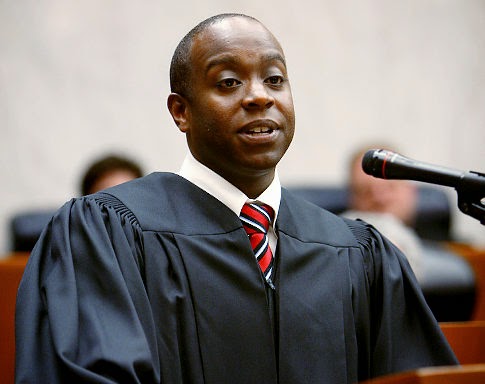



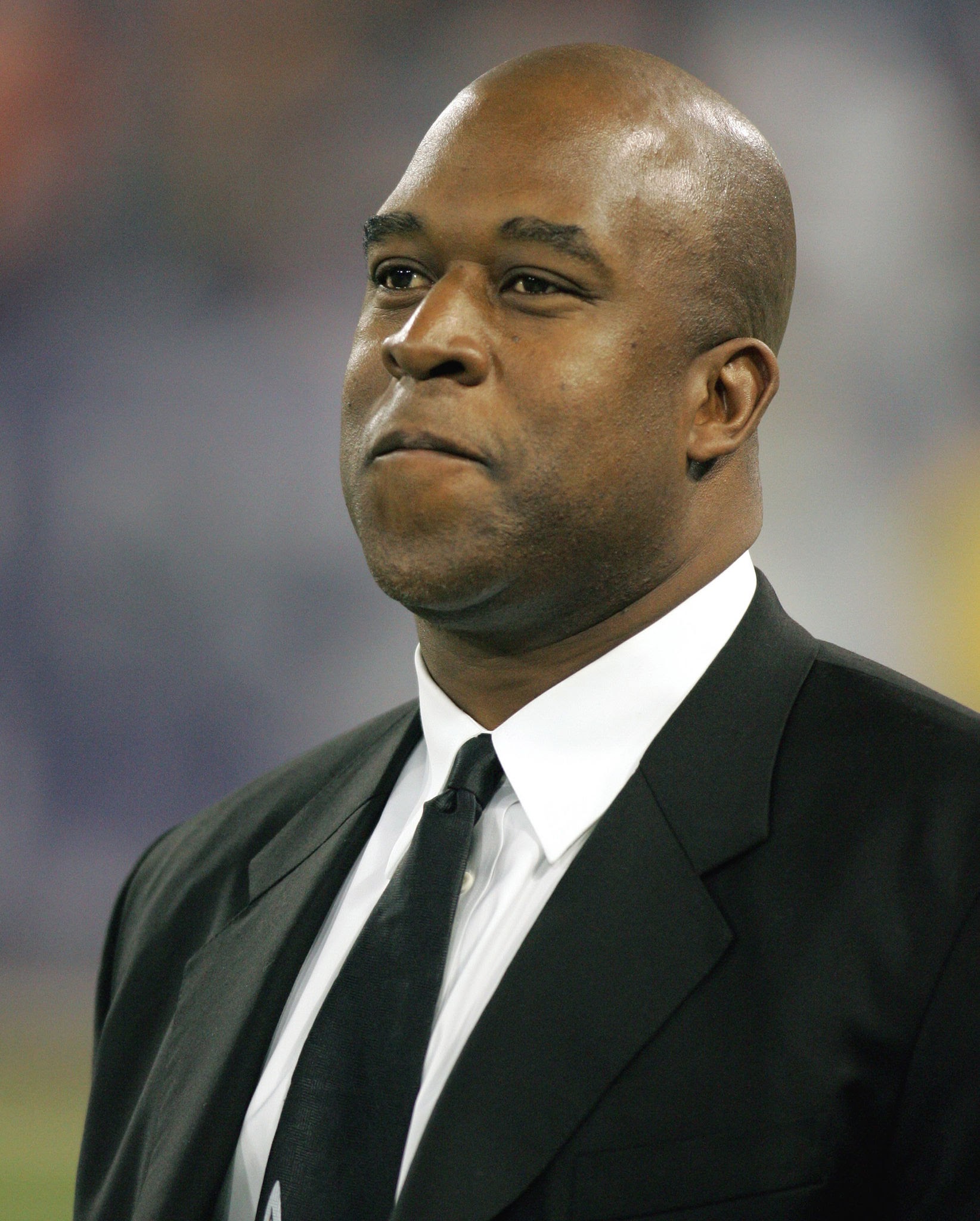
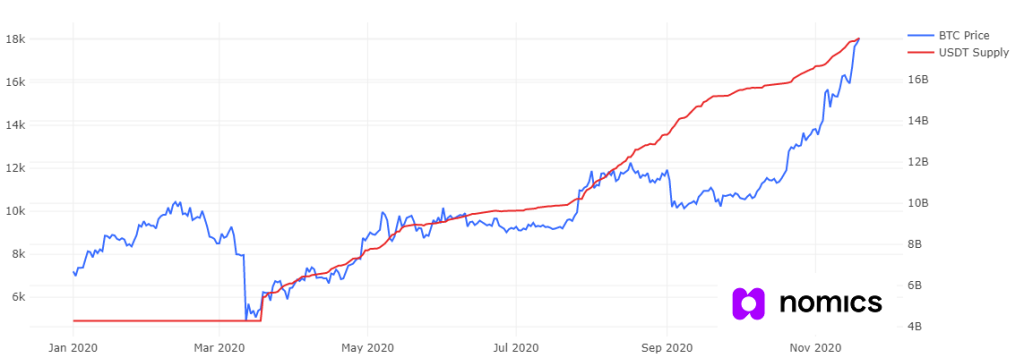



 It’s no fun when the money’s all gone. Two weeks after Polish crypto exchange Bitmarket shut down due to “lack of liquidity,” the
  Dmitri Vasilev, the ex CEO of defunct crypto trading platform Wex, was
  UNIS SED LEO, the full name of Bitfinex’s shiny new utility token, is in its second week of trading. The price started at around $1, but it’s already climbed to a high of $1.52, according to
 Basically, that equates to, you could get shares of iFinex (Bitfinex and Tether’s parent company) or LEO tokens (a new token Bitfinex recently created) or whatever is in the soup bowl that day. And you may end up with something that has as much real world value as horse manure—just not as good for the roses.
 Bitfinex will not be able to dip into Tether’s reserves for 90 days, except to maintain normal business activities, according to a New York judge. The crypto exchange must also “promptly” hand over documents to the New York Attorney General (NYAG).
 Bitfinex has a $851 million shortfall due to issues with Crypto Capital. How is it going to fix that? Here is an idea: Why not just print more money?
 Bitfinex was not happy with the New York Attorney General’s April 24
  It’s still not clear where all that money went. Bitfinex says the funds were “
 Fowler, 60, is a former minority owner of the Minnesota Vikings and the original
  According to an April 24


 Amy Castor