Bitcoin mining earns you half as many bitcoins every four years. The reward for mining a block of transactions started at 50 bitcoins in 2009. It dropped to 25 bitcoins in 2012, 12.5 in 2016, and 6.25 in 2020. Sometime in May 2024, the block reward will drop to 3.125 BTC.
“Halvening” is a silly bitcoin neologism for when the block reward — the amount of newly minted bitcoin a miner receives every time they mine a new block — halves.
To understand the “halvening,” you need to know about two things:
The practical problems for bitcoin miners when half their income suddenly vanishes;
A whole mythology of inane gibberish.
Mining on half the income
The halving is a serious problem for bitcoin miners.
We expect an apocalypse of miners. They will try to sell any bitcoins they’ve been holding in reserve just to survive.
The cost of the electricity to guess enough random numbers to mine one bitcoin is currently around $26,000. After May, the price of bitcoin will need to be at least double this ($52,000) for mining to break even. There’s also the costs of mining computers (“rigs”), facilities, and paying executives huge salaries.
If the price of bitcoin falls below $50,000, expect miners to just shut down their hardware. Some may keep mining if their electricity is super-cheap — such as the now-illegal bitcoin mines that still exist in China. Miners around the world will switch off and throw away older inefficient mining rigs.
As well as a reward of fresh new bitcoins, the successful miner of a block also gets all the transaction fees. We calculate that the transaction fee per block was around $4,000 on February 20. Miners can also make money from questionable deals fornot mining bitcoins.
The price of bitcoin may be pumpable with judiciously applied tethers — if the miners are on sufficiently good terms with the rest of the broader crypto casino. Previous halvings have been preceded by price pumps and lots of talk of bitcoin going to the moon. Expect to see “finance experts” making inane and baseless price predictions.
The real problem is that bitcoin mining is a terrible business to be in and gets worse every four years — which is why the actual businesses tend to structure themselves in ways that look more like a stock market scam.
There can only ever be 21 million bitcoin memes
Bitcoin discussion is promotional memes all the way down, and it always has been.
One big promotional meme is that there will only ever be 21 million bitcoins. That’s if the bitcoin software never changes. We don’t hear this meme so much anymore.
Satoshi Nakamoto wanted to issue new bitcoins but limit the total amount to 21 million to make it “scarce.” So instead of each block granting 50 BTC forever, the number would halve every four years. By 2140, the issuance would be zero and bitcoin miners would have to rely on transaction fees for their income.
Why would you want the total issuance of a general currency to be limited to a particular quantity? That comes from the political ideas behind bitcoin — a variant of Austrian economics that wants a rigid gold standard where the currency is firmly pegged to gold in a vault.
The world went off the gold standard in the 1930s, with the last vestiges disappearing in 1971, because it just didn’t work anymore. But there’s no bad or obsolete idea that someone won’t decide “What if that was actually a good idea?”
So the pre-bitcoin cypherpunks got high on completely incorrect conspiracy theories and spent a couple of decades trying to do a “gold” standard digitally.
Quite a lot of the deep weirdness of bitcoin is because it starts from this wrong economic premise and extrapolates from it in the face of all real-world evidence.
This is tremendous fun for Wall Street traders, who love volatility — and now they have cash-create ETFs and cash-settled derivatives of the alleged price of bitcoin, all using actual money under proper regulation. Plus, they don’t ever have to do anything so gauche as to touch a bitcoin.
Traders will create a complex thicket of derivative financial products on two flies crawling up a wall, and in bitcoin they have particularly demented flies to bet on.
The real dollars headed into the bitcoin system are interested in gambling on things that have less and less to do with actual bitcoins and the parameters of the blockchain.
Number go up
The dumbest promotional myth about the “halvening” is that the halvings cause the bitcoin price to go up! Because there’s less bitcoins now. With less bitcoins to fill the demand, there will be a shortage!
But there have always been large bitcoin holders with more than enough coins to flood the market, if only there were buyers. The supply of available bitcoins does not depend on mining output.
In the previous halving in 2020, the world was going nuts from COVID lockdown. Any supposed effects of the halving were just lost in the noise.
The current supply is a fresh 900 BTC per day in the form of block rewards. When 450 BTC of that disappears starting in May, existing whales already have a lot more coins they don’t want to just dump and risk crashing the price.
Miners were already holding coins while the price was going down through early 2022.
An even wilder myth is that the halving will come as a shock to the market, which can’t possibly have priced it in already.
While bitcoin is pretty solid evidence against strong versions of the efficient market hypothesis — that markets of any sort automatically incorporate all new information as soon as it exists — the crypto market isn’t so information-inefficient that it’ll be surprised by something that’s been scheduled since 2009.
All kinds of things can and do send the bitcoin price up and down. Most of them are shenanigans.
The various myths exist solely to convince fresh retail suckers — the most valuable bitcoin users — to get in quick while they can. The real price of bitcoin is what the next sucker will pay for it.
What if bitcoin did change, though?
The bitcoin code will never change!
Unless enough stakeholders want it to.
The last serious attempts to change the parameters of bitcoin were SegWit, which would allow a few more transactions in a block, and Bitcoin Cash, which would make blocks much larger and perhaps make the bitcoin blockchain a bit less hopelessly clogged. SegWit was eventually adopted, but Bitcoin Cash failed because they couldn’t talk the exchanges into giving them the “BTC” ticker.
None of these disputes were technical — it was all the politics of who got to make money.
As the bitcoin reward decreases, practical behind-the-scenes discussions of changing the code are becoming more prominent.
Miners need real dollars to pay their outrageous electricity bills. Power companies won’t accept tethers. The miners would very much like the issuance of bitcoin to change so that it no longer halves.
The reward per block is defined by two lines of code. A simple change and the reward could just as easily be thirty, sixty, or a hundred bitcoins per block.
Coiners will tell you that the code won’t change because it’s against the miner’s self-interest or the community would reject such a change. There are indeed those who would reject it — but their hold has been weakening since bitcoin finally failed hard as currency around 2017.
Bitcoin started in libertarianism. But approximately 100% of current crypto users are in it for the money. Crypto market participants subscribe to the bitcoin ideology only as long as it works for marketing.
Like conservatives and reactionaries in the wider world who don’t understand markets and condemn doing things that get you customers as “woke capitalism,” ideological bitcoiners will loudly decry as corrupt and unacceptable the actions of the actual existing crypto markets full of people who are in it for the money. Because they’re doing capitalism wrong, apparently.
So the biggest threat to the bitcoin ideology is a sufficient threat to the flow of cash.
Nobody cares about the blockchain
The point of cryptocurrency is to create financial instruments that are obscured from regulators. The crypto markets are happy to trade centrally controlled tokens like XRP or most defi tokens on this basis.
When the bitcoin blockchain lost a lot of hashpower in the Bitcoin Cash wars in late 2017, the time between blocks could be over an hour. The crypto world barely noticed — because all the action was market traders on the exchanges in a bubble.
We would like to wish the bitcoin miners a very pleasant go broke and vanish. But we expect there will still be enough mining to keep the blockchain moving, even if very slowly.
The “halvening” only matters as a publicity stunt for bitcoin — a reason to get bitcoin into the headlines that isn’t Sam Bankman-Fried going to jail.
Our latest crypto collapse update is on David’s blog.
In this issue, FTX creditors will be getting back 100% of what they had as of the precise moment they lost it. Tether claims its “loans” — issuing money out of thin air — are no longer a problem as they’re making tons of interest from the thin air. Larry David feels silly after doing that FTX advertisement, especially after he took a salary in crypto, and ETFs may not be the holy grail crypto hoped for, but they’re a great way to dump your GBTC.
If you like this, share this, and also, please take a moment to support our work, and become a patron at the $5, $10, or even the very generous $100 level — links in story!
Q: An update on the carbon footprint of the crypto industry for 2023, if this hasn’t been done by someone else already? Thanks [Thomas Endgame on Twitter]
The news is still dismal. The bitcoin network’s annual carbon footprint is a shocking 76.79 million tons of carbon dioxide, comparable to the entire country of Oman, according to Digiconomist. [Digiconomist, archive]
In terms of energy, bitcoin uses as much electricity as the country of Ukraine — 137.68 terawatt-hours annually. Energy consumption was highest in the first half of 2022 — 204 terawatt-hours per year — but started to go down in July, after the crypto collapse.
The network currently produces 23.75 kilotons of e-waste per year, comparable to the entire Netherlands, and every bitcoin transaction uses enough water to fill a swimming pool.
Q: Who’ll be left holding bags when Tether collapses? [Julius Cobbett on Twitter]
Tethers (USDT) function as substitute dollars on offshore crypto exchanges that have no access to US dollar banking.
The biggest holders of tethers are arbitrageurs, such as Cumberland, who pass tethers along to secondary users in exchange for bitcoins and other crypto. [CoinTelegraph, 2020; Protos]
If all tethers were suddenly switched off tomorrow, that would be nearly 100 billion “dollars” in liquidity instantly sucked out of the market.
Any secondary users stuck holding tether would find their virtual dollars suddenly worthless. Arbitrageurs would have nothing to buy and sell bitcoin with on offshore exchanges — they would have to switch over to a different stablecoin — and the price of bitcoin would likely take a serious hit.
We would expect to see a large number of bitcoin holders trying to dump their holdings on actual-dollar exchanges like Coinbase in a mad rush to get out of the market. It might look like a bunch of mice trying to squeeze out of a tiny hole.
Q. We all know crypto is garbage, why does YAHOO finance continue to have the BTC ticker and other crypto related garbage up? I’d have thought by now it would be gone. [Barsoapguy on Twitter]
Sadly, with bitcoin ETFs and so on still all over the finance press, it’s a relevant number to put up. Even if they just pull the number from whatever CoinMarketCap says.
Q. In the bankruptcy of FTX, about 7B of the $8.7B said to be “lost” has been found, and with Crypto making a comeback all creditors may become whole or better. But SBF rots in prison for decades? And BK firms make over a billion in fees? [Bill Hochberg on Twitter]
There are two misconceptions here — one is that John Jay Ray and his team have found all the money and everything will be fine. The other is that Ray and his lawyers are gouging the creditors and nobody can stop them.
FTX got itself into trouble because it had stolen the customer assets, then inflated its balance sheets with worthless FTT tokens — its own illiquid supermarket loyalty card points. The FTT made up a third of its balance sheet. When FTX filed for bankruptcy in November 2022, it had a shortfall of $8.7 billion.
In August 2023, Ray estimated his team had recovered $7 billion — but that included spurious dollar values for trash crypto assets. A lot of it will be FTT and other worthless tokens that aren’t realistically convertible to cash in those quantities.
In October 2023, FTX said it would refund up to 90% of “distributable assets” to creditors. That’s 90% of the amount of funds that FTX was able to recover — not 90% of the amount owed to creditors. [FTX]
Bitcoin has gone up in price since FTX fell over. The price of bitcoin was $17,000 when FTX filed for bankruptcy. Now it’s over $40,000. If FTX held onto its crypto holdings, instead of converting them into cash as soon as possible, they might have made some money. But bankruptcy lawyers typically don’t gamble on volatile markets.
Bankruptcy professionals are super expensive. Ray’s team has so far cost about $200 million. That’s a lot of money, and many people questioned this — but even the independent fee examiner said, yep, that looked about right for the ridiculous mess Ray had to sort out here.
An appeals court has ordered the appointment of an independent examiner reporting to the US Trustee, paid for out of the bankruptcy estate, which will likely cost another $100 million or so.
Q: Eth staking and destaking? It was not possible to unstake at launch, does it work now? Are stakers happy? How scammy is the whole thing? There was some stuff about OFAC compliance for stakers too? I don’t know? I might use an explainer? [Laventeot on Twitter]
Ethereum proof of stake uses validators rather than miners like bitcoin does. Every validator has a chance at winning this moment’s ETH. If your block is the winner, you get the block reward, transaction fees, and all the MEV you can steal.
You can set up a validator at the cost of staking 32 ETH. When Ethereum moved to proof of stake in September 2022, this 32 ETH couldn’t be unstaked. But since Ethereum’s Shanghai upgrade in April 2023, it is now possible to unstake your staked ETH.
Unstaking has a queueing mechanism to avoid there being too much churn. So when there’s a big dump — such as when Celsius Network destaked 30,000 ETH recently to hand back to their bankruptcy creditors — it can take days or even weeks to process. [Nansen]
The staking process seems to work as advertised and the stakers are pleased with it.
The process closely resembles an unregistered security in the US — the Ethereum Foundation (incorporated in Switzerland) promotes that you put in your ETH and you get a return on it from the efforts of others.
Anyone moving money — or, in FinCEN’s terms, “value that substitutes for currency,” including “convertible virtual currencies” — as a business in the US is required to comply with sanctions law. This is usually assumed to mean not validating transactions for sanctioned blockchain addresses listed by OFAC. US-based validators would be very foolish to flout this.
OFAC compliance in transaction processing doesn’t directly relate to the economics of staking in itself — US bitcoin miners would similarly be liable under law for processing transactions for sanctioned entities, even if OFAC hasn’t called them up yet.
Q: maybe a check-in on the enterprise blockchain pitch decks? is the same dead horse still being beaten? [Stephen Farrugia on Twitter]
Enterprise blockchain has gone back into hibernation. Corporate interest in non-cryptocurrency blockchain goes up and down with the price of bitcoin — lots of interest in 2017 and 2018, almost none in 2019 and 2020, and a sudden burst of interest in 2021 as the number went up.
The problem with enterprise blockchain is that it’s a completely useless idea. A blockchain doesn’t actually work any better than using a conventional database in any situation where you have a trusted entity who’s responsible for the system. If you’re a business, that’ll be yourself. Just use Postgres.
The main remaining interest in enterprise blockchain is inside banks. We’ve had many reports of bank fintech research units infested with coiners trying to do something — anything — that they can say is “blockchain.” Société Générale’s completely useless euro stablecoin is one recent example.
Q. Something on the way that Bitcoin Magazine and BitMEX bought commercial places on the Peregrine Mission One so they could say they’d “gone to the moon” … and the spacecraft is going to miss the moon. [BiFuriosa on Bluesky]
Private companies have of late been offering to send personal items — cremated remains, time capsules, and even crypto — to the moon. Astrobotic, which owns Peregrin-1, is one of them.
In May, BitMEX and Bitcoin Magazine announced they were going to send a physical bitcoin to the moon via Astrobotic — that is, a metal medallion with a bitcoin private key engraved onto it. They declared that this would mark a “defining moment for bitcoin as we explore the possibilities of Bitcoin beyond planet Earth.” [BitMEX, archive]
Peregrin-1 made it into space earlier this month — but it never managed to land on the moon. So when it burned up on re-entry to Earth’s atmosphere, everything onboard burned up with it, including the time capsules, the ashes of more than 200 people, and the bitcoin. [Gizmodo]
Dogecoin fans had earlier funded a similar effort to send a physical dogecoin to the moon in 2015, also via Astrobotic. As of 2023, they were still trying to get it sent up. If the physical dogecoin had been onboard, it would have met the same fate. [Twitter, archive]
Sadly, even the moon hates crypto.
Q. Why are people still falling for this nonsense? [Peter Nimmo on Mastodon]
Dude, they can get rich for free! Maybe.
Thankfully, fewer people are falling for the nonsense. Retail trade is one-eighth of what it was in the 2021 bubble. Most of the dollars boosting the price of bitcoin since 2017 have been fake.
By the end of 2017, a billion USDT was sloshing around in the crypto markets; today in 2024, we’re coming up to 100 billion USDT. Bitcoin’s price is largely manipulated.
Crypto media — CoinDesk, The Block, Decrypt, and others — play a major role in promoting the nonsense. These outlets, owned and/or financed by crypto companies, are the public relations machines for the crypto industry. The finance press treats these sites as specialist trade press rather than fundamentally a promotional mechanism.
Crypto has also put big money into lobbying efforts, so we see senators like Cynthia Lummis, Kirsten Gillibrand, and Rand Paul shamefully repeating the propaganda.
Crypto skeptics are a smaller group who try to warn people of the dangers of investing in crypto. So it’s important to send money to us. Instead of bitcoins, we spend it on useful things like wine to get through all this guff.
Q. Once Crypto blows over what will we salt our popcorn with? [EamonnMR on Mastodon]
We don’t expect crypto to ever disappear completely. We do expect the number to eventually go down to the point where fewer people pay attention.
Meme stocks blew out even harder than crypto did. The remaining devotees are like QAnon for finance, posting to Reddit with their theories of how much they’ll surely get for their deactivated BBBY shares when the Mother Of All Short Squeezes finally descends.
Now that the well of dumb crypto money has dried up, venture capitalists are pivoting to AI as the next big thing. The tech is running out of steam, though. But the power consumption is likely to be even worse than bitcoin mining by 2027, and the AI grifters are using the same excuses for it as the bitcoin grifters. [Digiconomist]
Suckers are eternal. As long as money exists, fraud and get-rich schemes will be with us. And we’ll have something to write about.
Our latest roundup of everything that’s falling over is on David’s site. [David Gerard]
In this edition:
SEC wins a lot of their claims against Terraform
Coinbase motion to dismiss hearing, with yet more Beanie Babies. (“funding my new startup by selling Stock Babies which are an asset just like a parcel of land, the value of which may reasonably fluctuate.” — Andrew Molitor)
Help our work: if you liked this post, please tell just one other person. It really helps!
You can also send money to our one-way ETFs! Here’s Amy’s Patreon and here’s David’s. For casual tips, here’s Amy’s Ko-Fi and here’s David’s.
Boy, those ETFs were the juice bitcoin really needed, eh?
The SEC approved 11 bitcoin spot ETFs on Wednesday, January 10, with media widely reporting what a boon this would be for the coiners. Surely this would lure piles of fresh dollars into bitcoin!
Not quite. The bitcoin price held around $46,000 — but just for long enough for the whales to start cashing out.
What the crypto world needs to understand is that bitcoin ETFs are not bitcoins. They’re a traditional finance product with bitcoin flavoring.
Except for the risk — that bit is completely bitcoin.
Number go down
The first big post-ETF price drop came on Friday, January 12. Bitcoin slipped from $46,000 to $43,500 in two hours — only one hour after the day’s printing of a billion tethers was released. A few hours after that, another dump took the price from $43,500 to $41,000.
The bitcoin market is fake and in tethers. The retail securities market is real and in actual dollars. You can’t pump bitcoin ETFs with tethers.
After years of being severely discounted from the price of the bitcoins in the fund, Grayscale GBTC finally reached net asset value. This turned out to be not so great — it looks like long-frustrated GBTC holders are finally dumping now that they can. [CoinDesk; Bloomberg, archive]
Coinbase (Nasdaq: COIN) stock went down as well. It was up as high as $186 at the end of December. It dropped to $130.78 on January 12.
ETFs have put bitcoin on steroids! Asthmatic and with shrunken balls.
Bitcoins: not so great
Bitcoins are still an awful investment for ordinary people who aren’t true believers in Satoshi and just want to grow their dollars.
The ETF S-1 filings go into considerable detail on the risks — none of which should be news to anyone here.
The main risk the ETF trusts see is that the base asset is still a completely terrible investment. Crypto is insanely volatile. A pile of crypto companies went broke from being run by crooks — the filings go into some detail on this. Everyone hates bitcoin miners. The regulators, from the White House down, increasingly just despise everything about crypto. And very few people like bitcoin anyway.
Securities broker Vanguard thinks the bitcoin ETFs are such trash that they’re not only not offering these spot bitcoin ETFs — they’re withdrawing the crypto futures ETFs they presently offer. [Axios]
What happens if the ETF bitcoins are stolen?
Unlike a bitcoin futures ETF, a spot ETF is based on actual bitcoins — and these have to be stored somewhere.
Most of it, including $29 billion face value of GBTC bitcoin, is stored by Coinbase Custody. VanEck is storing their ETF coins at Gemini. Fidelity is storing their ETF coins at their own custody subsidiary.
So what happens if a hacker gets into the digital fortress and takes all the bitcoins?
In short: too bad. Sorry, your money is gone!
Coinbase Custody advised BlackRock that it has insurance covering up to $320 million losses of custodied crypto — but that’s for all its customers’ $144 billion (face value) of cryptos in custody. That’s a whole 0.2% coverage. [SEC]
The ETF trusts themselves do not have FDIC or Securities Investor Protection Corporation (SIPC) insurance.
The ETF trusts specifically disclaim liability for lost backing assets. Valkyrie, for example, says: “Shareholders’ recourse against the Trust, Trustee, Custodian and Sponsor under New York law governing their custody operations is limited.” [SEC]
Investors would likely sue anyway. BlackRock and Fidelity could cover such a loss, though it would sting. Grayscale would be utterly unable to cover it.
If Coinbase were to go bankrupt, it’s not clear legally if crypto stored in Coinbase Custody would belong to the individual customers or would be thrown into the bankruptcy estate!
The custodian just losing all the bitcoins is not a trivial risk — two crypto custodians, Prime Trust and Fortress, went bankrupt in 2023 just from losing customer coins.
We spoke to Frank Paiano, who teaches finance and investing at Southwestern Community College, about what would happen if a bitcoin ETF’s backing assets vanished. [Frank Paiano]
He thinks that customers “will be fooled into thinking” that the ETF assets are protected, even though they absolutely are not. “That is mostly why Fidelity has set up their own trustee. I would guess that companies such as BlackRock would do the same.” (BlackRock is so far just using Coinbase.)
Loss of ETF-backing assets happens quite a lot, said Paiano. “A simple Internet search for ‘gold investments stolen’ yields several examples. Then there are the age-old anecdotes of people being duped into buying lead painted or plated with gold.”
Paiano thinks bitcoin ETFs are profoundly unwise investments: “prudent, long-term oriented investors should stay far away from these abominations”— but they’ll find customers.
“If there are foolish, greedy individuals willing to part with their hard-earned money, there will be scoundrels happy to oblige them.”
Other bitcoin ETF fallout
The day before the SEC announced its approval of 11 spot bitcoin ETFs, the official @SECGov Twitter posted a fake notice saying a bitcoin ETF was approved. SEC Chair Gary Gensler issued a statement on the fake tweet, saying that an unauthorized party got hold of the phone number connected to the account but didn’t get access to any SEC internal systems. [SEC]
What happens next?
The new narrative we’ve seen is that the real bitcoin pump is in 90 days when financial advisors are finally ready to push bitcoin ETFs on their customers, for some reason. Probably the halvening, or sunspots maybe.
We don’t expect the number to go up just from bitcoin ETFs existing — anyone who wanted bitcoins could already buy them, and “anyone” numbers one-eighth of what it did in the recent bubble.
We do expect downward pressure on the bitcoin price to continue from the GBTC holders who can finally cash out near par.
Tether pumps only work if nobody tries to cash out into the pumped-up price. Unfortunately, that only works as long as nobody wants real dollars. It turns out they do.
With these ETFs, bitcoin is the dog that caught the parked car.
Media stardom
David was quoted by Cointelegraph on bitcoin ETFs. A bitcoin ETF is a terrible idea, but we don’t think the threat model includes the issuers stealing the bitcoins. [Cointelegraph; Cointelegraph; Cointelegraph]
David spoke to Davar about bitcoin ETFs and our friends at Tether. (“Basket fund” is the local term for “ETF.”) [Davar, in Hebrew, Google translate]
David went on Logan Moody’s podcast The Contrarian just before the ETFs were approved to talk about the state of crypto as of early 2024. [YouTube]
As predicted, the SEC today approved several spot bitcoin ETFs — Grayscale GBTC, Bitwise, Hashdex, BlackRock iShares, Valkyrie, ARK 21Shares, Invesco Galaxy, VanEck, WisdomTree, Fidelity Wise Origin, and Franklin.
Fees are cut throat, some less than a quarter of a percent. These companies can run the ETFs as loss leaders for a while, but eventually they’ll have to raise the fees or quit.
Today’s post is over on David’s blog. [DavidGerard]
Q: I keep wondering what’s keeping the circus alive, given that the retail dollars are practically gone, and the last remaining on/off-ramps are all but down the drain. [Tomalak on Bluesky]
The circus is fed by dollars — real and fake — and its product is hopium, the unfaltering belief that number will always go up. The hopium runs on narratives, such as the current story that a bitcoin ETF will result in a magical influx of fresh dollars.
In crypto, the retail dollars have largely gone home — but too many people have large piles of crypto accounted as dollars to let the number go down. So they deploy fake dollars to keep the crypto flowing.
There are currently 93 billion dubiously-backed tethers sloshing around the crypto markets. We expect that to go over 100 billion as we get closer to the bitcoin mining reward halving in April.
The circus is advertised by the crypto media, which functions as PR outlets for the space. The CoinDesk live-wire feed on any given day is about half hopium, for instance. There are no respectable media outlets in a crypto winter.
Q: Why can’t or wouldn’t the average investor make money in crypto? We criticize it, and rightfully so, but why should the person looking to make a profit care? [King Schultz on Twitter]
There is no source of dollars other than fresh retail investors. Old investors can only be paid out with money from new investors.
Crypto isn’t technically a Ponzi scheme — it just works like one. So investing in crypto will always be a slightly negative-sum game.
Functionally, crypto is a single unified casino, run by a very small number of people, with no regulation. Binance is the tables, Coinbase is the cashier window. The flow of cash is from retail suckers to very few rich guys at the top.
There are many, many complicated mechanisms in the middle, and they’re fascinating to look at and describe and watch in action. But the complex mechanisms don’t change what’s happening here — money flows from lots of suckers to a few scammers.
Some people make money in crypto, just like some people make money in Las Vegas — but gambling in Vegas isn’t an investment scheme either. And the house always wins.
You can make money in crypto if you’re a better shark than all the other sharks in the shark pool, who built the pool. It can be done! Good luck!
Q: be interested in reading about money laundering [Broseph on Bluesky]
Money laundering is when you try to turn the proceeds of crime into money that doesn’t appear to be the proceeds of crime. Laundering money is also a specific crime in itself.
With money going electronic, it’s harder to obscure the origins of ill-gotten gains and avoid unwanted attention from banks and the authorities. Many crooks have attempted to launder money by using crypto as the obfuscatory step.
Heather “Razzlekhan” Morgan and Ilya Lichtenstein tried laundering the bitcoins from the Bitfinex hack through the Alphabay darknet market. This would have completely covered their trail! Except that the police had pwned Alphabay by then, and Lichtenstein’s transactions were all right there for the cops to track him. Whoops.
We also highly recommend Dan Davies’s fabulous book on fraud, Lying for Money.
Q: Not so much baffled but curious as to how law enforcement can and does identify people using blockchain. Also, do some coins not have a public blockchain? [Bob Morris on Twitter]
Cryptocurrencies run on publicly available blockchains. In theory, you can trace the history of every transaction on a blockchain right back to when it started.
The hard part for authorities is linking someone’s real-world identity to a specific blockchain address. Achieving this was the key to busting Heather Morgan and Ilya Lichtenstein, for instance. The hardest part for crooks is cashing out successfully without being busted.
The trail can be difficult to trace, especially if the crook has put effort into obfuscation — e.g., running transactions through a mixer such as Tornado Cash. But specialists can get good at tracing blockchain transactions and several companies sell this as a service.
Privacy coins like Monero and ZCash try to obfuscate the traceability of transactions on the blockchain itself. But users often give themselves away by other channels — e.g., transaction volumes elsewhere that coincidentally correspond to amounts of Monero sent to a darknet market.
Even if you can protect yourself cryptographically, one error can leave your backside hanging out — and crypto users are really bad at operational security.
Q: nfts aren’t really relevant these days but I’ve never been clear on what ‘mint events’ are and how they relate to the icos. Are users generating new nfts paid for by using the coins they previously bought? [Robert Kambic on Bluesky]
Initial coin offerings (ICOs) were huge in 2017 and 2018 — but the SEC came down hard on them because they were pretty much all unregistered offerings of penny stocks.
Since that time, crypto has tried to come up with other ideas for doing unregistered offerings while making them look at least a little less illegal. There were SAFTs, airdrops, and now NFT mint events. These are all about creating fresh tokens out of thin air and promoting them as an investment in a common enterprise that will make a profit from the efforts of others.
A “mint event” is when you buy into an NFT collection early — when it first mints — hoping the value will increase astronomically over time.
But these are not securities, no, no, no. Yuga Labs wasn’t selling you shares in a company — they were selling you ape cartoons! You weren’t getting dividends, you were getting Mutant Apes, dog NFTs, and ApeCoins! You’re not investing in a speculative startup, you’re buying art!
The SEC has so far sued one NFT company, Impact Theory, after it raised $30 million through NFT sales. The SEC said the NFTs were promoted as investment contracts and not registered. [Complaint, PDF]
We didn’t say too much about NFTs in our 2024 predictions, but we expect that the SEC will go after more NFT projects this year, as they clear their backlog of violators.
Q. I’d like a definitive explanation on the amount of apes you can feed with a single slurp juice. [Etienne Beureux on Twitter]
Slurp juices were popularized in a tweet about Astro Apes, a Bored Apes knockoff, which also featured tokens called “slurp juices” that you could apply to your Astro Ape tokens to generate more Astro Ape tokens and get rich for free.
The tweet was posted on May 4, 2022 — just a few days before Terra-Luna exploded and popped the 2021-2022 crypto bubble.
Also, the guy who tweeted about slurp juices is a neo-Nazi. Welcome to crypto. [BuzzFeed News]
Q: I’ve often wondered why new languages like Solidity were necessary for smart contracts. [David John Smailes on Twitter]
The Ethereum team originally just wanted to use JavaScript, but it didn’t quite do what they needed in terms of functionality and data types — so they created Solidity, a new language based on JavaScript.
A blockchain is an extremely harsh programming environment. It’s hard or impossible to modify your code once deployed — you must get it right the first time. It’s about money, so every attacker will be going after your code.
In situations where programming errors have drastic consequences, you usually try to make it harder to shoot yourself in the foot — functional programming languages, formal methods, mathematical verification of the code, not using a full computer language (avoid Turing completeness), and so on.
Solidity ignores all of that — and the world’s most mediocre JavaScript programmers moved sideways to write the world’s most mediocre smart contracts and cause everyone to lose all their money, repeatedly. Smart contracts are best modeled as a piñata, where you whack it in the right spot and a pile of crypto falls out.
Other blockchains saw Ethereum-based projects making a ton of money (or crypto) and wanted that for themselves — so they tend to just use the Ethereum Virtual Machine so they can run buggy Solidity code too.
There are other, somewhat better, smart contract languages — but Solidity is overwhelmingly the language of choice, which keeps the comedy gold flowing nicely.
Q. Miner extracted value? [Cathal Mooney on Twitter]
Miners — or now validators — supposedly make money from block rewards and transaction fees.
There is a third way for validators to make money. Smart contract execution depends on the order of transactions within a block. Since the validator controls what transactions they can put in a block and how they order those transactions, they can front run the traders — the validator sees an unprocessed transaction, creates their own transaction ahead of that one and takes some or all of the advantage that the trader saw.
The term “Miner Extractable Value” was coined in the paper “Flash Boys 2.0: Frontrunning in Decentralized Exchanges, Miner Extractable Value, and Consensus Instability” in 2020. [IEEE Xplore]
Front-running is largely illegal in real finance. But since the Ethereum Foundation couldn’t stop their validators from front-running their users, they decided to claim it was a feature, which they have renamed “maximal extractable value.” [Ethereum Foundation]
Q: What do you think will eventually happen to all the Satoshi Nakamoto Bitcoin wallets? [Steve Alarm on Twitter]
Quite likely nothing. We suspect the keys, and thus the million bitcoins, are simply lost. Nobody has heard anything verifiably from Satoshi since April 13, 2011, when he sent a final email to bitcoin developer Mike Hearn. [Plan99]
If the Satoshi coins ever did move, there would be a lot of headlines. But we don’t think the crypto trading market would be affected much — the market is so thin, there are multiple large holders who could crash the market any time they felt like it, and the market is already largely fake. We think everyone will just pretend nothing happened and everything is fine.
Q. Did Do Kwon actually sell all his BTC to prop up Luna? [Saku Kamiyūbetsu on Twitter]
Terra (UST) was an algorithmic dollar stablecoin and luna was its free-floating twin. Terraform Labs ran the Anchor Protocol, which promised 20% interest on staked UST. At peak, there were 18 billion UST in circulation.
It turned out there was money to be made in crashing UST — so in May 2022, someone did. There is a strong rumor (and DOJ investigations) that it was Alameda. Other parties who collapsed because of Terra-Luna left the gaping hole in Alameda that eventually killed FTX. If Alameda fired the first shot directly into their own leg, that would be extremely crypto, as well as extremely funny.
UST was crashing, so Terraform Labs tried to prop up Terra-Luna. The bitcoins came from the Luna Foundation Guard, which promised to deploy $1.5 billion worth of bitcoin to defend UST. This didn’t work. [Twitter, archive]
We haven’t found a smoking gun that Luna actually spent the bitcoins on buying up UST or luna. In 2023, the SEC charged Terraform Labs and Do Kwon and said that Kwon and Terraform took over 10,000 BTC out of Luna Foundation Guard in May 2022 and converted at least $100 million into cash.
Q: I’m baffled at the lack of interest from crypto critics that the DoJ will not be pursuing additional charges against SBF. Specifically, the charges that could make some politicians very uncomfortable. [Amer Icon on Twitter]
The issue was specifically whether to further prosecute Sam Bankman-Fried. The prosecution letter to the judge quite clearly explains their reasons why a second case wouldn’t do anything useful in this regard. [Letter, PDF]
The evidence that Sam was the guy who made these bribes was presented in the case that just concluded and will be considered when he’s sentenced in March — they don’t need a second trial to nail those facts down.
Hypothetical other evidence that might have come to light about other parties wasn’t a factor in considering what to do about Sam Bankman-Fried. It’s quite reasonable to want to get those guys, but you will probably need a more direct method than a side factor in an additional case against a guy who is already likely going to jail forever.
Q. snarkier memes would be worthy [Chris Doerfler on Twitter]
“Esto no puede ser tan estúpido, debes estar explicándolo mal.”
We did a follow-up on this story. Part 2, though not labeled as such, is here!
Image: Amy Landers and Dear David reading today’s Web 3 Is Going Just Great
We shot our mouths off a year ago, and again in March 2023, and made way too many testable predictions for a good psychic. How did we do?
David and I look back on 2023 to see what we got right and what we missed and make our predictions for the New Year. Hint: more criming and more regulatory crackdowns.
Tether’s been under some regulatory heat after the reports of how useful USDT is for financing terrorists and other sanctioned entities. Even Cynthia Lummis, the crypto-pumping senator from Wyoming, loudly declared that Tether had to be dealt with.
The US government isn’t entirely happy with Tether’s financial shenanigans. But they’re really unhappy about sanctions violations, especially with what’s going on now in the Middle East.
So Tether has announced that it will now be freezing OFAC-sanctioned blockchain addresses — and it’s onboarded the US Secret Service and FBI onto Tether! [Tether, archive; letter, PDF, archive]
Tether doesn’t do anything voluntarily. We expect they were told that they would allow this or an extremely large hammer would come down upon them.
There’s more to Tether’s criminal use case than sanctions violation. The most jaw-dropping chapter in Zeke Faux’s excellent book Number Go Up (US, UK) is when he traced a direct message scammer to a human trafficking operation in Cambodia that favored tethers as its currency. South China Morning Post follows up on this with an in-depth report on how Cambodian organized crime uses tethers. [SCMP]
Credit rating firm S&P Global rated eight stablecoins for risk. Tether and Dai got the lowest marks. S&P notes in particular the lack of information on Tether’s reserves. [press release; S&P; Tether report, PDF]
At least some of the claimed Tether backing in treasuries is held in the US with Cantor Fitzgerald — exposing Tether to US touchability. This has been known since February 2023, and was proudly confirmed in December 2023 by Cantor CEO Howard Lutnick: “I hold their Treasuries, and they have a lot of Treasuries. I’m a big fan of Tethers.” [Ledger Insights; Forbes]
Cointelegraph had a fascinating story on a company called Exved using tethers for cross-border payments from Russia! Then they deleted it, for some reason. Exved was founded by Sergey Mendeleev, who also founded the OFAC-sanctioned crypto exchange Garantex, which was kicked out of Estonia. Exved is working with InDeFi Bank, another Mendeleev venture. We’re not so sure the new OFAC-compliant Tether will be 100% on board with this. [Cointelegraph, archive; Telegram, in Russian; Protos]
SEC answers Coinbase’s prayers: “No.”
In July 2022 — just after crypto crashed — Coinbase wrote to the SEC proposing new regulatory carveouts for crypto.
The SEC took its sweet time responding. Eventually, Coinbase sued in April 2023 with a writ of mandamus, demanding a bureaucratic response. The court told the SEC to get on with it, or at least supply a date by which it would answer.
Finally, the SEC has responded: “the Commission concludes that the requested rulemaking is currently unwarranted and denies the Petition.” The SEC thinks existing securities regulations cover crypto securities just fine, and there’s no reason for special rules for Coinbase. [SEC rejection, PDF; Coinbase letter to court, PDF; Gensler statement]
Coinbase general counsel Paul Grewal welcomed the opportunity to challenge Coinbase’s dumb and bad proposal being turned down. [Twitter, archive]
4 (continued)
Binance founder and former CEO Changpeng Zhao will not be returning home to Dubai anytime soon. US District Judge Richard Jones ordered CZ to remain in the US until his sentencing on February 24. He can travel within the US, but he cannot leave. [Order, PDF]
After being busted hard, Binance is still behaving weird. At the FT Crypto and Digital Assets Summit in London, the exchange’s new CEO Richard Teng refused to answer even basic questions, like where Binance is headquartered and whether it’s had an audit. “Why do you feel so entitled to those answers?” Teng said when pushed. “Is there a need for us to share all of this information publicly? No.” [FT]
CZ and Binance have been trying to dismiss the SEC charges against them. This is mostly loud table pounding, wherein Binance claims that what the SEC argued were securities are not really securities. [Doc 190, PDF, Doc 191, PDF]
France was the first country in Europe to grant Binance regulatory approval. State-endorsed blockchain courses for the unemployed and NFT diplomas helped push the country’s most vulnerable into crypto. Since the collapse of FTX and Binance’s $4.3 billion fine for money laundering, French President Emmanuel Macron’s relationship with CZ has fallen under scrutiny. [FT, archive]
London law firm Slateford helped to cover up Binance’s crimes and attempted to intimidate media outlet Disruption Banking from writing about Binance’s sloppy compliance hiring practices. (Disruption Banking told Slateford to get knotted and didn’t hear from them again.) [Disruption Banking]
Binance is finally removing all trading pairs against Great British pounds. [Binance, archive]
FTX: The IRS wants its money
FTX filed a reorganization plan in mid-December. The plan is 80 pages and the disclosure statement is 138 pages, but there’s a notable lack of detail on what happens next. None of the talk of starting a new exchange has made it into the current plan — this appears to just be a liquidation.
The plan treats crypto claims as their value in cash at the time of the bankruptcy filing on November 11, 2022, back when bitcoin was at $17,000 — less than half of what it is now.
The IRS is demanding $24 billion in unpaid taxes from the corpse of FTX. John Jay Ray wants to know how the IRS came up with that ludicrous number — the exchange never earned anything near those amounts. The IRS originally wanted $44 billion, but brought the number down. Judge John Dorsey has told the IRS to show its working. [Doc 4588, PDF; Bloomberg, paywalled]
Three Arrows Capital
Three Arrows Capital was the overleveraged crypto hedge fund that blew up in 2022 and took out everyone else in crypto who hadn’t already been wrecked by Terra-Luna. After months of dodging culpability, co-founder Zhu Su was finally arrested in Singapore in September as he was trying to skip the country.
Zhu was released from jail and appeared before the Singapore High Court on December 13, where he had to explain to lawyers for the liquidator Teneo what happened when 3AC went broke. The information will be shared with creditors. [Bloomberg, archive]
A British Virgin Islands court froze $1.1 billion in assets of Zhu and his co-founder Kyle Davies and Davies’ wife Kelly Chen. [The Block]
Teneo expects a 46% recovery rate for 3AC creditors on $2.7 billion in claims. [The Block]
Crypto media in the new Ice Age
Crypto news outlet Decrypt has merged with “decentralized media firm” Rug Radio. No, we’d never heard of them either. The two firms will form a new holding company chaired by Josh Quittner. Decrypt had spun out from Consensys in May 2022, just before everything crashed. It’s reportedly been profitable since then — though crypto sites always say that. [Axios; Axios, 2022]
Forkast News in Hong Kong has merged with NFT data provider CryptoSlam and fired most of its staff. Forkast was founded in 2018 by former Bloomberg News anchor Angie Lau; it shut down editorial operations on November 30. [The Block]
Crypto news outlets ran seriously low on cash in 2019 and 2020, just before the crypto bubble, and they’re struggling again. We expect more merges and buyouts of top-tier (such as that is in crypto) and mid-tier crypto outlets. We predict news quality will decline further.
Amy recalls the old-style crypto media gravy train and eating in five-star restaurants every night in Scotland and London while embedded with Cardano in 2017. Thanks, Charles! Nocoining doesn’t pay nearly as well, but these days crypto media doesn’t either. There’s probably a book in those Cardano stories that nobody would ever read.
Regulatory clarity
The Financial Stability Oversight Council, which monitors domestic and international regulatory proposals, wants more US legislation to control crypto. FSOC’s 2023 annual report warns of dangers from:
crypto-asset price volatility, the market’s high use of leverage, the level of interconnectedness within the industry, operational risks, and the risk of runs on crypto-asset platforms and stablecoins. Vulnerabilities may also arise from token ownership concentration, cybersecurity risks, and the proliferation of platforms acting outside of or out of compliance with applicable laws and regulations.
Yeah, that about covers it. FSOC recommends (again) that “Congress pass legislation to provide for the regulation of stablecoins and of the spot market for crypto-assets that are not securities.” [Press release; annual report, PDF]
IOSCO, the body of international securities regulators, released its final report on how to regulate DeFi, to go with its November recommendations on crypto markets in general. IOSCO’s nine recommendations for DeFi haven’t changed from the draft version — treat these like the instruments they appear to be, and pay attention to the man behind the curtain. These are recommendations for national regulators, not rules, but look at the DeFi task force — this was led by the US SEC. [IOSCO press release, PDF; IOSCO report, PDF]
London-based neobank Revolut is suspending UK crypto services — you can no longer buy crypto with the app — citing a new raft of FCA regulations, which go into force on January 8. [CityAM; CoinDesk]
Crypto exchange KuCoin has settled with New York. The NY Attorney General charged KuCoin in March for violating securities laws by offering security tokens — including tether — while not registering with NYAG. KuCoin has agreed to pay a $22 million fine — $5.3 million going to the NYAG and $16.77 million to refund New York customers. KuCoin will also leave the state. [Stipulation and consent order, PDF; Twitter, archive]
Montenegro plans to extradite Terraform Labs cofounder Do Kwon to either the US or South Korea, where he is wanted on charges related to the collapse of Terra’s stablecoin. Kwon was arrested in Montenegro in March. Originally it looked like Montenegro was going to pass him off to the US, but the case has been handed back to the High Court for review. [Bloomberg, archive; Sudovi, in Montenegrin]
Anatoly Legkodymov of the Bitzlato crypto exchange, a favorite of the darknet markets, has pleaded guilty in the US to unlicensed money transmission. Legkodymov was arrested in Miami back in January. He has agreed to shut down the exchange. [Press release]
The SEC posted a new investor alert on crypto securities with a very lengthy section on claims of proof of reserves and how misleading these can be. [Investor.gov; Twitter, archive]
Santa Tibanne
It’s been nearly ten years, but Mt. Gox creditors are reportedly starting to receive repayments — small amounts in Japanese yen via PayPal. [Cointelegraph; Twitter, archive]
Some payouts are apparently bitcoin payouts — with the creditors not receiving a proportionate share of the remaining bitcoins, but instead the yen value of the bitcoins when Mt. Gox collapsed in February 2014. This means a 100% recovery for creditors! — but much less actual money.
There are still 140,000 bitcoins from Mt. Gox waiting to be released. If payouts are made in bitcoins and not just yen, we expect that claimants will want to cash out as soon as possible. This could have adverse effects on the bitcoin price.
Trouble down t’ pit
In the Celsius Network bankruptcy, Judge Martin Glenn has approved the plan to start a “MiningCo” bitcoin miner with some of the bankruptcy estate. He says that “the MiningCo Transaction falls squarely within the terms of the confirmed Plan and does not constitute a modification.” [Doc 4171, PDF]
Bitcoin miners are racing to buy up more mining equipment before bitcoin issuance halves in April or May 2024. Here’s to the miners sending each other broke as fast as possible [FT, archive]
Riot Platforms subsidiary Whinstone sent its private security to Rhodium Enterprise’s plant in Rockdale, Texas, to remove Rhodium employees and shut down their 125MW bitcoin mining facility. The two mining companies have been brawling over an energy agreement they had made before prices went up. [Bitcoin Magazine]
More good news for bitcoin
The UK is setting up a crypto hub! ’Cos that’s definitely what the UK needs, and not a working economy or something. [CoinDesk]
Liquid is a bitcoin sidechain set up by Blockstream at the end of 2018. It was intended for crypto exchange settlement, to work around the blockchain being unusably slow. It sees very little use — “On a typical day, there are more tweets about Liquid than there are transactions on its network.” [Protos]
A16z, Coinbase, and the Winklevoss twins say they’ve raised $78 million as part of a new push to influence the 2024 elections. [Politico]
Little-known fact: coiners can donate to the PAC in tethers. All they have to do is send them via an opaque Nevada trust structure to hide the origins of the funds. And this is perfectly legal! [FPPC, PDF, p. 85, “nonmonetary items”]
Ahead of the SEC’s deadline to rule on a bitcoin ETF, Barry Silbert, CEO of Digital Currency, has quietly stepped down from the board of DCG subsidiary and ETF applicant Grayscale and is no longer chairman, according to a recent SEC filing. Silbert will be replaced by Mark Shifke, the current DCG senior vice president of operations. US regulators are suing DCG over the Gemini Earn program co-run by its subsidiary Genesis. [Form 8-K]
Ordinals are an exciting new way to create NFTs on bitcoin! ’Cos who doesn’t want that? The bitcoin blockchain immediately clogged when it was actually used for stuff. Now TON, the blockchain that is totally not Telegram’s, no, no no, has ordinals — and it’s getting clogged too. [The Block]
Image: Mark Karpeles with aggrieved bitcoin trader outside Mt. Gox in Tokyo in 2014.
The SEC really doesn’t want to approve a bitcoin ETF — but we think it may be forced to. So it’s gonna make them compliant, which means they’ll suck a lot more for crypto’s purposes.
Image: Gary Gensler with Zeke Faux’s Number Go Up.
Help our work: if you liked this post, tell just one other person. It really helps, especially since Twitter’s so bad now.
You can also send us money! Here’s Amy’s Patreon and here’s David’s. For casual tips, here’s Amy’s Ko-Fi and here’s David’s.
Société Générale’s euro-backed stablecoin, EUR CoinVertible (EURCV), has been listed on the Bitstamp exchange in Luxembourg!
This is the first stablecoin issued by a bank! If you stretch the word “first” and the word “stablecoin.”
EURCV is as useful as every other enterprise blockchain scheme — it doesn’t do anything, but you can market it with ancient bitcoin slogans with a different buzzword in them.
EUR CoinVertible: what it is
Société Générale (SocGen) is France’s third largest bank. SocGen Forge is their experimental blockchain unit, founded in 2018.
Jean-Marc Stenger, chief executive of SocGen Forge, promoted EUR CoinVertible to the Financial Times by talking about the huge US dollar domination of the stablecoin market — meaning Tether and USDC. [FT, archive]
Here’s the EUR CoinVertible white paper. [SocGen Forge, PDF]
SocGen has big ambitions for EURCV:
… we want our solution to be widely available through major Digital Asset exchanges to offer market participants a robust alternative for their needs. We also hope to see our solution used as a quality asset for various on-chain transactions (collateral, margining, wrapping to another blockchain etc.).
The trouble is that SocGen can do hardly any of these fancy DeFi tricks — because they can’t get away with setting up a money-laundering coin.
How EUR CoinVertible works, or not
EUR CoinVertible is “open to anyone who wants to use it, either operations on our own platform or other platforms,” Stenger told FT. This is only true in the sense of “anyone” who’s signed up with SocGen as an authorized user of the token.
EURCV will be issued on the public Ethereum blockchain as an ordinary ERC20 token. But you will only be able to move tokens if you’re whitelisted with SocGen as an authorized customer. Only “qualified investors” under French law — analogous to “sophisticated investors” in the UK or “accredited investors” in the US — can become EURCV customers.
So you can trade EURCV on Bitstamp against EUR and USDT — but you can’t move it off again unless you’re a fully qualified and KYCed customer of SocGen. [Bitstamp, archive]
Functionally, EURCV is a zero-interest bank account with SocGen — but less flexible.
EURCV is so locked down that we can’t even think of a way to use it for scamming.
Why would you even do this?
SocGen Forge has produced multiple blockchain products. Very few of these have more than pilot usage. That doesn’t matter, because the project existing at all matters much more than whether it’s of the slightest use. [Forge]
Banks want to chase the crypto buck — they think it’s cheap, free money from morons. This is true, but only if you break as many laws as crypto does.
Banks can’t really do that — so they end up creating things that don’t work for the crypto guys and also don’t work for conventional finance.
The potential is incredible, of course. Just imagine the hypothetical wins!
Banks were worried that a new wave of fintech startups — online banking, mobile lending, etcetera — were going to steal business from them. So in the mid-2010s, they formed fintech innovation teams.
Those bank innovation teams have to justify their existence. Sometimes they come up with something useful! But usually they just go with blockchain. We hear it’s the future of money.
Bank blockchain teams tend to coalesce around a few hardcore coiners who see it as their sacred mission to evangelize the good news about crypto. Anyone who isn’t a hardcore coiner moves elsewhere, to spend their life on something less futile.
The only reason to put EURCV on the public Ethereum chain is so that SocGen can say they’re doing a public stablecoin.
For similar reasons, SocGen Forge did an 11 million EUR “green bond” on Ethereum in November. It’s got all the finely permissioned and documented legal requirements of any other bond — but it’s also on Ethereum, for no functional reason. [Press release]
The attraction for SocGen is to claim it’s bringing “tech” to France, and it doesn’t matter if the tech is incoherent trash.
The Byzantine Manager Problem
Bank culture is about minimizing risk. So banks are terrible at innovation. Issuing a “stablecoin” is easier than being in any way actually innovative.
There are also many in the financial sector who want things to stay just as they are: lack of transparency, bad systems, no competition.
And there’s no better way to keep things the same than to invest in “innovation” that can’t work.
Blockchain is the perfect solution to this Byzantine Manager Problem:
Imagine a group of senior Byzantine managers who need to implement a new system.
If managers do not support any ideas, they will be fired for failing to show leadership.
Anyone supporting a strategy for implementing the new system knows that if it fails, the other managers who did not support the idea will unite to blame them and crush them.
All the managers know that none of them are capable of predicting what will work.
If managers do not support an idea that subsequently succeeds, the supporters of the successful idea will drive them out of the organization for failing to support them.
The solution is to find an idea that is guaranteed not to work, i.e., blockchain. Every manager can support the strategy because guaranteed failure means everyone can show leadership with no chance of another faction blaming them for failure or lack of support.
Images: Teodor Kreczmar-Schuldorff
Other bank stablecoin tokens
The current favored euphemism for bank stablecoins is “tokenized deposits.”
Tokenized deposits represent traditional bank deposits — e.g., J.P. Morgan’s JPMCoin is a token traded on a private Ethereum instance they run in-house, and only JPMCoin customers can access it. This sounds pointless because it is.
Citibank has Citi Token Services. This doesn’t do anything. But it could and it has potential! Citi did a test transaction with Maersk. [Bankingdive; Citigroup; Bloomberg, archive]
The crypto world has TassatPay, the successor to Silvergate Exchange Network and SIGnet, for internal settlement between US crypto companies. Somehow the banks involved don’t talk this one up so much.
When you read a puff piece that talks about companies doing a real, genuine single blockchain transaction, it means the two companies’ blockchain innovation units are both trying to justify their existence.
SocGen’s innovation is to put their useless private altcoin on a public blockchain — but they have to maintain the same level of absolute control as with anything else that touches real money to keep the crooks out, or the regulators will be deeply unhappy with them.
You might think that all of this sounds completely pointless, and you must just be missing the subtle reasons why it’s actually very clever and useful. We would just tap the sign again:
Bitcoin is over $44,000! By complete coincidence, Tether has printed five billion USDT in the past month out of thin air as “loans.”
In its attempts to explain number go up, the mainstream press keeps repeating crypto talking points — a bitcoin ETF is coming soon, and all the crime is behind us now — without mentioning Tether! David and I break down what’s behind the current pump — and why the crypto talking points are absolute rubbish.
The crypto industry demands regulatory clarity! So the SEC keeps stating the regulations as clearly as it possibly can. Isn’t that nice of them? On November 20, the SEC sued the Kraken crypto exchange.
The causes of action are very similar to those against Coinbase and Bittrex. Kraken deals in crypto securities and acts as an exchange, a broker, a dealer, and a clearing agency, all in the same company and without the proper registrations for each. The particular crypto securities in this case are ADA, ALGO, ATOM, FIL, FLOW, ICP, MANA, MATIC, NEAR, OMG, and SOL.
The SEC also alleges Kraken commingled customer assets with its operating accounts. Kraken’s own auditors said this created “a significant risk of loss” to customers and led to “material errors to Kraken’s financial statements for 2020 and 2021.”
The message the SEC is sending in this series of cases is that it just isn’t going to put up with crypto exchanges doing all the securities jobs in one company anymore, and they need to stop. [SEC press release; complaint, PDF]
The Financial Stability Board, which monitors the global financial system, thinks what the SEC is doing is very good and cool. Its new report “The Financial Stability Implications of Multifunction Crypto-asset Intermediaries” sets out precisely how and why crypto exchanges combining all these functions (an exchange, a broker, a dealer, and a clearing agency) “can exacerbate structural vulnerabilities in those markets.” It uses precisely what happened in the crypto collapse as its example. Risk to the actual economy is limited, says the FSB — though the biggest issue is how the exchanges wrecked the few banks willing to talk to them. [Press release; cover sheet; report, PDF]
It’s not just the SEC cracking down on crypto. The US government is generally sick of crypto nonsense and looking to shut it down. This is what we’ve spent the past year and a half advocating for as loudly as we possibly could.
IOSCO, the International Organization of Securities Commissions, released its final policy recommendations to securities regulators on crypto. In short: regulate the heck out of this stuff for what it clearly is — and don’t accept handwaving about technology. IOSCO will release a second part on DeFi before the end of 2023. [Press release; recommendations, PDF]
SEC trashes Celsius bankruptcy plan
Judge Martin Glenn approved the Celsius NewCo plan on November 9, giving creditors fresh hope that all the nonsense they’d been trudging through since July 2022, when Celsius initially filed for Chapter 11, was finally coming to an end. But it was not to be.
The original plan was that NewCo would be managed by Fahrenheit LLC, which won the bidding for Celsius’ assets in May. This business would focus on bitcoin mining and ether staking. [Doc 3972, PDF]
Creditors would get shares in NewCo, which would trade on NASDAQ. NewCo could issue shares without registration — under an exemption in the bankruptcy code that would allow it to do the initial issuance without filing an S-1 form with the SEC. Creditors would also get back $2 billion in crypto in January 2024.
But within hours of the court approving the deal, it fell afoul of the SEC — who would not approve the staking and lending portion of the business. [CoinDesk]
The SEC also wanted more details on the company’s assets and accounts for the “predecessor entity,” i.e., Celsius Networks. Unfortunately, Celsius’ pre-bankruptcy accounts are comical trash, somewhat documented in QuickBooks and some Google spreadsheets. This wasn’t quite good enough. [Doc 4050, PDF]
Celsius is now pivoting to “MiningCo,” a mining-only company with US Bitcoin as the manager and a board of directors. Fahrenheit members will not be part of the new entity.
Celsius’ lawyers argue that the “toggle” to mining-only is just fine, and they had this in their back pocket the entire time. Judge Glenn is not convinced: “This is not the deal that creditors voted on,” he said in a November 30 hearing. Celsius may have to seek a new creditor vote to get approval on the revised plan, putting them right back in the mud again. [Reuters, archive]
Blockchain Recovery Consortium (BRIC), who had been selected as a backup bidder in May if the Fahrenheit plan fell through, argued that Celsius should have gone with its backup bid, rather than pushing forward with this stripped-down “MiningCo” plan.
A hearing on this mess will take place on December 21.
If the MiningCo plan is not approved, Celsius may be forced to liquidate in Chapter 7.
If this new plan does go through, creditors should count the cash and liquid cryptos they get in the settlement as their actual return — and treat their MiningCo shares as lottery tickets.
My beautiful launderette
Spain has arrested Alejandro Cao de Benós, a long-time Western agent of North Korea and founder of the Korean Friendship Association, on behalf of the US, for working with Virgil Griffith. [Reuters]
Cao de Benós was indicted in April 2022, along with Christopher Emms, a UK citizen, for signing up Griffith to travel to North Korea in April 2019 to give a talk on crypto at the Pyongyang Blockchain and Cryptocurrency Conference, which the pair organized. Emms, a crypto entrepreneur, is still at large. [DOJ; FBI; FBI]
We’re guessing the US wants a long discussion with Cao de Benós concerning all of North Korea’s other money laundering as well.
The US is currently working to extradite Cao de Benós from Spain, a process that can take months.
In the US, FinCEN wants to declare crypto mixing to be primarily about money laundering, for no better reason than money laundering is precisely what crypto mixing is primarily about. [FinCEN; Federal Register]
Following “requests from its wealthy customers,” Ferrari is looking to sell cars to sanctioned Russians(ahem) unspecified entities in a currency-substitute that they have to hand. [Reuters, archive]
But there was much more to FTX than one crook — or five crooks if you count the guilty pleas of Sam’s former fellow executives. The use case for crypto is crime, and FTX was a money laundering machine. Jacob Silverman and Molly White discuss Sam’s many, many as-yet-unindicted co-conspirators. [The Nation; Molly White]
If you ever need a moment of cheer in your life, imagine how Alex Mashinsky, the criminally charged founder and former CEO of Celsius Network, feels seeing Sam be sent to jail in less than five hours. (The amount of time jurors deliberated.) Mashinsy’s trial is scheduled for September 2024.
Over in the FTX bankruptcy, John Jay Ray is suing the Bybit exchange to recover $953 million. Bybit had a private line into FTX and successfully withdrew $327 million in the run on the exchange just before FTX declared bankruptcy in November 2022. [Complaint, PDF]
Stablecoins for the UK
The more foolishly ambitious parts of the UK government are still talking up crypto. So the Financial Conduct Authority has a new discussion paper on fiat-backed stablecoins for “consumers who wish to pay for their everyday shopping with stablecoins” — a category that does not presently exist. [Discussion paper, PDF]
So far, the plan is to allow UK-issued asset-backed “regulated stablecoins” supervised by the FCA. Overseas-issued “approved stablecoins,” with a UK “payment arranger” taking local responsibility, will come later.
The FCA will be requiring consumer protections, consumer right of redemption, protections in case an issuer fails, coin value stability despite market conditions, and ways to “mitigate the risks and harms that we have observed in the market, and those that arise from existing business practices” — i.e., all the crime.
Anti-money-laundering requirements will apply only on redemption — not on every transaction.
This initiative is not about our friends at Tether or USDC — though the FCA uses them as cautionary tales, particularly with USDC breaking its peg when Silicon Valley Bank went down.
Instead, the FCA seems to be setting a path for non-banks to issue their own asset-backed pounds — a regulated form of wildcat banking, with crypto as the excuse to even contemplate doing this weird thing. Or a privatized CBDC, if you want to be generous. The listed examples don’t even really need a blockchain.
There is nothing a regulated GBP stablecoin would do for ordinary UK consumers that they can’t already do with debit cards. But the FCA says that prospective issuers are already in the wings. Our psychic powers suggest these may be Conservative Party donors, given the present government’s recent track record of blatant kleptocracy.
CoinDesk spoke to Matthew Long, the FCA’s director of payments and digital assets, who confirmed that their intent is not to let rubbish through: “We’ve seen lots of things that we’re really concerned about and at the end of the day, the person this actually affects is the customer.” [CoinDesk]
Submit comments by January 22, 2024.
Bitfinex suffers hardly any data leakage to speak of
The Bitfinex crypto exchange apparently suffered a completely trivial wafer-thin leak of almost no customer information at all sometime in October. They announced this complete non-news at 21:30 UTC on Saturday November 4. [Bitfinex, archive]
How bad do you think Bitfinex’s customer data spill was? Clearly so very insignificant — a mere trifle! — that they couldn’t get away with just saying nothing at all to the very large and important customers with short tempers.
We’re sure it’s fine. “Bitfinex has a very close relationship with law enforcement,” and maybe it’ll get much closer.
More good news for bitcoin
CoinDesk has been sold in an all-cash deal to Bullish, the crypto exchange backed by Peter Thiel via Block.One — and not to the Vessenes consortium that was sniffing around the site in August. Terms were not disclosed. CoinDesk will operate as a totally independent entity, for sure! Bullish says it will inject lots of capital. [Press release; WSJ, archive]
Binance is finally killing its BUSD stablecoin as of December 15, 2023. The remaining BUSD balances will be converted to the totally trustworthy stablecoin FDUSD on December 31. You can redeem BUSD directly at Paxos up to February 2024 — if you can pass their anti-money laundering. [Binance, archive]
Binance had previously been trying to switch to Justin Sun’s TrueUSD. But TrueUSD was having problems in July 2023 — such as billions of pseudo-dollars being minted out of thin air. It turns out TrueUSD was hacked. The company waited a month to announce the hack, giving themselves plenty of time to furiously mint more TUSD tokens and send them to Huobi. [Twitter, archive; Twitter, archive; Protos]
Bankrupt crypto lender BlockFi is winding down at last. Payouts will be between 39.4% and 100%! … so, 39.4%. [Reuters, archive]
Circle, the company behind the USDC stablecoin, reportedly wants to try going public again in 2024. Circle tried in 2021 to go public through a SPAC offering. But they failed to get SEC approval for the proposed merger with Concord Acquisition, and by early 2023 they had given up. [Bloomberg, archive; WSJ, paywalled]
OpenSea is laying off 50% of its staff, as all the air has been let out of the NFT balloon. When it laid off 20% of its employees last year, around 230 people remained. So now they’re down to about 100 employees. [Twitter, Nitter]
The trial of crypto trader and alleged exploiter of Mango Markets Avi Eisenberg has been delayed until April 8, 2024. Eisenberg’s lawyers say they need additional time to prepare for the case. He is currently residing at MDC Brooklyn, also the temporary home of Sam Bankman-Fried. [CoinDesk]
Alex de Vries (Digiconomist) has a new report out on bitcoin’s water usage. Each transaction on the bitcoin blockchain uses 16,000 liters of water on average, about 6.2 million times more than a credit card swipe — and enough to fill a backyard swimming pool. [Cell]
We also suggested that someone should become the Digiconomist of AI power usage. It turns out that guy is Digiconomist! De Vries’ article “The growing energy footprint of artificial intelligence” was published in Joule in October. [Joule]
When you buy a nice house, make sure the previous owner wasn’t a crypto Ponzi scammer. Basketball player Shai Gilgeous-Alexander bought a house in Toronto previously owned by Aiden Pleterski, the guy who was kidnapped and tortured over three days by an extremely upset investor inquiring as to where his funds had gotten to. Further aggrieved investors are still showing up at the house — and so Gilgeous-Alexander wants to reverse the sale. [NYT, archive]
Image: Kraken founder Jesse Powell in a random tie he found out on a road somewhere.
Binance and CZ himself just settled with the US Department of Justice, the Treasury, and the CFTC. The stake through Binance’s heart won’t be the $4.3 billion in fines — it’ll be the compliance.
Real finance businesses that don’t run on crime can do compliance — they just don’t like it. Businesses that run on crime are screwed.
We wouldn’t be surprised if Binance files for bankruptcy next year, and the regulators just become creditors in the bankruptcy.
Microsoft has put $13 billion into OpenAI. It put in $1 billion in 2019 and another $2 billion in the years since. In January 2023, the company pledged an additional $10 billion in capital and infrastructure credits — i.e., compute time on the Azure cloud — though not all of that has been drawn.
Microsoft CEO Satya Nadella announced early on Monday morning that Microsoft would be starting its own AI unit — with Sam at the helm. Microsoft would also hire Greg Brockman, the former OpenAI president who was also booted from the board and quit his job in solidarity with Sam.
Microsoft’s stock price shot up on the news — even as the deal isn’t signed as we write this. [Twitter, archive]
Restoring the rightful order in Silicon Valley
OpenAI is not a regular tech company. It was formed as a nonprofit to develop artificial general intelligence (AGI) to benefit “humanity as a whole” and keep developers from creating a Torment Nexus. [Twitter, archive]
OpenAI’s chartered duty is to humanity, not to making big money into bigger money. But it turns out big money is also important. Training machine learning models isn’t cheap.
If OpenAI does put Altman back on the board, he wants the remaining board members — Adam D’Angelo, Helen Toner, Ilya Sutskever (maybe), and Tasha McCauley — replaced with Sam-friendly people who aren’t full-on AI doomsday cultists. He also wants his name cleared.
If a Sam-friendly board is put in place, then no enterprise or government will take anything OpenAI says about AI safety seriously henceforth — and OpenAI will just become a regular tech company focused on number going up, not a research company with AI doomers guiding its ethics.
Sam is venture capital’s guy. He’s the face of “AI” for the VC world. The VCs simply could not suffer the humiliation of Sam being ousted. They want him back.
Sam’s VC buddies have been working the press hard since Friday, trying to pressure the remaining OpenAI board members. If you see an article sourced to “multiple people familiar with discussions,” think to yourself which of the warring factions the “multiple people” likely belong to.
Right now, the VCs who put money into the for-profit arm of OpenAI are talking up the idea of suing the nonprofit board for their losses, to put added pressure on the board to resign. [Reuters]
If Altman and Brockman do go to Microsoft, OpenAI becomes an empty shell with no funding — a nonprofit board of nothing.
Sutskever, who led the coup against Sam, has already crumbled. He says he’s sorry — “I deeply regret my participation in the board’s actions. I never intended to harm OpenAI. I love everything we’ve built together and I will do everything I can to reunite the company.” [Twitter, archive]
Altman now needs two of the three remaining Sam-opposed board members to flip. [Verge]
Palace intrigue
Nobody has revealed precisely why Sam got booted — but several past and present OpenAI employees who spoke with the Atlantic said the tension started with the release of ChatGPT. The company was growing too quickly.
“After ChatGPT, there was a clear path to revenue and profit,” one source said. “You could no longer make a case for being an idealistic research lab. There were customers looking to be served here and now.” [Atlantic, archive]
OpenAI was torn between two growing factions at the company — the idealistic, like Sutskever, who feared AI taking over the world, and the commercial, like Altman and Brockman, who were pushing for more product releases, sometimes before the products were ready.
Sutskever began to behave like some sort of cultist:
At OpenAI’s 2022 holiday party, held at the California Academy of Sciences, Sutskever led employees in a chant: “Feel the AGI! Feel the AGI!” The phrase itself was popular enough that OpenAI employees created a special “Feel the AGI” reaction emoji in Slack.
Altman, meanwhile, was trying to drum up money from Softbank and Middle Eastern investors to build a chip company so OpenAI could own its computation. He wanted an OpenAI that worked like any other fast-growing Silicon Valley startup. [Bloomberg, archive]
New seeker falls off broomstick
OpenAI has hired a second interim CEO, Twitch cofounder Emmett Shear, to replace Mira Murati, who held the position for two days. Shear wants to hire an independent investigator to find out what the heck happened here. [Twitter, archive]
Shear appears to fall into the idealistic category. He takes Eliezer Yudkowsky seriously. He also had a cameo in Yudkowsky’s Harry Potter and the Methods of Rationality. [Twitter, archive; HPMOR]
But unlike Yudkowsky, who thinks that the rogue superintelligence will absolutely, positively, destroy humankind one day, Shear puts the probability of AI doom at a mere 5% to 50%. [Twitter]
In the manner of AI doom prophets throughout recent history, Shear has never done anything so tawdry as showing how he worked out these numbers. You might be forgiven for thinking that these guys pull this sort of number out of their backsides so that they can announce scary numbers in a confident voice.
Altman’s job at OpenAI was not in any way technical. He dropped out of Stanford computer science after two years to chase money in startups. But he inspired the team. So OpenAI’s 770 employees want their old CEO, not this new guy.
When Shear called for an all-hands meeting on Sunday at the company’s San Francisco headquarters, the employees refused. One responded in Slack with a rude emoji. [Verge]
By Monday afternoon, 700 of the OpenAI staff had signed a letter saying that they would quit and go to Microsoft if Sam didn’t return. They wrote that they were “unable to work for or with people that lack competence, judgment and care for our mission and employees.”[Wired; archive]
Sutskever also signed the letter — because hey, we all want to find the guy who did this. Murati signed too.
Ask Clippy
Microsoft also has rights to OpenAI’s source code and training data. It could start a unit with Altman as an inspirational tech leader and let him cherry-pick who he wants there. Microsoft could effectively buy OpenAI for nothing. The company is already extending feelers out to OpenAI staff — though on a very noncommittal “if needed” basis. [BBC]
Whether Microsoft actually wants to swallow OpenAI is another question. Working for a startup is a very different experience from working for a large corporate office supply company. Nobody who thought they were changing the world is going to stick around to work on text generation for Outlook email, including Sam. And Microsoft is smart enough to realize this.
Microsoft’s ideal outcome is that Altman goes back to OpenAI and the flows of cash and firewalling from culpability continue as they did before all this unpleasantness.
What Microsoft wants is to rent out computation on Azure. Cloud computing is a commodity, and one that’s only getting cheaper. But the supply of graphics cards for number crunching is rather more constricted. [Paris Marx]
If there’s demand for “AI” products — whether or not they even work — then there’s money renting out the number crunching the machine learning will need. That’s what Microsoft is in this for.
This provides a more robust and business-friendly substrate — without those annoying “ethics” people — for AI’s real use case: abusing labor and customers.
Update 11/22/2023: Sam has been reinstated. Venture capital won and OpenAI is now just another startup whose goal is to grow like a cancer. The paperclip maximizer is satisfied. [Twitter; archive]
We’ve got a new Pivot to AI post. This one is on David’s blog. [David Gerard]
OpenAI just dumped their CEO Sam Altman. You just don’t come out and call your CEO a liar in a press release!
The world is presuming that there’s something absolutely awful about Altman just waiting to come out. But we suspect the reason for the firing is much simpler: the AI doom cultists kicked Altman out for not being enough of a cultist.
Image: Sam and Ilya, back in the happier days of June 2023
Send us money! Here’s Amy’s Patreon, and here’s David’s. Sign up today!
If you like this article, please forward it to just one other person. Thank you!
Coinbase is the biggest crypto exchange that deals in actual dollars, and it’s the first choice for new crypto users. The company went public (NASDAQ: COIN) in April 2021 and enjoyed a few good quarters in the crypto bubble.
CEO Brian Armstrong said on the earnings call: “The American people are embracing crypto as more Americans grow unhappy with the traditional financial system.” Armstrong and COO Emilie Choi also harped on how “52 million Americans own crypto.”
Unfortunately, this isn’t sufficiently good news for bitcoin. Per the company’s shareholder letter: “Trading volume has been shifting away from the U.S., where our business is concentrated.” Or, from the 10-Q: “A significant amount of the Trading Volume on our platform is derived from a relatively small number of customers.”
Trading volume is the lifeblood of a crypto exchange — and Coinbase’s is through the floor. The exchange saw $76 billion in total trading volume in Q3, down from $92 billion in Q2. (They did $547 billion in trading volume in Q4 2021, their last profitable quarter.)
That’s not good for trading fees. Here’s how the numbers have gone starting from Q4 2021:
Q4 2021: $2,185.8 million from retail traders; $90.8 million institutional;
Q1 2022: $965.8 million from retail traders; $47.2 million institutional;
Q2 2022: $616.2 million from retail traders, $39.0 million institutional;
Q3 2022: $346.1 million from retail traders, $19.8 million institutional;
Q4 2022: $308.8 million from retail traders, $13.4 million institutional;
Q1 2023: $352.4 million from retail traders, $22.3 million institutional;
Q2 2023: $310.0 million from retail traders, $17.1 million institutional;
Q3 2023: $274.5 million from retail traders, $14.1 million institutional.
Coinbase’s net loss for the third quarter was only $2.3 million — the closest the company’s come to making a profit in seven quarters. Total revenue was $674 million, up 14% on Q2. Total operating expenses were $1.1 billion, down 38% on Q2.
The bleeding was stemmed by a $82 million debt repurchase and a $50 million gain in “strategic investments,” said CFO Alesia Haas. In Q3 2022, the company posted a loss of $545 million on total sales of $590 million — just before FTX blew up.
Coinbase ended Q3 with $5.6 billion in cash and a pile of illiquid crypto assets that it accounted for as $483 million.
In the year to date, COIN stock is up 155% and currently trading at $85 — but that’s still a long way from its high of $342 back in the bubble days.
Analysts predicted even worse numbers for Coinbase than it achieved this quarter — so it mostly beat analyst estimates, just! [NASDAQ]
Banking the unbankable
What is going up is interest income. Holders put actual dollars into the USDC stablecoin and get zero interest on it — Coinbase and its partner Circle get all the interest on the USDC reserve.
USDC interest earned Coinbase $172 million in Q3 — up from $151 million in Q2. USDC reserves are mostly in short-term US government debt, and rising interest rates mean more income.
Interest on USDC is cheap revenue for Coinbase. Circle assumes all of the infrastructure-related costs, while Coinbase simply handles marketing.
The main worry is that USDC issuance is way down. The current market cap is 24 billion, down from 55 billion in mid-2022.
Regulatory clarity
The 10-Q and earnings call harped on “regulatory clarity.” What this means is that Coinbase wants special permission to do things that are presently just plain illegal.
We don’t like their chances. What Coinbase calls “The 2022 Events” have brought the regulatory heat — big time. Stated risk factors in the 10-Q include “adverse legal proceedings or regulatory enforcement actions, judgments, or settlements impacting cryptoeconomy participants.”
As of June, Coinbase is also getting sued by the SEC for selling unregistered securities and running an exchange, a broker-dealer, and a clearinghouse as part of the same operation — and without registering any of these.
Armstrong’s plan is to put pressure on lawmakers and make them see the light. He hopes to get those “52 million” crypto holders in the US to spam Washington D.C. about the case and get them “to come out in force in this 2024 election, make their voice heard.”
We note that those “52 million” are not trading on Coinbase — we’re pretty sure they’re the bagholders stuck with altcoins and apes they can’t sell and may not be so keen to cheer on Coinbase.
If the SEC wins, Coinbase may have to stop trading in any cryptos other than CFTC-regulated commodity coins such as bitcoin. There isn’t enough volume in those for Coinbase to live on.
This is why Coinbase is so insistent on trading blatant unregistered securities — it’s all they have left for a business model.
If Coinbase can’t trade unregistered securities in the US — a very real possibility — it will have to rely on custody services and interest income from its stablecoin business. Since Circle runs the infrastructure, Coinbase’s only cost from USDC is marketing. Total marketing was $78 million for the quarter, though half of that was compensation.
The other ongoing legal issue is that multiple states have issued Coinbase show-cause orders, cease-and-desist letters, and fines over their staking products. In July 2023, Coinbase settled with California, New Jersey, South Carolina, and Wisconsin, and shut down staking there. In October 2023, they did the same in Maryland. But the 10-Q states: “The Company and Coinbase, Inc. dispute the claims of the state securities regulators and intend to vigorously defend against them.” OK.
Buddy, can you spare a satoshi
Coinbase needs to figure out new income streams. The company desperately needs to show that it’s profitable at an operating level and not just a black hole.
The earnings call hammered on Coinbase’s hopes that the SEC will finally approve a spot Bitcoin ETF, so Coinbase can charge custody fees. To date, the SEC has shot down every application for a spot bitcoin ETF put before it since 2017. But you can’t prove it won’t happen!
If ETFs do happen, they may hurt Coinbase’s transaction fee income — fees are way lower on ETFs than on Coinbase. Two analysts asked about this on the earnings call and Choi said Coinbase had no plans in place at all — except that ETFs would be super positive for crypto!
Coinbase is also spinning up offshore perpetual futures trading in the Bahamas. Offshore crypto futures could be a huge market if Coinbase can tap into what Binance is doing now and what FTX used to do. In between all the sanctions violations and criming, we mean.
Innovation!
Coinbase’s new tagline is “onchain is the new online.” Coinbase says it stands at the “forefront of this technology.”
Armstrong has the same vision he’s had for the past two quarters — “digital assets, broader access to financial services.” The miracle of onchain “even changes how we think about identity, governance, artwork, and non-financial services.” That is, all the stuff that crypto failed hard at for the past decade. But maybe this quarter it’ll work?
Coinbase’s current bet is Base, an in-house Layer 2 “payments solution” for Ethereum — that is, a completely centralized Ethereum sidechain to run Ethereum applications without Ethereum fees. So far, that means NFTs and scamcoins.
Armstrong also touted plans to put Coinbase itself onto Base — “one of our next major efforts is going to be how to integrate that into all of our products.” It’s not clear how any of that would work, but it should be a hoot.
Coinbase’s risks list in its 10-Q happens to mention that Base “has been in the past, and may in the future, be a target for scam tokens or other illegal activity. For example, in August 2023, a number of fraudulent tokens were identified and traded on Base blockchain.” It’s a pity that’s the use case.
What this means
Coinbase are screwed and they know it. There’s no hope for the greater glory of crypto any time soon. They need the stock price not to completely crater. Not being sued for number going down would probably be nice. And there’s insider stock sales to schedule. This 10-Q is a prayer for a miracle.
A new crypto collapse update is out! This one is on David’s blog. [David Gerard]
Sam’s trial is wrapping up. He took the stand, a terrible move, and predictably, prosecutors ate him alive. Now the jurors will decide on his guilt or innocence.
Elsewhere in crypto, Tether is making loans again, Celsius creditors still getting soaked, the proper regulator for crypto is the DOJ, and Twitter is going down the toilet.
Send us money! Here’s Amy’s Patreon, and here’s David’s. Sign up today!
If you like this article, please forward it to just one other person. Thank you!
The New York Attorney General is suing crypto investment fund Genesis, its parent company Digital Currency Group (DCG), and the Gemini crypto exchange for defrauding customers of Gemini’s Earn investment product. [Press release; complaint, PDF]
Earn put investors’ money into Genesis — where it evaporated.
The lawsuit also charges former Genesis CEO Soichiro (a.k.a. Michael) Moro and DCG founder and CEO Barry Silbert for trying to conceal $1.1 billion in crypto losses with an incredibly dubious promissory note.
New York is asking the court to stop all three companies’ business in “securities or commodities” in the state. That’s all but a death sentence — bitcoin is a commodity in the US.
The NYAG says that Genesis and Gemini defrauded more than 230,000 Earn investors of more than $1 billion total, including at least 29,000 New Yorkers. New York says that thousands more lost money because of DCG’s actions.
The NYAG claims that:
Genesis and Gemini lied to investors about Earn and Genesis’ credit-worthiness;
Genesis lied to Gemini that it was solvent;
DCG and Gemini lied to the public, including investors, about the promissory note;
Earn is an unregistered security under New York’s Martin Act.
This is a complaint we recommend you read. We all knew some of what went on between Genesis, DCG, and Gemini, but this suit goes into great detail about what happened behind the scenes.
This is a civil complaint, not a criminal indictment — but the NYAG describes several crimes being committed, particularly by DCG, Genesis, Moro, and Silbert.
How Earn worked
Gemini, owned by Tyler and Cameron Winklevoss, and Genesis Capital, a subsidiary of DCG, partnered to launch the Gemini Earn program in February 2021 — just as bitcoin’s number was going up really fast. Crypto was a hot product!
Gemini and Genesis marketed Earn to the public as a “high-yield investment program” — which is just coincidentally a common marketing term used by Ponzi schemes.
Earn promised to pay up to 8% yield. Ordinary investors could deposit their crypto via the Gemini exchange. You could get your money back anytime!
Earn was a pass-through fund to Genesis. Retailers put their crypto in Earn. Gemini then handed the funds off to Genesis, who then lent the money to institutional investors, notably crypto hedge fund 3AC in Singapore. Genesis was substantially a 3AC feeder fund — of which there were many.
When Earn investors wanted to withdraw their funds, Genesis had five days to return the principal and the interest, minus Gemini’s agent fee.
Gemini earned more than $22 million in agent fees for running Earn, plus more than $10 million in commissions when investors bought crypto on Gemini to put into Earn.
Paper thin
3AC was Genesis’ second largest borrower. 3AC had borrowed $1 billion of crypto at 8% to 15% interest, secured by $500 million of illiquid crypto tokens.
Genesis hadn’t received audited financial statements from 3AC since July 2020. But with interest rates like that, why worry — it’ll be fine, right?
It wasn’t fine. 3AC fell over on June 13, 2022, losing Genesis $1 billion. Babel Finance, another Genesis borrower, fell over on June 17, losing Genesis another $100 million — because in June 2022, everyone was falling over.
Genesis was $1.1 billion in the red — it didn’t have the funds to pay back Earn investors. Between mid-June and July 2022, Silbert and other DCG officers met with Genesis management to work out how to fill the hole in Genesis’ balance sheets — and what to tell counterparties such as Gemini.
One problem was that some of the collateral for 3AC’s loan was GBTC shares, issued by another DCG subsidiary, Grayscale — which Genesis couldn’t sell, due to restrictions on sales of stock by “affiliates” of the issuing company.
Silbert told the board of DCG that Genesis was anticipating a run on the bank if word got out. So DCG began casting about for financing. Silbert also suggested to the DCG board on June 14, 2022, that they “jettison” Genesis.
But DCG and Genesis decided instead to act like everything was fine. On June 15, Genesis told everyone its “business is operating normally.” Two days later, Genesis CEO Michael Moro posted in a tweet reviewed and edited by DCG: “We have shed the risk and moved on.” [Twitter, archive; Twitter, archive]
Everything was not fine. The 3AC hole meant that Genesis’ loss exceeded its total equity, and Genesis couldn’t pay out Earn investors. Genesis hadn’t “shed the risk and moved on” — it still had the gaping hole in its balance sheet. It was not “operating normally” — it was floundering in a panic.
Genesis was unable to find anyone to lend them the money they needed, so they had to find a way to paper the hole before the end of the quarter.
The solution: DCG would make a loan from its right pocket to its left pocket and count the loan as an asset.
So on June 30 — the last day of Q2 2022 — DCG gave its wholly-owned subsidiary Genesis a promissory note for $1.1 billion. DCG would pay it back in ten years at 1% interest.
Both Silbert and Moro signed off on the IOU. The note was, of course, not secured by anything.
DCG never sent Genesis a penny — the note was only ever meant to be a $1.1 billion accounting entry so that Genesis and DCG could tell the world that Genesis was “well-capitalized” and that DCG had “absorbed the losses” and “assumed certain liabilities of Genesis.”
None of this was true. DCG wasn’t obligated to pay anything on the note for 10 years. And Genesis was still out $1.1 billion of actual funds.
Michael Patchen, Genesis’ newly appointed chief risk officer, said in internal documents that the promissory note “wreaks havoc on our balance sheet impacting everything we do.”
Genesis directed staff not to disclose the promissory note to Genesis’ creditors, such as Gemini. Many Genesis staff didn’t even know about the promissory note until months later.
DCG’s piggy bank
DCG made Genesis’ problems even worse by treating Genesis like its own personal piggy bank.
In early 2022, DCG “borrowed” more than $800 million from Genesis in four separate loans. When $100 million of this came due in July, DCG forced Genesis to extend the maturity date — and DCG still hasn’t paid a penny of it to date.
A DCG executive told a Genesis managing director on July 25, 2022, that DCG “literally [did not] have the money right now” to repay the loan. Genesis had no choice — the managing director replied: “it sounds like we don’t have much room to push back, so we will do what DCG needs us to do.” DCG also dictated the interest rate for this loan.
Around June 18, 2022, DCG borrowed 18,697 BTC (worth $355 million at the time) from Genesis. It partially paid this back on November 10, 2022 — with $250 million worth of GBTC! — but this still left Genesis with no cash to pay back its own creditors. And it still couldn’t liquidate the GBTC.
It’s hard to consider the deals between Genesis, DCG, and Grayscale as anything like arm’s length — it was a single conglomerate’s internal paper-shuffling.
On November 2, CoinDesk reported that FTX, one of the largest crypto exchanges, was inflating its balance sheet with worthless FTT tokens. The report brought FTX tumbling down, and FTX filed for bankruptcy on November 11, 2022.
Around November 12, 2022, Genesis sought an emergency loan of $750 million to $1 billion from a third party due to a “liquidity crunch.” Its efforts were unsuccessful. On November 16, Genesis halted redemptions.
If you owe Gemini a billion dollars, then Gemini has a problem
Gemini Earn investors were supposed to be able to get their funds back at any time. This meant that those funds had to be highly liquid. Gemini told investors it was monitoring the financial situation at Genesis.
Gemini absolutely failed to do this. They lied to investors, and they hid material information.
Gemini got regular financial reports from Genesis. Gemini’s internal risk analyses showed that Genesis’ loan book was undercollateralized for Earn’s entire operating existence. But Gemini told Earn customers that Genesis had more than enough money to cover their loans.
Starting in 2021, Genesis’ financial situation went from bad to worse. In February 2022, after analyzing Genesis’ Q3 2021 financials, Gemini internally rated Genesis capital as CCC-grade — speculative junk — with a high chance of default.
Gemini also found out that Genesis had a massive loan to Alameda — secured by FTT tokens! The same illiquid FTX internal supermarket loyalty card points that were discovered by Ian Allison at CoinDesk to make up about one-third of Alameda’s alleged reserves.
Even after Genesis recalled $2 billion in loans from Alameda, the crypto lender was still full of loans to affiliates, including its own parent company DCG.
In June 2022, the crypto markets crashed and burned. But Gemini continued to reassure investors that it was safe to feed money to Genesis via Earn.
This was apparently fine when it came to someone else’s money, but according to the complaint:
During this same period, Gemini risk management personnel withdrew their own investments from Earn. A Gemini Senior Risk Associate working on Earn withdrew his entire remaining Earn investment — totaling over $4,000 — between June 26, 2022, and September 5, 2022.
Likewise, Gemini’s Chief Operations Officer [Noah Perlman], who also sat on Gemini’s Enterprise Risk Management Committee, withdrew his entire remaining Earn investment — totaling more than $100,000 — on June 16 and June 17, 2022.
This was when DCG tried to paper over the hole in Genesis’ balance sheet with a $1.1 billion IOU.
Gemini realized things weren’t good at Genesis, but it’s not clear that they realized how bad they were — not helped by Genesis lying to Gemini about their true condition.
From June to November 2022, Genesis would send Gemini false statements on their financial condition — for instance, saying that the DCG promissory note could be converted to actual cash within a year, when in fact, it was a 10-year note.
Gemini didn’t tell investors that Genesis was in trouble. Instead, they thought they’d “educate clients on the potential losses” and “properly set clients’ expectations.”
When the Gemini board was advised of Genesis’ financial state in July 2022, one board member compared Genesis debt-to-equity ratio to Lehman Brothers before it collapsed.
Gemini tried and failed to extricate itself from Genesis. They just could not get the funds back. But they knew that Genesis operated as a closely controlled sockpuppet of DCG, and they wanted Silbert to make good on Genesis’ debt.
As things at Genesis got worse, Gemini worked out how to break the news to Earn creditors.
On September 2, 2022, Gemini finally decided to terminate Earn. On October 13, Genesis formally terminated the Earn agreements and demanded the return of all investor funds.
On October 20, 2022, Silbert met with Cameron Winklevoss of Gemini. Silbert said that Gemini was Genesis’ largest and most important source of capital — meaning that Genesis could not redeem Earn investors’ funds without Genesis declaring bankruptcy.
Gemini quietly granted Genesis multiple extensions to return investor funds.
On October 28, 2022, Silbert finally let Genesis tell Gemini the true terms of the promissory note — just two weeks before Gemini cut off withdrawals.
For some reason neither we nor the NYAG can fathom, Gemini cointinued to take investors’ money and put it into Earn right up to the end!
Customer service
Gemini didn’t do anything so upsetting for Earn investors as to tell them about Genesis’ unfortunate condition — even as Gemini’s own staff closed out their positions in Earn.
One customer wrote to Gemini on June 16, 2022, three days after 3AC collapsed, asking if any of their funds were with 3AC. Gemini didn’t answer the question, but replied with vague reassurances about Genesis’ trustworthiness.
Another wrote on June 27, 2022: “with other exchanges like Celsius and Blockfi I am concerned about Gemini. Does Gemini have any similar vulnerabilities? … liquidity vulnerabilities? … risky investments/loans that would risk my assets or cause Gemini to halt withdrawals?”
Gemini responded: “Gemini is partnering with accredited third party borrowers including Genesis, who are vetted through a risk management framework which reviews our partners’ collateralization management process.”
This investor was sufficiently reassured to send in another $1,000.
A third customer wrote on July 24, 2022, asking specifically if Gemini was involved in any of the “drama” around 3AC and if it impacted Earn. Gemini said they weren’t involved in anything regarding 3AC — even as the 3AC crash had in fact blown out Earn.
The consequences
The NYAG is asking the court that all three companies be permanently banned from dealing in “securities or commodities” in New York — e.g., bitcoin.
Some of the press coverage noted this provision — but didn’t notice that it would be a near death sentence for a crypto business. DCG’s profitable Grayscale business would have to leave New York or be sold off. Gemini would be kicked out of the state.
New York is also seeking restitution for the victims and disgorgement of ill-gotten gains.
Also, they all get fined $2,000 each. It’s possible that bit of the General Business Law could do with an update.
Here’s our latest, just before Sam gets up to destroy his life even further. He is testifying in his own defense in his criminal trial today, something his lawyers have likely strongly advised against. But Sam just can’t shut up. What makes him so reckless? Join us, as we take a deep look inside the mind of Sam and uncover what makes him tick. This one is on David’s blog. [David Gerard]
We need your support to publish more stories like this. Send us money! Here’s Amy’s Patreon, and here’s David’s. Sign up today!
If you enjoyed this article, please tell just one other person. Thank you!
Jackie Sawicky recalls the day she got seriously pissed about bitcoin mining. It was April 27, 2022, when Riot Platforms announced it would be building a one-gigawatt facility in Navarro County, seven miles outside of Corsicana, and about an hour south of Dallas.
Jackie, a lifelong Texan who lives in Navarro, had been looking into the bitcoin bubble and crypto waste. “I watched the Netflix documentary Trust No One on Quadriga, and literally that week, we found out about Riot building the largest bitcoin mine in the US.”
Corsicana’s then-mayor, Don Denbow, had invited citizens to attend a special announcement at the city’s library. [Letter, PDF]
Jackie watched a live stream of the event from her home. Her curiosity turned to horror when Denbow introduced Chad Harris, the executive vice president and chief commercial officer at Riot at the time.
“We turn energy into opportunity,” Harris said with his best salesman smarm. (Harris is no longer with the company.) Riot would create jobs — hundreds of them — and bring tax revenue to the county. This was good news for Navarro County! [Facebook, video; press release]
Riot already had an existing bitcoin mine in Milam County. This new project was an expansion on a grander scale.
A voice in the crowd asked but why Navarro? “You have two very valuable resources,” Harris responded. There’s the Navarro switch — meaning Riot could plug itself directly into the state’s power grid — and plenty of fresh water for cooling.
“He told us from the beginning we are coming here to exploit your resources,” Jackie said.
Riot got national attention when it got $31.7 million in energy credits in August 2023 for not mining bitcoins. That money came out of ordinary Texans’ pockets. Welcome to the future of bitcoin mining.
Radicalized by bitcoin
A self-described environmentalist, Jackie lives “on six acres in the boonies” in Navarro County. She loves Texas for “its natural beauty and the amazing state parks.”
Jackie understood bitcoin’s use case — money laundering and fraud — and the huge threat bitcoin mining poses to the environment. She was shocked to learn a massive crypto mining facility was setting up shop in her backyard: “I lost sleep that weekend.”
She wasn’t alone. “In the live stream, you can see people reacting in real-time,” Jackie said. She started the Concerned Citizens of Navarro, a group to oppose bitcoin mining in the county. Soon Jackie and her mom were out pounding the pavement and putting flyers on cars to gather support for the cause.
Why Texas?
After China kicked the crypto miners out in mid-2021, the miners looked for other places in the world where they could get cheap energy. China has the cheapest electricity in the world — but the US and Canada have the second cheapest.
Texas Governor Greg Abbot rolled out the red carpet for the bitcoin miners later in 2021, making the state especially attractive to the industry — at the expense of the people who live there. [Bloomberg, archive]
Jackie thinks Texas is into bitcoin specifically because of crypto mining’s unlimited appetite for power. “They are driving up demand for fossil fuels, and Texas is a fossil fuel state.” A Bloomberg report on the Electric Reliability Council of Texas (ERCOT), the state’s grid operator, concurs: “Everything depends on Bitcoin.” [Bloomberg, PDF]
Bitcoin miners in Texas have negotiated deals with the state for power as cheap as it was in China — 2 to 4 cents per kilowatt-hour. Miners in Texas are subsidized by the taxpayer. For comparison, the going rate for electricity in New York state is 12 to 18 cents per kilowatt-hour.
“When we found out that Texas is number one in bitcoin mining, we changed our name to the Texas Coalition against Cryptomining because it is so much bigger than just Navarro County,” Jackie said.
Off to fight: SB 1751
In May 2022, Concerned Citizens of Navarro went to Austin to support SB 1751, an unfortunately failed bill to bar tax exemptions for crypto mining facilities. [Texas Legislature]
SB 1751 would have prohibited tax abatements, capped miners’ participation in ERCOT subsidies to large companies to 10 percent, and mandated they register with the state. “This bill would have been the nail in the coffin to this industry here,” said Jackie.
The bill passed the Senate unanimously in April 2022, but the session ended with the bill stalled in the state’s House committee. Jackie hopes to get it back on the agenda for next year.
Riot and Corsicana
Riot’s plans to expand to Navarro County didn’t come out of nowhere. “We found out through records requests that they had actually been working behind closed doors with the city for five months, so it actually started in December 2021,” Jackie said.
Jackie and others who oppose the Riot project have tried to reach out to Corsicana city council members and John Boswell, Corsicana’s economic development director. The city says they can’t do anything about the Riot facility because it’s outside of city limits in unincorporated Navarro County. Yet Corsicana city council members are the very people promoting the project.
Riot already has one of North America’s largest bitcoin mines — a 750-megawatt plant in Rockdale (though currently running only 450 megawatts), an hour outside of Austin. The Corsicana facility would be even larger — with a maximum capacity of one gigawatt.
One gigawatt is roughly the size of two coal-fired power plants — enough energy to power 750,000 homes. The proposed plant would put an enormous strain on the state’s already fragile power grid — and the cost would be passed on to ordinary Texans.
Bitcoin mines are huge, ugly, noisy things — warehouses or container buildings full of rows and rows of mining rigs, small servers that guess numbers to win the bitcoins. Texas is hot and humid — not the best climate for a mining farm. The low-frequency sound generated by the fans cooling the rigs can travel up to a mile.
It’s hard to appreciate the immensity of this eyesore of a facility until you look at the videos. Riot broke ground at its 265-acre Corsicana site in October 2022, digging up a section of the pasture and woodland and filling it with concrete and conduit. Riot plans to take the site live with 400 megawatts next year. [YouTube; YouTube]
Riot’s Corsicana facility will displace 265 acres of nature.
Unlike Riot’s Rockdale facility, the planned Corsicana facility is in a residential neighborhood. Residents living near bitcoin mines in other parts of the US liken the sound — produced by the fans used to keep the rigs cool — to a highway, the roar of a jet engine, or an idling semi-truck. The sound is pervasive and unrelenting — because bitcoin mining never sleeps. [Washington Post, 2022]
We asked Jackie if anyone had talked to homeowners in the area.
“A Reuters reporter came down here last July,” she said. “He and I knocked on doors but nobody answered. People around here are scared of retaliation, rocking the boat, the local government, etc. There’s a massive chilling effect over the entire county. I’ve been ostracized for being so vocal and confrontational. When we had our first protest at the site, only about six people showed up, even though this project is overwhelmingly opposed by all residents in the county.”
Riot’s Corsicana plant has been pushed back several times. According to a June press release, they are expecting 33,280 MicroBT mining rigs to be delivered in December. Deployment of the rigs, which will provide initially 400 megawatts, is currently set to begin in the first quarter of 2024. Riot expects the rigs to be fully operational by mid-year. [press release]
Job creators
Corsicana and Navarro are poor — Navarro has a 16 percent poverty rate and 17 percent of the population are seniors, likely to be on a fixed income. Thirty-two percent of family households are single parents.
When a city gives breaks to a large business, the pitch is usually jobs. Corsicana already has a candy factory and an iron smelt, but more industry is always welcomed — if they bring jobs.
Riot’s April 2022 press release told the public that the facility would create 270 jobs when it has 400 megawatts operational — less than half its capacity. In a Cana Girl Speaks podcast, Cody Muldner, Riot’s operations manager at its Corsicana site, said that “when it’s complete there’s going to be 900 full-time employees.” [press release; YouTube, 15:00on]
However, in investor presentations, Riot said that Navarro was only two hours away from its existing Rockdale mine and that the Navarro facility would use existing talent. Riot is not becoming part of the town in the same way the candy factory or the iron smelt are.
“They have their own electric company and their own construction company,” Jackie said of Riot. “They are not going to be creating jobs here. When I spoke with Colleen Cox, Chamber of Commerce, she’s like, it’s not 250 to 900 permanent jobs, it’s at some point in the project, along the way, there would have been these things.”
Anyone familiar with crypto mining knows that Bitcoin mines don’t bring a lot of jobs to an area. Once up and running, they typically employ only a handful of workers to monitor the rigs and swap out dead rigs to throw in the huge pile of e-waste out the back.
The Texas Blockchain Council told the Texas Senate that SB 1751 endangered 22,000 jobs in Texas. Council president Lee Bratcher breaks that down as “directly employs about 2,000 people across the state and another 20,000 people for indirect jobs” — which we still find implausible. Lobbyists, maybe. [Twitter; Decrypt]
“One of the most enraging things that Chad Harris [Riot] did was use very predatory language saying they hire single moms and pay single moms great,” said Jackie. “And I was like, 250 jobs is like .002 percent of the county. And every single mom is going to see higher electricity bills.” [Facebook, video, 20:00 on]
Water
Environmental concerns about bitcoin mining tend to focus on power requirements and hence the CO2 generated. But even crypto people tend not to be aware of how much water-cooling proof-of-work mining actually needs.
At an economics development meeting on June 7, 2022, Eddie Moore, a Navarro County commissioner, said he visited the Riot Rockdale plant and it was “as quiet as it is right here in this room,” because the facility uses immersion cooling — bathing the rigs in oil coolant rather than using noisy fans. “It reminded me of a turkey farm,” he said. [video]
Jackie says this isn’t what’s happening in Navarro. Riot often implied the Corsicana mine would be fully immersion-cooled — something promoters kept referencing as the reason for no noise pollution. “One of the lies they told to get their foot in the door here is that the Navarro County mine is all going to be immersion-cooled. But Riot’s own investor deck says that only 40 percent is going to be immersion-cooled,” she said.
Riot says in its investor deck that only 40% of its Corsicana rigs will be immersion cooled.
We contacted Riot in September asking about all of this — what type of immersion coolant they planned to use, if they’d done any environmental risk studies, how they planned to cool the rest of the facility — but didn’t get a reply. It’s worth noting that oils tend to be flammable. Immersion cooling also carries the risk of leakage, which can cause environmental problems.
“The other 60 percent is going to be traditional fan-cooled,” said Jackie. “So what they do is they need a ton of water — and they feed it through these porous walls and they use fans. It’s like a swamp cooler.”
The water gets quite hot — over 100 degrees Fahrenheit — and that hot water needs to go somewhere. Where will it go?
Jackie hasn’t been able to get a clear answer, but she has concerns. “The property Riot purchased here in Navarro Country feeds into Richland Creek and Richland Creek feeds into Richland-Chambers Reservoir, and that’s the tap water for Arlington-Fort Worth.”
Worse things can happen. “One of my worst-case scenarios is they actually get it up and a fire happens and all these toxic metals leach into the water table and some of the biggest cities in all of Texas have their tap water contaminated. There was never an environmental study done.”
Corsicana will sell Riot the water. Jackie only discovered how much water Riot needed via records requests. “They asked for 1.6 million gallons a day in the height of the summer, and we are all being told to conserve,” Jackie said.
“When Riot tells people they are going to be wasting 1.6 million gallons a day, more than the iron smelt, more than the candy factory, they are going to be the number one user of water,” said Jackie.
This could put a huge strain on other industries. In 2022, a record number of local cattle ranchers had to sell off their herds early — because the price of hay skyrocketed due to the drought. [Corsicana Daily Sun, archive]
But in the June 7 economic development meeting, Boswell, Corsicana’s economic development director, said: “We have enough water to supply the water needs today without any upgrades to our system. We can supply the water to them today and have room for growth. No expansion plans are needed for our treatment plant to be able to meet the needs today.”
Boswell said, in an early email to a Navarro county commissioner, that the Riot facility would end up using 1.4 million gallons of water per day when the site was fully up and running — though he later told the Dallas Observer that the number would be smaller. [Dallas Observer, 2022,archive]
However much the facility will end up needing, Boswell said, the city will be selling water to Riot. All the water that’s sold throughout Navarro County — parts of Hill County, parts of Ellis County — is produced by the city of Corsicana and sold through wholesale water utilities throughout the area. “So, if anything goes on here, it will have an impact on water sales for the city,” said Jackie.
We are skeptical that Riot will maintain any significant oil immersion cooling for the facility. Bitcoin mining rigs are poorly manufactured disposable hardware with a productive lifetime on the order of 18 months. We expect Riot will overwhelmingly use conventional fan-cooled rigs.
Money for nothing
Riot is a publicly traded company. Its stock (NASDAQ: RIOT) has virtually flatlined, having lost 99 percent of its value from its all-time high in November 2021 during the bitcoin bubble. [Yahoo]
Instead, Riot is subsidized by Texas. Bitcoin miners can enroll in demand response programs, which pay them for reducing or shutting down power when called to do so — so they literally get paid to do nothing. [ERCOT, PDF]
During the Texas heatwave in August 2023, Riot made about $9 million from selling bitcoin — but it got $7.4 million in demand response credits from ERCOT and $24.2 million from selling pre-purchased energy back to TXU, the retail electricity provider for ERCOT. [CNBC; Bloomberg, archive; press release; press release]
Riot did the same thing in July 2022 and received $9.5 million in power credits. [press release]
Ordinary citizens don’t get paid to turn up their thermostats and conserve energy — but Riot does.
How you can help
If you’re fired up about what’s going on in Texas, there are lots of ways you can get involved in the fight against bitcoin mining.
In partnership with Greenpeace, the Texas Coalition Against Crypto Mining is having a week of action, starting October 24. The week kicks off with a public town hall meeting on Tuesday, followed by an action event at the Riot site in Navarro on Wednesday, and a press conference on Thursday.
“If you live anywhere near FM 709 and the Navarro Switch, we would really love you to show up and talk to the media,” Jackie said in a tweet. “They are very interested in what you have to say and how you feel about this project.” [Twitter, archive]
If you live in Texas, join the Texas Coalition Against Cryptomining group on Facebook. As well as news updates, they have monthly Zoom meetings. [Facebook]
There is also a separate Facebook group for the National Coalition Against Cryptomining. [Facebook]
At a national level, support Senator Ed Markey’s (D-MA) bill — the Crypto Asset Environmental Transparency Act, which would require miners to disclose their emission levels. [press release; bill, PDF]
At a local level, stay vigilant. “Keep your eyes out for ‘data centers’ coming to your community,” said Jackie. If you live in a county with a bitcoin miner, reach out to one of Jackie’s Facebook groups. “We can help you form a local chapter.”
Our latest crypto collapse newsletter is out. This one is on David’s blog. [David Gerard]
In this episode:
Fortress is the latest crypto trust to put on the red-nose and floppy shoes. You had one job!
Binance is giving the SEC the runaround.
FTX to drain crypto of precious actual money US dollars.
Celsius’ Mashinsky and Goldstein are very silly.
Genesis sues its owner.
11,196 years in jail for Turkish crypto crook.
New York versus Web3 securities fraud
and more!
Next time (probably): talking to Concerned CItizens of Navarro about what a pain in the backside it is having Riot Blockchain, er Platforms, in your backyard.
We need your support for more posts like this. Send us money! Here’s Amy’s Patreon, and here’s David’s. Sign up today!
“all this talk of AI xrisk has the stink of marketing too. Ronald McDonald telling people that he has a bunker in New Zealand because the new burger they’re developing in R&D might be so delicious society will crumble.”
Crypto’s being dull again — but thankfully, AI has been dull too. The shine is coming off. So we’re back on the AI beat.
The AI winter will be privatized
Since the buzzword “artificial intelligence” was coined in the 1950s, AI has gone through several boom and bust cycles.
A new technological approach looks interesting and gets a few results. It gets ridiculously hyped up and lands funding. The tech turns out to be not so great, so the funding gets cut. The down cycles are called AI winters.
Past AI booms were funded mainly by the US Department of Defense. But the current AI boom has been almost completely funded by venture capital.
The VCs who spent 2021 and 2022 pouring money into crypto startups are pivoting to AI startups, because people buy the idea that AI will change the world. In the first half of 2023, VCs invested more than $40 billion into AI startups, and $11 billion just in May 2023. This is even as overall VC funding for startups dropped by half in the same period from the year before. [Reuters; Washington Post]
The entire NASDAQ is being propped up by AI. It’s one of the only fields that is still hiring.
In contrast, the DOD only requested $1.8 billion for AI funding in its 2024 budget. [DefenseScoop]
So why are VCs pouring money into AI?
Venture capital is professional gambling. VCs are looking for a liquidity event. One big winner can pay for a lot of failures.
Finding someone to buy a startup you’ve funded takes marketing and hype. The company doing anything useful, or anything that even works, is optional.
What’s the exit plan for AI VCs? Where’s the liquidity event? Do they just hope the startups they fund will do an initial public offering or just get acquired by a tech giant before the market realizes AI is running out of steam?
We’re largely talking about startups whose business model is sending queries to OpenAI.
At least with “Web3,” the VCs would just dump altcoins on retail investors via their very good friends at Coinbase. But with AI, we can’t see an obvious exit strategy beyond finding a greater fool.
Pay no attention to the man behind the curtain
The magical claim of machine learning is that if you give the computer data, the computer will work out the relations in the data all by itself. Amazing!
In practice, everything in machine learning is incredibly hand-tweaked. Before AI can find patterns in data, all that data has to be tagged and output that might embarrass the company needs to be filtered.
Commercial AI runs on underpaid workers in English-speaking countries in Africa creating new training data and better responses to queries. It’s a painstaking and laborious process that doesn’t get talked about nearly enough.
The workers do individual disconnected actions all day, every day — so called “tasks” — working for companies like Remotasks, a subsidiary of Scale AI, and doing a huge amount of the work behind OpenAI.
AI doesn’t remove human effort. It just makes it much more alienated.
There’s an obvious hack here. If you are an AI task worker, your goal is to get paid as much as possible without too much effort. So why not use some of the well-known tools for this sort of job? [New York]
Another Kenyan annotator said that after his account got suspended for mysterious reasons, he decided to stop playing by the rules. Now, he runs multiple accounts in multiple countries, tasking wherever the pay is best. He works fast and gets high marks for quality, he said, thanks to ChatGPT. The bot is wonderful, he said, letting him speed through $10 tasks in a matter of minutes. When we spoke, he was having it rate another chatbot’s responses according to seven different criteria, one AI training the other.
Remember, the important AI use case is getting venture capital funding. Why buy or rent expensive computing when you can just pay people in poor countries to fake it? Many “AI” systems are just a fancier version of the original Mechanical Turk.
Facebook’s M from 2017 was an imitation of Apple’s Siri virtual assistant. The trick was that hard queries would be punted to a human. Over 70% of queries ended up being answered by a human pretending to be the bot. M was shut down a year after launch.
Kaedim is a startup that claims to turn two-dimensional sketches into 3-D models using “machine learning.” The work is actually done entirely by human modelers getting paid $1-$4 per 15-minute job. But then, the founder, Konstantina Psoma, was a Forbes 30 Under 30. [404 Media; Forbes]
The LLM is for spam
OpenAI’s AI-powered text generators fueled a lot of the hype around AI — but the real-world use case for large language models is overwhelmingly to generate content for spamming. [Vox]
The use case for AI is spam web pages filled with ads. Google considers LLM-based ad landing pages to be spam, but seems unable or unwilling to detect and penalize it. [MIT Technology Review; The Verge]
The use case for AI is spam books on Amazon Kindle. Most are “free” Kindle Unlimited titles earning money through subscriber pageviews rather than outright purchases. [Daily Dot]
The use case for AI is spam news sites for ad revenue. [NewsGuard]
The use case for AI is spam phone calls for automated scamming — using AI to clone people’s voices. [CBS]
The use case for AI is spam Amazon reviews and spam tweets. [Vice]
The use case for AI is spam videos that advertise malware. [DigitalTrends]
The use case for AI is spam science fiction story submissions. Clarkesworld had to close submissions because of the flood of unusable generated garbage. The robot apocalypse in action. [The Register]
Supertoys last all summer long
End users don’t actually want AI-based products. Machine learning systems can generate funny text and pictures to show your friends on social media. But even that’s wearing thin — users mostly see LLM output in the form of spam.
LLM writing style and image generator drawing style are now seen as signs of low quality work. You can certainly achieve artistic quality with AI manipulation, as in this music video — but even this just works on its novelty value. [YouTube]
For commercial purposes, the only use case for AI is still to replace quality work with cheap ersatz bot output — in the hope of beating down labor costs.
Even then, the AI just isn’t up to the task.
Microsoft put $10 billion into OpenAI. The Bing search engine added AI chat — and it had almost no effect on user numbers. It turns out that search engine users don’t want weird bot responses full of errors. [ZDNet]
The ChatGPT website’s visitor numbers went down 10% in June 2023. LLM text generators don’t deliver commercial results, and novelty only goes so far. [Washington Post]
After GPT-3 came out, OpenAI took three years to make an updated version. GPT-3.5 was released as a stop-gap in October 2022. Then GPT-4 finally came out in March 2023! But GPT-4 turns out to be eight instances of GPT-3 in a trenchcoat. The technology is running out of steam. [blog post; Twitter, archive]
Working at all will be in the next version
The deeper problem is that many AI systems simply don’t work. The 2022 paper “The fallacy of AI functionality” notes that AI systems are often “constructed haphazardly, deployed indiscriminately, and promoted deceptively.”
Still, machine learning systems do some interesting things, a few of which are even genuinely useful. We asked GitHub and they told us that they encourage their own employees to use the GitHub Copilot AI-based autocomplete system for their own internal coding — with due care and attention. We know of other coders who find Copilot to be far less work than doing the boilerplate by hand.
(Though Google has forbidden its coders from using its AI chatbot, Bard, to generate internal code.) [The Register]
Policy-makers and scholars — not just the media — tend to propagate AI hype. Even if they try to be cautious, they may work in terms of ethics of deployment, and presume that the systems do what they’re claimed to do — when they often just don’t.
Ethical considerations come after you’ve checked basic functionality. Always put functionality first. Does the system work? Way too often, it just doesn’t. Test and measure. [arXiv, PDF, 2022]
AI is the new crypto mining
In 2017, the hot buzzword was “blockchain” — because the price of bitcoin was going up. Struggling businesses would add the word “blockchain” to their name or their mission statement, in the hope their stock price would go up. Long Island Iced Tea became Long Blockchain and saw its shares surge 394%. Shares in biotech company Bioptix doubled in price when it changed its name to Riot Blockchain and pivoted to bitcoin mining. [Bloomberg, 2017, archive; Bloomberg, 2017, archive]
The same is now happening with AI. Only it’s not just the venture capitalists — even the crypto miners are pivoting to AI.
In mid-2024, the bitcoin mining reward will halve again. So the mining companies are desperate to find other sources of income.
Ethereum moved to proof of stake in September 2022 and told its miners to just bugger off. Ethereum was mined on general-purpose video cards — so miners have a glut of slightly-charred number crunching machinery.
Hive Blockchain in Vancouver is pivoting to AI to repurpose its pile of video cards. It’s also changed its name to Hive Digital Technologies. [Bloomberg, archive; press release]
Marathon Digital claims that “over time you’re going to see that blockchain technologies and AI have a very tight coupling.” No, us neither. Marathon is doubling and tripling down on bitcoin mining — but, buzzwords! [Decrypt]
Nvidia makes the highest-performance video cards. The GPU processors on these cards turn out to be useful for massively parallel computations in general — such as running the calculations needed to train machine learning models. Nvidia is having an excellent year and its market cap is over $1 trillion.
So AI can take over from crypto in yet another way — carbon emissions from running all those video cards.
AI’s massive compute load doesn’t just generate carbon — it uses huge amounts of fresh water for cooling. Microsoft’s water usage went up 34% between 2021 and 2022, and they blame AI computation. ChatGPT uses about 500 mL of water every time you have a conversation with it. [AP]
We don’t yet have a Digiconomist of AI carbon emissions. Go start one.
It’s David’s turn to post, so that’s where you’ll find our latest on the crypto collapse. [David Gerard]
In this installment, Tether finds itself a new banking partner, everybody still hates Binance, and the one joke about libertarians keeps coming up true. Also, bitcoin gets its chance at becoming a tire fire for real.








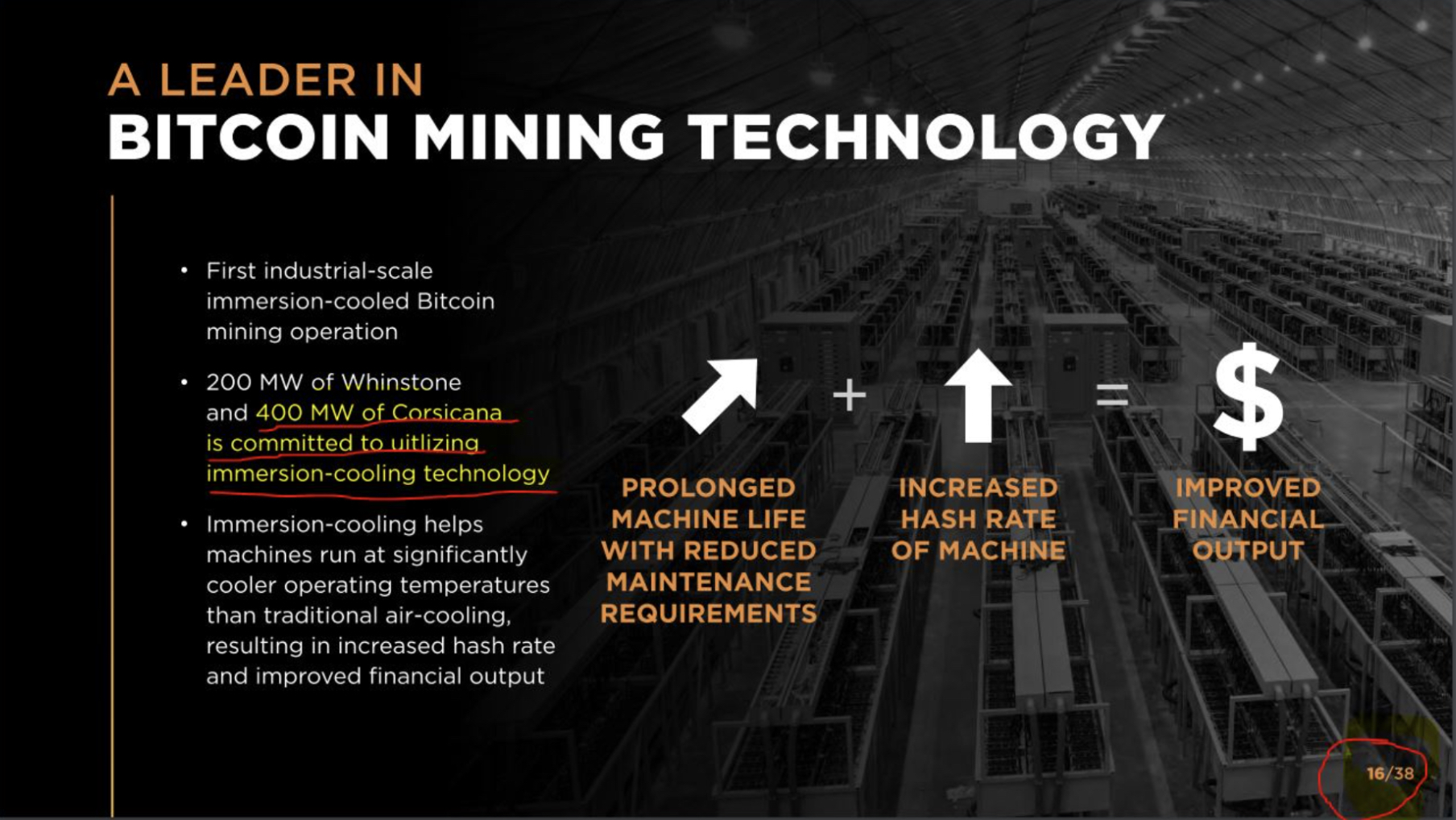
 Amy Castor