SEC sues Binance, part 1: the complaint, Binance US asset freeze, Tai Chi plan, sock puppet CEOs, weird cash flows

  • By Amy Castor and David Gerard

“Every single one of these news updates from the slow motion implosion of the great fake tech money pyramid scheme is like reading headlines that say: ‘Man confused as to why his clothing caught fire after dousing self with kerosene.’ Every one.”

A Shiny Blue Thing

CZ: “4”
SEC: “Fore!”

A day before the SEC sued Coinbase, the agency also filed a suit against Binance, the world’s largest offshore crypto casino, and its affiliate Binance.US. Binance founder Changpeng Zhao, better known as “CZ,” was also named in the suit. 

CZ tweeted “4,” which means he is dismissing the complaint as “FUD, fake news, attacks, etc.” If you have a single-digit shorthand for this sort of thing, you may already be in trouble. [Twitter, archive; Twitter, archive]

The 136-page complaint, filed in the District of Columbia on June 5, outlines 13 charges. Unlike the Coinbase suit, this one alleges fraud. The complaint comes with nearly 100 exhibits, some of which are incendiary. [Press release, Complaint, PDF; Docket]

CZ has his hands full these days. The US Department of Justice is currently investigating Binance over money laundering. In March, the CFTC filed its own enforcement action against Binance and CZ — which Binance has until July 27 to respond to. [CFTC docket]

The SEC complaint covers some of what’s in the CFTC complaint. But there’s a pile of new stuff. This is a huge amount to cover, so we’ll be doing it over a few posts.

The SEC complaint

The lawsuit is against Binance Holdings Limited, BAM Trading Services Inc., BAM Management US Holdings Inc., and Changpeng Zhao. (BAM Trading runs Binance.US; BAM Management is a holding company that owns BAM Trading.) Summons were served to listed company addresses and to an address for CZ in Malta. [defendant list, PDF]

The SEC comes out of the gate loud:

This case arises from Defendants’ blatant disregard of the federal securities laws and the investor and market protections these laws provide.

Among the accusations:

  • Binance and BAM Trading both operated as unregistered securities exchanges, broker-dealers, and clearing agencies, while raking in $11.6 billion in revenue. 
  • Binance’s own BNB and BUSD tokens are securities, as are 10 other tokens listed for trading on Binance.US.
  • Binance lending products (Simple Earn and BNB Vault) and Binance.US staking products are also securities.
  • CZ claimed BAM operated separately from its offshore parent and had its own leadership. In practice, he firmly controlled BAM and the US platform’s customer assets.
  • Binance secretly enabled US-based high-value “VIP” customers to trade on its non-US platform. 
  • BAM defrauded company investors of $200 million by lying to them about non-existent controls against abusive trading on the platform.
  • CZ funneled customer funds to Sigma Chain, a trading entity that he owned.
  • Sigma Chain inflated the trading volume on the US site through wash trading — because the Binance trading engine let anyone trade with themselves.
  • Binance and CZ commingled billions in customer funds on Binance.US and sent them to market maker Merit Peak, also owned by CZ.

The SEC wants Binance and BAM permanently enjoined from doing any of this ever again, disgorgement of ill-gotten gains with interest, civil money penalties, and equitable relief.

The SEC has also sought to freeze customer assets on Binance.US — specifically to protect US customers from CZ and Binance.com. 

Tai Chi: A plan to evade regulation

CZ launched Binance in July 2017 to rapid popularity. He evaded accountability from the start, moving his headquarters from China to Japan to Malta.

Per the complaint, CZ denies that Binance has an office at all: “Wherever I sit is the Binance office. Wherever I meet somebody is going to be the Binance office.”

A month after launching in China, Binance revealed that the US and China together made up nearly half of its customer base. [Binance, archive]

But how to keep the ball rolling? Crypto trading was banned in China in 2019. It continued online through foreign exchanges until September 2021, when China declared all cryptocurrency transactions illegal.

CZ needed US customers — especially “VIP” ones — but not US regulation. So, starting in 2018, he worked on how to surreptitiously evade US securities laws. As his chief compliance officer Samuel Lim admitted: “we do not want [Binance].com to be regulated ever.” [Doc 17-5, PDF]

The trouble was, as Lim put it to fellow Binance employee Alvin Bro: “we are operating as a fking unlicensed securities exchange in the USA bro.”

Lim was keenly aware of the hazards of US law enforcement:

there is no fking way in hell i am signing off as the cco for the ofac shit

theres a certain point where money is totally useless, and that is making a declaration to the USA that you are clean

when shanghai is totally cowboy

there is no fking way we are clean

i have zero visibility on our VIP clients

ZERO

the strategy of bnb is to survive for 2 years and f off

and in this 2 yrs try ur bestest to not land in jail

An unnamed “consultant” who ran “a crypto asset trading firm in the United States” suggested options to CZ and his team. One option was low-risk: settle the regulators’ concerns in an orderly manner. But if they went that route, they might be shut out of the US market entirely for months or years. The second option was risker, but more profitable: create a separate US entity that would head off the regulators.

The consultant suggested engaging with the SEC on how to comply but “with no expectation of success and solely to pause potential enforcement actions.” The new entity would “become the target of all built-up enforcement tensions” and “reveal, retard, and resolve built-up enforcement tensions.”

The new entity would also give Binance better access to US dollars without Binance.com needing its own banking relationships.

Binance would still need to insulate the new entity from US enforcement: “Key Binance personnel continue to operate from non-US locations to avoid enforcement risk” and “Cryptocurrency wallets and key servers continue to be hosted at non-US locations to avoid asset forfeiture.”

This was the “Tai Chi plan,” first reported in Forbes in October 2020. Binance filed a defamation suit against Forbes for this report, though they withdrew it a few months later. Binance then tried to buy equity in Forbes in a SPAC deal that later fell through — though this didn’t hold Forbes back from going in hard against Binance. The SEC complaint includes the original Tai Chi documents. [Forbes, 2020; Doc 17-2, PDF; Doc 17-3, PDF]

CZ opted to go ahead with the Tai Chi plan. Binance.US launched in July 2019, run by a separate entity, BAM Trading. Binance announced it would begin restricting US customers from transacting on Binance.com and they should use the US site instead.

CZ’s sockpuppets

Binance.US was a supposedly independent US affiliate of Binance.com, run by BAM Trading, incorporated in Delaware. In practice, CZ reportedly ran BAM himself with an iron hand.

Catherine Coley and Brian Books — “BAM CEO A” and “BAM CEO B” in the complaint — sang like birds to the SEC. Brooks detailed to the SEC how CZ was not merely the chairman of BAM, but exercised CEO-level close control.

Even BAM’s accountants cautioned their client that the lack of information around money movements “makes it very difficult to ensure the Company is fully collateralized at specific points in time.”

Only two people — CZ and another person, Guangying Chen, who nobody seems to admit much about — controlled all of the flows of cash and cryptos.

Coley and her team were extremely unhappy after reading the Forbes article on the Tai Chi plan:

As BAM CEO A [Coley] explained to the Binance CFO shortly after the article was released, BAM Trading employees “lost a lot of trust with the article” and “the entire team feels like they’ve been duped into being a puppet.”

The SEC wants to freeze Binance.US funds

The SEC was very concerned about the status of Binance.US customer funds all through early 2023 and couldn’t get straight answers out of BAM or Binance.com as to where the funds were held and who controlled the purse strings.

On June 6, the SEC filed a motion seeking an emergency temporary restraining order and preliminary injunction against Binance and BAM. Customer assets at Binance.US are largely controlled by non-US entities, and Binance has allegedly siphoned a pile of cash out of BAM. Motions like this are what the SEC does when it suspects huge fraud.

The SEC specifically wants to let Binance.US customers withdraw their funds, but not allow Binance to transfer money outside the US. [SEC press release; Doc 4, PDF; Memorandum of law, PDF]

A hearing on the matter is set for Tuesday, June 13 at 2:00pm. It’s expected that Judge Amy Berman will rule on the day as to whether to put the TRO into place.

Where’s the US money?

The SEC’s investigation into Binance and Binance.US started on August 17, 2020 — before Forbes told the world about the Tai Chi plan. [Doc 12, PDF]

The first SEC contact with BAM was a December 17, 2020, subpoena for documentation of BAM’s control of Binance.US crypto assets.

The SEC requested more information in September 2022. BAM finally answered in February 2023, but “its answers were not reassuring.”

BAM had a “wallet custody agreement” such that Binance would custody Binance.US crypto — the part of the Tai Chi plan where the crypto would be held outside the US. BAM told the SEC that the wallet custody agreement “was never operationalized.”

The SEC sent Binance Holdings Limited (Binance.com) a Wells notice, indicating that an enforcement action was imminent, on February 21. BHL responded on March 15 that “BHL does not, and has not, served as the custodian of the digital assets on Binance.US.” [Doc 19-13, PDF]

But the SEC already knew this was not true — based on information it had gotten from Signature Bank, conversations with former BHL and BAM employees, and reports to BAM from BAM’s auditor Armanino. 

In the two weeks leading up to filing the June 5 complaint, the SEC was still trying to resolve the custody issue — with “numerous written and oral exchanges concerning custody of Binance.US Platform customers’ assets and, more importantly, who is in ultimate control of those assets.” [Doc 19-15, PDF; Doc 19-16, PDF]

BAM now “disputes its own auditor’s conclusion of past Binance custody over customer assets” (emphasis SEC’s) and “admits that Zhao and Binance continue to possess substantial control over at least some of BAM Trading’s crypto assets.”

BHL and CZ have not been helpful:

Zhao’s attorneys have continued to maintain that Zhao is not subject to the jurisdiction of the United States — despite setting up a crypto trading platform in the United States that has made hundreds of millions from trading with U.S. customers, and despite his beneficial ownership of accounts held at banks in the United States through which billions of dollars flowed to some of his foreign domiciled companies like Merit Peak and Sigma Chain.

As recently as June 4, BHL was begging the SEC not to freeze BAM assets. [Doc 19-14, PDF]

The Binance money funnel

Binance is a network of shell companies. These entities hypothetically have different roles, but in practice, money flows between them in vast amounts — mostly via transfers between the entities’ accounts at Silvergate Bank, and some at Signature. We know this because Silvergate, Signature, and FedWire told the SEC all about it. [Doc 21, PDF]

How much money are we talking about? Sachin Verma, an SEC forensic accountant, says:

At times the amounts being credited and debited during a single month amounts to movement of more than a billion dollars.

… On January 1, 2023, eight Binance/Zhao-owned companies had $58.7 million on deposit. During that same time frame, $840 million was deposited into, and $899 million was withdrawn, from those accounts

Binance could and did transfer funds without BAM’s knowledge. At one point, while she was CEO, Coley had to ask where $1.5 billion in daily transfers was coming from — neither she nor her team had the access needed to verify them. 

Coley also had to ask why on earth $17 million in BUSD was moving from Merit Peak (Binance) to Sigma Chain (Binance) via BAM, and where Merit Peak got the money from. [Doc 19-2, PDF]

The billions of dollars flowed in from Binance.US customers, through the various Binance companies’ checking accounts, into a Merit Peak account, to Paxos Singapore (for $21.6 billion of BUSD between 2019 and 2021), and out to … somewhere:

Binance Holdings Limited and Binance Capital Management show large deposits and withdrawals from and to Signature accounts for some Zhao-owned companies, and hundreds of millions of dollars have been transferred.

Per the SEC’s request to freeze Binance.US assets:

During 2022, a U.S. bank account for Swipewallet (beneficially owned by Zhao) sent $1.5 billion offshore in foreign exchange, or “FX,” wires … Between January and March 2023, multiple Binance accounts wired more than $162 million offshore for further credit of a foreign account belonging to the company beneficially owned by the Binance Back Office Manager.

That manager was Guangying Chen.

CZ ran billions of dollars through Silvergate every month. None of it ever stayed in one place for long — all the accounts were just checking accounts where money sat for a moment before being shuffled under another shell.

Unlike Sam Bankman-Fried, CZ seems from all this to have had the good sense to stash away billions of dollars in actual money. He also purchased a home in Dubai in 2021 — a coincidentally non-extradition jurisdiction. 

Where did the money end up? Where’s CZ keeping the dollars? Following the money trail is confusing — which appears to be the point.

It’s not clear whether Silvergate filed suspicious activity reports on all these dubious transfers. They certainly should have.

__________________

Also read:
SEC sues Binance, part 2

SEC sues Binance, part 3

Crypto collapse: Good night Silvergate Bank, unbanking crypto exchanges, Voyager sale to Binance proceeding

  • By Amy Castor and David Gerard

“And it seems to me, you lived your life like a candle in the wind. You’ve abruptly toppled over and you’re burning things. Now there’s one less fiat onramp, for those who’ve been orange pilled. And there is no liquidity, for all the crypto shills.”

Rycochet on Silvergate Bank

Silvergate Bank: Time wounds all heels

Silvergate was the easiest crypto death pool call this week. The bank has announced it is voluntarily unwinding and liquidating, “in light of recent industry and regulatory developments” — its customers kept treating deposits as their own money or something, and regulators and legislators hated it a whole lot. All deposits will be returned in full. [Press release

“The Company is also considering how best to resolve claims and preserve the residual value of its assets, including its proprietary technology and tax assets.” We’re not sure which proprietary technology this means — Silvergate wrote off its investment in Diem, formerly Facebook’s Libra, in its preliminary Q4 2022 accounts, and it just shut down the Silvergate Exchange Network.

FDIC examiners went into Silvergate last week — as we predicted — and have been reviewing Silvergate’s books since. [Bloomberg]

The FDIC was discussing how to keep Silvergate alive — even suggesting a rescue by crypto-related investors. Yeah, right. We suspect they already asked every other bank in the US, none of whom would offer a dollar for this thing.

The big question is: what happens to the loans secured by bitcoins that Silvergate made to MicroStrategy and various bitcoin miners?

Silvergate’s total loan book, bitcoin and otherwise, was $1.4 billion as of September 30, 2022, including the infamous $205 million loan to MicroStrategy. The bitcoin loans are not “bad loans” — they’re not in default, as yet. But they were clearly stupid loans — some idiot thought that lending money to weird companies with insane business models, against an asset that was only up because of a bubble, was a good idea.

So, if Silvergate’s cut up for parts, who takes on these loans?

Loans collateralized with crypto will be a nuisance to transfer because you also need to transfer rights to the collateral (which is sitting in Coinbase Custody, the MSTR loan at least). The MSTR crypto was pledged rather than transferred — there’s a custody account for this specific deal — which is a bit less fiddly. And the bitcoin price is, of course, incredibly volatile, so the collateral itself is risky.

No sane bank is going to want to take on these loans at anywhere near face value. But we expect there will be some buyer who’s interested, at a suitable discount.

If no bank is willing to buy a loan from an insolvent bank, the FDIC tries to close the loan by negotiating with the borrower about possible early repayment. But we don’t expect these loans to end up in that position.

Silvergate Capital stock (NYSE:SI) is a dead cat bouncing between $3.00 and $3.50 today. It was $219 in November 2021. We hope the short sellers have managed to cash out. [Yahoo!]

Frances Coppola on Silvergate: “This is the story of a bank that put all its eggs into an emerging digital basket, believing that providing non-interest-bearing deposit and payment services to crypto exchanges and platforms would be a nice little earner, while completely failing to understand the extraordinary risks involved with such a venture.” [Coppola Comment; Coppola Comment]

Unbanking, on the blockchain

Marco Santori, chief legal officer at Kraken crypto exchange, tells The Block that Kraken is going to start its own crypto bank any day now. With “pens with the little ball chains.” [The Block]

Kraken got itself a Wyoming SPDI charter in 2020 — that’s the same charter as Caitlin Long’s Custodia Bank, which was recently refused an account at the Federal Reserve.

Kraken Bank originally told Decrypt it was aiming to launch in the first quarter of 2021. It’s currently “planning a phased launch” in, er, 2022, apparently. [Kraken, 2020; Decrypt, 2020; Kraken, 2023, archive]

Kraken recently lost US dollar access via Signature Bank for non-corporate customers. In the meantime, Kraken has various other dollar options. The dollar channel for ordinary schlubs is via SynapseFi, “The Launchpad for Financial Innovation” — a payment processor marketing itself hard to crypto companies, though stressing that it never touches crypto itself — or MVB Bank of West Virginia, which thinks there’s a market in “Web3.” [Kraken, archive; SynapseFi; MVB Bank]

UK payments processor BCB Group is angling to take over from Silvergate as the fiat rails to the crypto industry. BCB actually has an FCA license, so the FCA considered they could pass basic money laundering muster at least. BCB launched its BLINC network in 2020; BCB’s recent publicity push is marketing for that. [Coindesk; Coindesk, 2020]

Crypto.com has lost its onramps for actual money, except euros in the European Economic Area and a GBP onramp via BCB — but no US dollar access. [CoinDesk]

Michel de Cryptadamus writes up crypto.com: “At the end of the day we will probably discover that the entire cryptocurrency industry is 5,000 shell companies run by 20 dudes in a foul smelling room in some non-extradition country.” [Cryptadamus]  

Outdoor miners

Crypto miners operating on public land haven’t been paying their taxes. Federal mineral lease operators have been using natural gas to power crypto mining without paying their gas royalties. The miners have been using mobile data centers in containers to evade oversight. [Office of Inspector General, PDF; Gizmodo]

Bitcoin miner Riot Platforms, née Riot Blockchain, has now filed its delayed 10-K for 2022 after the SEC told Riot to restate its accounts. There isn’t a lot that’s exciting here. The bitcoin mining business is knife-edge, bitcoin prices are down, and governments and the general public increasingly loathe bitcoin miners. Riot is branching out into selling its expertise in data center power distribution. Risks to Riot’s business include a pile of lawsuits against executives and directors concerning “allegedly false and misleading statements made in prior securities filings.” [SEC]

Voyager Digital

At the March 7 hearing in the bankruptcy of Voyager Digital, Judge Michael Wiles approved the purchase of Voyager assets by Binance US — assuming Binance US can pass various regulatory hurdles. (LOL.) [Doc 1159, PDF]

SEC staff think Binance US is likely an unregistered securities broker, but their objections weren’t specific enough to convince Judge Wiles to stop the sale. [WSJ]

In the hearing, Binance stressed that it really wants personal information, such as social security numbers, for all Voyager customers. Not just the ones moving to Binance US, but all of them: “Data is at the heart of the deal.” Judge Wiles was not impressed and said that SSNs from the Voyager customers who didn’t go to Binance would definitely not be a thing that Binance got. [Twitter]

More good news for bitcoin

The Financial Conduct Authority is hitting more UK crypto ATMs, this time in east London. No crypto ATM operator in the UK is registered with the FCA for anti-money laundering purposes, so all of them are illegal. [FCA]  

In India, the Financial Intelligence Unit of the Ministry of Finance is now requiring crypto-asset businesses to register with the FIU as reporting entities under AML laws. They also have to do basic know-your-customer — which they weren’t obliged to do before. Local crypto companies are actually positive about this move. [Gazette of India, PDF; CoinDesk]

In the US, the Public Company Accounting Oversight Board warns that crypto exchange “proof of reserves” statements are meaningless garbage. [PCAOB]

FTX in bankruptcy wants to redeem Alameda’s GBTC shares for the bitcoins backing them. Grayscale said no, so FTX is suing for redemption. Remember that Grayscale could now redeem GBTC any time they like — they just choose not to. [Press release]

Easy Money by Ben McKenzie and Jacob Silverman is available for preorder! The release date is July 27. [Amazon US; Amazon UK]

Image: With apologies to Alex Shaeffer.

Crypto collapse: FTX family subpoenas, SBF witness tampering, Celsius bids revealed, more crypto banking woes

  • By Amy Castor and David Gerard

FTX: It’s a family affair

FTX’s lawyers have questions. Specifically, they have questions for Sam Bankman-Fried’s brother Gabriel and his parents, Joseph Bankman and Barbara Fried.

Joseph advised FTX. He recruited its first lawyers and joined FTX staff in meetings on Capitol Hill. When visiting the FTX offices in the Bahamas, he and Barbara stayed in a $16.4 million house with its title in their names. Barbara founded a political action committee called Mind the Gap, which received donations from FTX.

Gabriel launched Guarding Against Pandemics, an organization funded by Sam. Gabriel purchased a multimillion-dollar property in Washington D.C., which John Jay Ray III’s current FTX team believe was purchased using FTX customer funds.

Every member of Sam’s family had some involvement in FTX — and they aren’t responding to requests for documents. So Ray’s team and the Unsecured Creditors’ Committee (UCC) want to subpoena Joseph, Barbara and Gabriel under rule 2004. [Doc 579, PDF; Bloomberg]

We’ve detailed rule 2004 previously. Federal Rule of Bankruptcy 2004 allows tremendously broad discovery and deposition. A witness is not always entitled to attorney representation or cross-examination and has only a limited right to object to questions. 2004 exams are sometimes referred to as “fishing expeditions” — because they need to be.

Included in the same 2004 motion, Ray is also asking the court’s permission to subpoena Sam and several other FTX insiders, including FTX cofounders Gary Wang and Nishad Singh, former Alameda CEO Caroline Ellison, and former FTX COO Constance Wang. Along with SBF’s family, they have not been very responsive:

“Mr. Wang and Ms. Ellison expressly declined to provide the requested information, and Ms. Fried has ignored the Requests altogether. The Debtors have not received meaningful engagement or any response from Mr. Singh or Mr. Gabriel Bankman-Fried.”

Ray’s team are investigating the FTX hack on November 11-12, which saw $300 million in crypto siphoned off the exchange while crypto Twitter watched in horror. They’ve requested an order pursuant to Rule 2004 here too — under seal, because the information in the motion could “reveal or lead to evidence that will reveal the identity and activities of the perpetrator(s).” It sounds like they already have a very good idea who was behind the hack. [Doc 581, PDF]  

A mostly-unredacted list of FTX creditors is now available. It includes investment banks, such as Goldman Sachs and JPMorgan; media companies, such as the New York Times and Wall Street Journal; commercial airliners, including American, United, Southwest, and Spirit; as well as several large tech players, including Netflix, Apple, and Meta. Individual customers’ names remain withheld. [Doc 574, PDF

FTX objects to the US Trustee’s request to appoint an independent examiner. They argue an examiner would duplicate work that’s already underway by FTX, the UCC, law enforcement, and regulators. “Indeed, if history is a guide, the cost could near or exceed $100 million.” They point out that “it is difficult to imagine an examiner candidate whose qualifications exceed those of Mr. Ray.” Which is a good point. The UCC concurs. [Doc 573, PDF; Doc 571, PDF]

What’s a little witness tampering between friends?

SBF is playing fast and loose with potential witnesses in his criminal trial. He contacted “Witness-1,” the “current General Counsel of FTX US” (Ryne Miller) to work out a story with. We doubt Miller would want anything to do with such a scheme. But this was enough for the government to ask Judge Lewis Kaplan to modify Sam’s bail: [DOJ letter to judge, PDF]

“Specifically, the Government respectfully requests that the Court impose the following conditions: (1) the defendant shall not contact or communicate with current or former employees of FTX or Alameda (other than immediate family members) except in the presence of counsel, unless the Government or Court exempts an individual from this no-contact rule; and (2) the defendant shall not use any encrypted or ephemeral call or messaging application, including but not limited to Signal.”

SBF’s lawyers responded by pounding the table. Judge Kaplan has told both sides to chill. The government should get its reply in, with substantiation of its claims, by February 2. [letter, PDF; order, PDF]

Dirty Bubble has found another link between FTX and the fraud-riddled binary options industry. In September 2021, FTX purchased the ZUBR derivatives exchange for $11 million. The exchange was registered in Gibraltar. By the time Gibraltar rescinded ZUBR’s license, the exchange had no active customers. The exchange was a collaboration between Belarusian binary options and crypto “billionaire” Viktor Prokopenya and his former business partner Said Gutseriev, the son of one of Russia’s wealthiest oligarchs. [Dirty Bubble]  

(Update, March 15, 2023: Viktor Prokopenya tells us he “never had any commercial interest or other involvement in ZUBR.” Dirty Bubble has updated his story to note that FTX purchased ZUBR directly from Prokopenya’s business partner Said Gutseriev. Dirty also notes interesting connections between ZUBR and Prokopenya’s other entities in his story.) 

Would it surprise you to learn that FTX made political donations to George Santos? [SFGate]

Celsius Network: Let’s make more magic beans!

Celsius has rejected the Binance US bid for Celsius assets, and four other bids. In the January 23 hearing, Ross Kwasteniet of Kirkland & Ellis, speaking for Celsius, said the bids “have not been compelling.”

Instead, Celsius have concocted a plan to reorganize into a publicly traded company and issue a new “Asset Share Token” to creditors. Those following the Celsius disaster will recognise this as Alex Mashinsky’s very dumb and bad Kelvin Plan from September 2022.

Creditors weren’t told about the other bids. As it happened, Tiffany Fong — Celsius creditor and YouTuber — got all the bids in a leak in December. Bidders included Binance US, Bank To The Future (Simon Dixon), Galaxy Digital, Cumberland DRW, and NovaWulf. Fong posted full text of the leaked bids. [Substack; Youtube

  • Binance US: buy just the crypto, assume liabilities (with a haircut); excludes FTT, CEL, and other illiquid trash tokens. Pay $15 million cash.
  • Bank to the Future: crypto returned to customers pro rata. Other Celsius assets to special-purpose vehicles, customers get an ownership share. Cash to be raised through rights offering to creditors.
  • Galaxy Digital: Acquire illiquid assets and staked ETH. Pay $66.8 million cash.
  • Cumberland DRW: Purchase certain tokens and portfolio of alternative investments, excluding CEL. $1.8 billion total payment, includes various haircuts.
  • NovaWulf: Transfer substantially all assets and businesses to SEC-compliant NewCo, 100% owned by the creditors. Issue revenue share tokens. NovaWulf to pay $60-120 million, mostly in tokens. This is also a version of the Kelvin plan.

Many ad hoc creditors were disappointed that the Binance bid was rejected — but it shouldn’t be surprising, given the issues that Binance is already having with its bid for Voyager.

Frankly, we don’t think the other bids look all that great either — they’re fanciful coiner dreams that first assume the crypto market is healthy, which it isn’t.

We think Celsius should have just liquidated in July rather than taking several months and handing millions of dollars to bankruptcy professionals to get to the same place.

Banks

Silvergate is short on cash, so it’s suspended dividend payments on its preferred stock. [Business Wire

The stock in question (NYSE:SI) is going down the toilet. It’s crashed from $220 in November 2021 to below $14 in January 2023. Signature Bank (NASDAQ: SBNY) has gone from $365 to $127 over the past year.

Moonstone Bank says that “recent events” — FTX tried to use them as a financial laundromat — and “the changing regulatory environment around crypto businesses” — the regulators are on the warpath — have prompted it to ditch the “innovation-driven business model” it adopted in recent years. [WSJ, paywall

Federal bank regulators are not keen on dodgy crypto banks authorized by captured Wyoming state regulators. Custodia Bank can’t get a Fed account: [Federal Reserve]

“The Board has concluded that the firm’s application as submitted is inconsistent with the required factors under the law. Custodia is a special purpose depository institution, chartered by the state of Wyoming, which does not have federal deposit insurance. The firm proposed to engage in novel and untested crypto activities that include issuing a crypto asset on open, public and/or decentralized networks.”

Crypto.com’s old gateway for GBP and EUR was Transactive Systems of Lithuania. Transactive has been cut off by the Bank of Lithuania, after it found “significant violations and shortcomings of the Law on the Prevention of Money Laundering and Terrorist Financing.” Transactive had apparently been giving accounts to a long list of low-quality institutions in low-quality jurisdictions. Transactive can no longer serve financial institutions, forex, or crypto clients. They also got cut off from the UK Faster Payments system. Your EUR and GBP sent to Crypto.com via Transactive are probably now stuck. [Twitter; Offshore CorpTalk; Bank of Lithuania, in Lithuanian]  

Before Crypto.com got kicked off Silvergate, it used to get US dollar deposits via an oddly roundabout method: customers would send USD to Circle’s account at Silvergate, and Circle would mint that much USDC and send the USDC to Crypto.com. It is possible this was not in full compliance with KYC and AML regulations. [Twitter; crypto.com, archive]

Other happy little accidents

London-based crypto exchange Luno, a subsidiary of DCG, is laying off 35% of its staff. About 330 employees will be let go from the firm, which has offices in Africa, Asia, and Europe. [WSJ, paywall; archive

DeFi volumes are right down. The amount of money (or “money”) involved has been flat for months, and — most importantly — you can’t get the ridiculous yields you could in the bubble. Oh no! Anyway. [Bloomberg]

Happy Penis Day, to those who celebrate

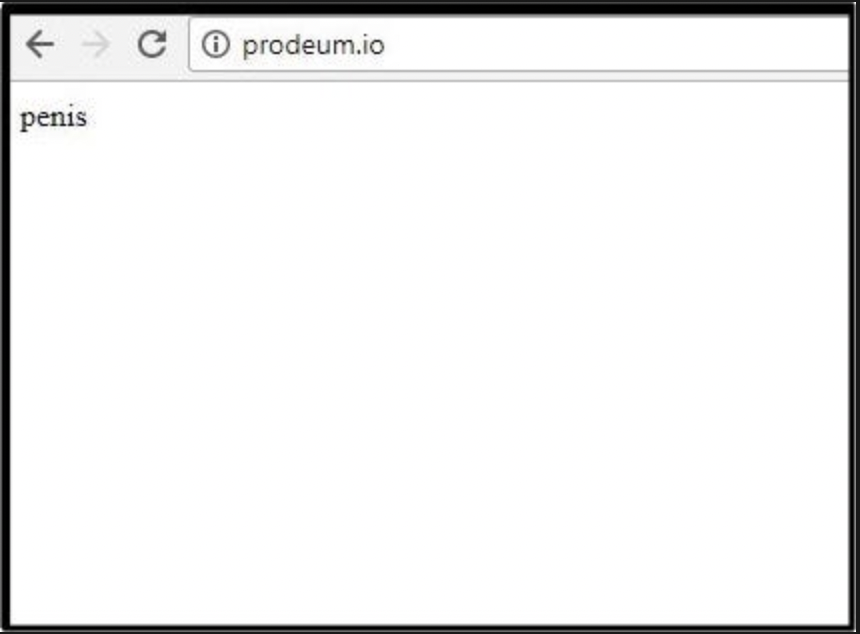
It was five years ago today, January 28, 2018, that the Prodeum initial coin offering took everyone’s money and disappeared, leaving behind only a new jargon term for “exit scam” or “rugpull.” You get a penis! And you get a penis! And you get a penis! Everybody gets a penis! [The Next Web, 2018]

Image: Sam Bankman-Sopranino and family.

FTX Bahamas vs. John Jay Ray, Bankman-Fried pleads not guilty, DoJ seizes FTX assets

  • By Amy Castor and David Gerard

i wonder how many times someone’s managed to hack in to a bitcoin exchange and found there wasn’t any money there and just left

— Boxturret, SomethingAwful

FTX vs the Bahamas

There’s a turf war going on between the FTX Digital Markets (FTX DM) liquidation in the Bahamas and the FTX Trading Ltd bankruptcy proceedings in the U.S. We wrote about it earlier, along with some of the fishy stuff going on in the Bahamas.  

The Securities Commission of the Bahamas (SCB) filed their liquidation for FTX DM, a small subsidiary of FTX Trading, just one day before John Jay Ray III filed for Chapter 11 on behalf of FTX. Sam Bankman-Fried helped the SCB get in before Ray by waiting until the wee hours of November 11 to hand control over to Ray. Now the SCB feels it is entitled to FTX assets so that the liquidators can distribute them to creditors of FTX DM — whoever those might eventually turn out to be. [PwC]

The Bahamas side seems to be working on the theory that FTX DM was the operating center of the FTX companies. But FTX DM wasn’t even incorporated until July 22, 2021. It lay dormant for nearly a year and didn’t start operating in any manner until May 13, 2022. Note that’s a few days after the Terra-Luna collapse — FTX and Alameda were already utterly screwed by the time FTX DM was used for anything, suggesting that that may have been part of SBF’s reason to activate it.

The SCB pissed off Ray even further when, on December 29, they valued the FTX funds they seized late in the night on November 11 — in violation of the Chapter 11 stay — at $3.5 billion. This is mostly a pile of FTT tokens, whose market value is way less than $3.5 billion. FTX says the assets were worth just $296 million — “assuming the entire amount of FTT could be sold at spot prices at the time.” [SCB press release, PDF; FTX press release]

Christina Rolle, SCB executive director, said the Commission sought control of the crypto held by FTX after SBF and FTX cofounder Gary Wang told them about “hacking attempts overnight” — a perfect justification to seize the assets. Her affidavit, filed with the Supreme Court of the Bahamas, confirmed that SBF and Wang were behind the transfers on November 11 and 12. [Affidavit of Christina R. Rolle, PDF]

U.S. Federal prosecutors are looking into the $370 million hack — or “hack.” [Bloomberg]

Rolle also said that Tether gave the SCB 46 million tethers (USDT). SCB had asked Tether to freeze some USDT held by FTX DM or FTX Trading Ltd (it’s not clear which entity), then create 46 million fresh USDT and send it to SCB: 

76. Additionally, the Commission sent instructions for the transfer of approximately US $46 million Tether tokens to a secured wallet under the control of the Commission. These Tether tokens were not transferred to the Commission’s wallet but, after a meeting with Tether representatives, the Commission agreed that Tether, in light of the Chapter 11 proceedings, would maintain a freeze over the Tether tokens until ownership of the tokens is resolved.

This sounded odd to us — a “meeting with Tether representatives”? Coincidentally, the Bahamas Attorney General, Ryan Pinder, used to work for Deltec Bank, the bank associated with Tether.

The SCB then put out a press release on January 3 accusing Ray of “material misstatements” and having a “cavalier attitude to the truth.” They claim Ray is “promoting mistrust of public institutions in the Bahamas.” Well, yes, he is. [LinkedIn]

The joint provisional liquidators (JPLs) handling the FTX DM liquidation in the Bahamas have been pushing for access to substantial amounts of FTX data. Ray and his lawyers are working to make sure that never happens. Ray’s team has submitted piles of evidence pointing to the Bahamas government acting in bad faith.

FTX has filed an incendiary objection to the JPLs’ motion to compel the turnover of electronic records. This is a 37-page must-read rant: [FTX objection, PDF]

10. Finally, the stunning press release issued late yesterday, on December 29, 2022, by the Commission, along with certain related materials, is a game changer. The press release (and the supporting affidavit of the Executive Director of the Commission) boldly admits that the Commission violated the automatic stay in taking certain of the Debtors’ digital assets and then recklessly values the assets taken at $3.5 billion. As described in more detail below, yesterday’s disclosures demonstrate conclusively that the JPLs and the Commission are cooperating closely to do an end run around this Court and chapter 11. In a situation where maximizing recoveries for creditors should be the primary goal of all concerned, one can only wonder why.

We expect Ray isn’t wondering at all. He believes that “an elaborate and intentional game is being played” by the JPLs, the SCB, and the Bahamas government. As FTX says in their objection: “The fact that the founders left the Debtors more closely resembling a crime scene than an operating business cannot be ignored.”

FTX lawyer James Bromely filed a 675-page declaration, presenting exhibits to support their case. FTX financial advisor Edgar Mosley at Alvarez & Marsal also filed a 185-page declaration loaded with exhibits. [Bromely declaration, PDF; Mosley declaration, PDF]

The Mosley declaration details what business FTX Digital Markets actually did. FTX DM seems to have been Sam’s local partying fund:

17. The Debtors’ records reflect that $15.4 million for “Hotels & Accommodation” was paid primarily to three hotels in The Bahamas: the Albany ($5.8 million), the Grand Hyatt ($3.6 million), and the Rosewood ($807,000). The $6.9 million for “Meals & Entertainment” was paid primarily to Hyatt Services Caribbean ($1.4 million), Six Stars Catering ($974,000), and to three other catering and delivery services ($2.3 million in total).

18. The Debtors’ records reflect that in the first three quarters of 2022, FTX DM had total operating expenses of approximately $73 million, including over $40 million labeled “other expenses.”

19. The Debtors’ records reflect that FTX DM’s 2022 income statements show that FTX DM made no disbursements in connection with transaction, engineering or product expenses.

The newly formed Unsecured Creditors’ Committee in the U.S. chapter 11 also objects to the Bahamas motion. “These requests are sweeping and appear to be based on the faulty theory advanced by the JPLs that FTX DM was actually the nerve center of the FTX enterprise.” [Committee objection, PDF]

Just seizing some assets, don’t mind us

There was a scheduling conference in the Delaware FTX bankruptcy hearing on January 4. This wasn’t expected to be interesting — but Department of Justice Attorney Seth Shapiro made a surprise appearance over Zoom to let Judge Michael Dorsey know that the DoJ has been seizing assets.

SBF held a 7.6% stake in day trading brokerage Robinhood. He admitted to borrowing from Alameda in April and May to purchase the shares, in an Antigua court affidavit shortly before his arrest. [CoinDesk; affidavit, PDF]

SBF pledged the Robinhood shares to multiple companies as loan collateral. Who was getting the shares in the bankruptcy was a point of some contention. Now the DoJ has seized the shares.

Various bank accounts connected to the FTX Digital Markets (Bahamas) case and the JPLs motions for provisional relief, and the money in them, have also been seized. “We didn’t just want the court to read that in the papers filed by Silvergate and Moonstone” (FTX’s banks), said Shapiro. The DoJ also seized some cryptocurrency, though Shapiro didn’t say who from — the banks? The DoJ is working things out with the parties.

Shapiro told Judge Dorsey that the bank accounts had been seized with a view to “a criminal or asset forfeiture proceeding at some point down the line, in the Southern District of New York, to which entities could file claims.”

Shapiro said: “We either believe that these assets are not the property of the bankruptcy estate or that they fall within the exceptions under sections 362(b)(1) and/or (b)(4) of the bankruptcy code.” 362(b) is about criminal proceedings. [LII]

The Bahamas JPLs, who were also hoping for the contents of these bank accounts, are in touch with the DoJ.

Sam did nothing* wrong

Sam Bankman-Fried stood before U.S. District Judge Lewis A. Kaplan on January 3 and pleaded not guilty to all eight counts against him. SBF actually flew to New York for his arraignment and had to squeeze through a mob of reporters to enter the courthouse. The judge set a tentative trial date of October 2. [Twitter; Twitter thread; NYT]

Sam thinks he’s too smart, rich, and pretty to go to jail. He just needs to explain things properly to the people in charge, and it’ll all be fine. 

SBF’s not-guilty plea doesn’t necessarily mean a trial will happen. SBF and his lawyer Mark Cohen are likely just buying time so they can negotiate a better deal with the prosecutors. We very much doubt the case will go to trial, or that Sam’s parents would be able to foot the legal bill if it did.

More funds mysteriously moved out of Alameda wallets on December 27, mainly illiquid altcoins being swapped for ETH and BTC. Over $1 million in funds were sent through crypto mixers, according to crypto intelligence firm Arkham. [Twitter; Decrypt]

This isn’t the work of a liquidator. Sam says it wasn’t him, even though Sam, FTX co-founder Gary Wang, and FTX director of engineering Nishad Singh were the only ones who had access to the keys. Reddit user Settless notes that SBF had previously claimed to own these addresses: “The pattern is similar — the wallet receives funds and swaps them via no-KYC exchange to launder the funds.” [Twitter; Reddit]

The U.S. isn’t happy about this movement of crypto. During SBF’s arraignment in Manhattan, the prosecutors asked the court to add a new condition to the bond: that Sam be prohibited from accessing or transferring any FTX or Alameda assets. Judge Kaplan agreed. 

Molly Crane-Newman from the NY Daily News said: “SBF became animated when prosecutors successfully requested that the judge prohibit him from accessing or transferring FTX assets — furiously writing notes to his attorneys on a legal pad and pointing to them with a biro.” [Twitter]

The judge also agreed to the redaction of names and addresses of Sam’s two additional bail signers — who he may not have actually found yet. The press has until January 12 to file any objections to this. Matthew Russell Lee of Inner City Press has already filed an application to unseal the names. [Motion, PDF; Twitter; Application to Unseal]

Two of SBF’s associates, Caroline Ellison and Gary Wang, have already pleaded guilty in the hopes of getting a lesser sentence. John Reed Stark ordered and posted their plea agreements and hearing transcripts. [LinkedIn; Ellison plea, PDF; Ellison agreement, PDF; Wang plea, PDF; Wang agreement, PDF]

* except all the things he may possibly, hypothetically, have done wrong

Other perfectly normal happenings in FTX

North Dimension, the company that FTX customers were unknowingly sending their actual U.S. dollars to, was a fake online electronics retailer. North Dimension has two accounts at Silvergate Bank. [archived website; NBC News]

The assorted shenanigans with FTX likely explain why Silvergate Bank (NASDAQ: SI) has 54% of its shares sold short. Smart investors know how this will end. [Fintel]

John Reed Stark discusses FTX investors getting hosed on CNBC Squawkbox. [YouTube]

“Beyond Blame: The philosophy of personal responsibility has ruined criminal justice and economic policy. It’s time to move past blame” — by Barbara H. Fried. Now, you might say that if Sam’s circumstances are to blame for his apparent crimes, then Barbara happens to be one of those circumstances. [Boston Review, 2013]

Someone made an NFT with actual artistic value. We’ve used it as the feature image for this article. [OpenSea]

The Latecomer’s Guide to Crypto Crashing — a quick map of where we are and what’s ahead

Since November 2021, when Bitcoin hit its all-time high of $69,000, the original cryptocurrency has lost 70 percent of its face value. And when Bitcoin falters, it takes everything else in crypto down with it. 

The entire crypto space has been a Jenga stack of interconnected time bombs for months now, getting ever more interdependent as the companies find new ways to prop each other up.

Which company blew out first was more a question of minor detail than the fact that a blow-out was obviously going to happen. The other blocks in the Jenga stack will have a hard time not following suit. 

Here’s a quick handy guide to the crypto crash — the systemic risks in play as of June 2022. When Bitcoin slips below $20,000, we’ll officially call that the end of the 2021 bubble.

Recent disasters

TerraUSD collapse — Since stablecoins — substitutes for dollars — are unregulated, we don’t know what’s backing them. In the case of TerraUSD (UST), which was supposed to represent $18 billion … nothing was backing it. UST crashed, and it brought down a cascade of other stuff. [David Gerard; Foreign Policy; Chainalysis Report]

Celsius crumbles — Celsius was the largest crypto lender in the space, promising ridiculously high yields from implausible sources. It was only a matter of time before this Ponzi collapsed. We wrote up the inevitable implosion of Celsius yesterday. [David Gerard]

Exchange layoffs — Coinbase, Gemini, Crypto.com, and BlockFi have all announced staff layoffs. Crypto exchanges make money from trades. In a bear market, fewer people are trading, so profits go downhill. Coinbase in particular had been living high on the hog, as if there would never be a tomorrow. Reality is a tough pill. [Bloomberg; Gemini; The Verge]

Stock prices down — Coinbase $COIN, now trading at $50 a share, has lost 80% of its value since the firm went public in June 2021. The company was overhyped and overvalued.

US crypto mining stocks are all down — Bitfarms ($BITF), Hut 8 Mining ($HUT), Bit Digital ($BTBT), Canaan ($CAN), and Riot Blockchain ($RIOT). Miners have been borrowing cash as fast as possible and are finding the loans hard to pay back because Bitcoin has gone down.

UnTethering

Crypto trading needs a dollar substitute — hence the rise of UST, even as its claims of algorithmic backing literally didn’t make sense. What are the other options?

Tether — We’ve been watching Tether, the most popular and widely used stablecoin, closely since 2017. Problems at Tether could bring down the entire crypto market house of cards.

Tether went into 2020 with an issuance of 4 billion USDT, and now there are 72 billion USDT sloshing around in the crypto markets. As of May 11, Tether claimed its reserve held $83 billion, but this has dropped by several billion alleged “dollars” in the past month. There’s no evidence that $10.5 billion in actual dollars was sent anywhere, or even “$10.5 billion” of cryptos.

Tether is deeply entwined with the entire crypto casino. Tether invests in many other crypto ventures — the company was a Celsius investor, for example. Tether also helped Sam Bankman-Fried’s FTX exchange launch, and FTX is a major tether customer.

Tether’s big problem is the acerbic glare of regulators and possible legal action from the Department of Justice. We keep expecting Tether will face the same fate as Liberty Reserve did. But we were saying that in 2017. Nate Anderson of Hindenburg Research said he fully expects Tether execs to end the year in handcuffs. 

Other stablecoins — Jeremy Allaire and Circle’s USDC (54 billion) claims to be backed by some actual dollars and US treasuries, and just a bit of mystery meat. Paxos’ USDP (1 billion) claims cash and treasuries. Paxos and Binance’s BUSD (18 billion) claims cash, treasuries, and money market funds.

None of these reserves have ever been audited — the companies publish snapshot attestations, but nobody looks into the provenance of the reserve. The holding companies try very hard to imply that the reserves have been audited in depth. Circle claims that Circle being audited counts as an audit of the USDC reserve. Of course, it doesn’t.

All of these stablecoins have a history of redemptions, which helps boost market confidence and gives the impression that these things are as good as dollars. They are not. 

Runs on the reserves could still cause issues — and regulators are leaning toward full bank-like regulation.

Sentiment

There’s no fundamental reason for any crypto to trade at any particular price. Investor sentiment is everything. When the market’s spooked, new problems enter the picture, such as: 

Loss of market confidence — Sentiment was visibly shaken by the Terra crash, and there’s no reason for it to return. It would take something remarkable to give the market fresh confidence that everything is going to work out just fine.

Regulation — The US Treasury and the Federal Reserve were keenly aware of the spectacular collapse of UST. Rumour has it that they’ve been calling around US banks, telling them to inspect anything touching crypto extra-closely. What keeps regulators awake at night is the fear of another 2008 financial crisis, and they’re absolutely not going to tolerate the crypto bozos causing such an event.

GBTC — Not enough has been said about Grayscale’s Bitcoin Trust, and how it has contributed to the rise and now the fall in the price of bitcoin. GBTC holds roughly 3.4 percent of the world’s bitcoin.  

All through 2020 and into 2021, shares in GBTC traded at a premium to bitcoin on secondary markets. This facilitated an arbitrage that drew billions of dollars worth of bitcoin into the trust. GBTC is now trading below NAV, and that arbitrage is gone. What pushed bitcoin up in price is now working in reverse.

Grayscale wants to convert GBTC into a bitcoin ETF. GBTC holders and all of crypto, really, are holding out hope for the SEC to approve a bitcoin ETF, which would bring desperately needed fresh cash into the crypto space. But the chances of this happening are slim to none.

The bitcoins are stuck in GBTC unless the fund is dissolved. Grayscale wouldn’t like to do this — but they might end up being pressured into it. [Amy Castor]

Whales breaking ranks — Monday’s price collapse looks very like one crypto whale decided to get out while there was any chance of getting some of the ever-dwindling actual dollars out from the cryptosystem. Expect the knives to be out. Who’s jumping next?

Crypto hedge funds and DeFi

Celsius operated as if it was a crypto hedge fund that was heavily into DeFi. The company had insinuated itself into everything — so its collapse caused major waves in crypto. What other companies are time bombs?

Three Arrows Capital — There’s some weird stuff happening at 3AC from blockchain evidence, and the company’s principals have stopped communicating on social media. 3AC is quite a large crypto holder, but it’s not clear how systemically intertwined they are with the rest of crypto. Perhaps they’ll be back tomorrow and it’ll all be fine. [Update: things aren’t looking good. 3AC fails to meet lender margin calls.] [Defiant; Coindesk; FT]

BlockFi — Another crypto lender promising hilariously high returns. 

Nexo — And another. Nexo offered to buy out Celsius’ loan book. But Nexo offers Ponzi-like interest rates with FOMO marketing as well, and no transparency as to how their interest rates are supposed to work out.

Swissborg — This crypto “wealth management company” has assets under management in the hundreds of millions of dollars (or “dollars”), according to Dirty Bubble Media. [Twitter thread]

Large holdings ready for release

Crypto holders have no chill whatsoever. When they need to dump their holding, they dump.

MicroStrategy — Michael Saylor’s software company has bet the farm on Bitcoin — and that bet is coming due. “Bitcoin needs to cut in half for around $21,000 before we’d have a margin call,” Phong Le, MicroStrategy’s president, said in early May. MicroStrategy’s Bitcoin stash is now worth $2.9 billion, translating to an unrealized loss of more than $1 billion. [Bloomberg]

Silvergate Bank — MicroStrategy has a $205 million loan with Silvergate Bank, collateralized with Bitcoin. Silvergate is the banker to the US crypto industry — nobody else will touch crypto. Silvergate is heavily invested in propping up the game of musical chairs. If Silvergate ever has to pull the plug, almost all of US crypto is screwed. [David Gerard]

Bitcoin miners — Electricity costs more, and Bitcoin is worth less. As the price of Bitcoin drops, miners find it harder to pay business expenses. Miners have been holding on to their coins because the market is too thin to sell the coins, and borrowing from their fellow crypto bros to pay the bills since July 2021. But some miners started selling in February 2022, and more are following. [Wired]

Mt. Gox — at some point, likely in 2022, the 140,000 bitcoins that remained in the Mt. Gox crypto exchange when it failed in 2014 are going to be distributed to creditors. Those bitcoins are going to hit the market immediately, bringing down the price of bitcoin even further.

Feature image by James Meickle, with apologies to XKCD and Karl Marx.

Don’t forget to subscribe to our Patreon accounts. Amy’s is here and David’s is here. We need your support for stories like this!